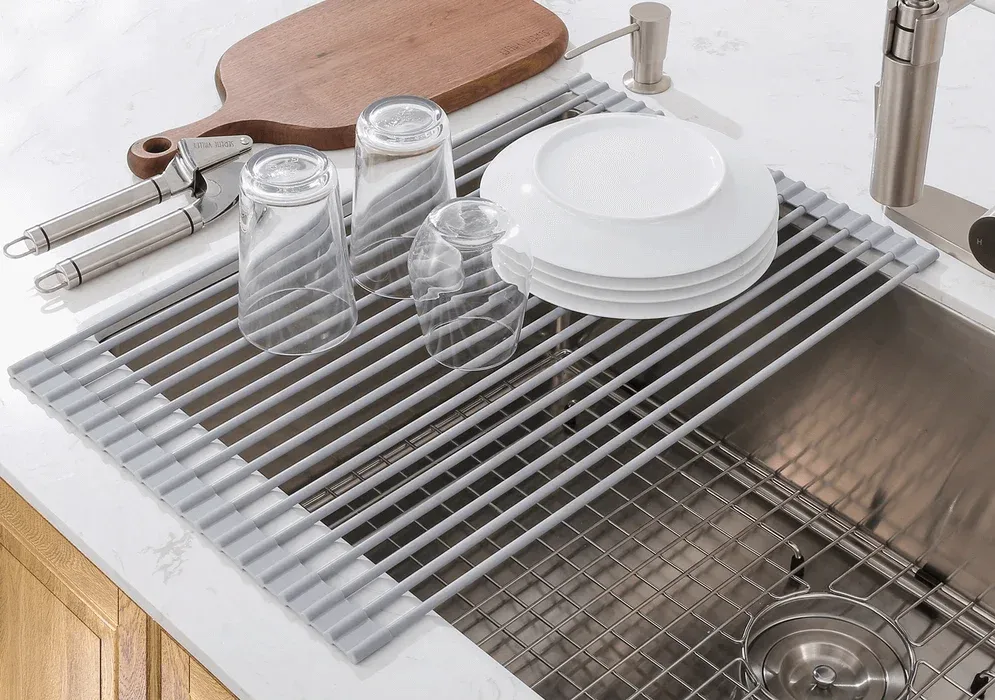
Kitchen & cookware
Racks, mats, molds, drinkware, food covers.
Custom silicone manufacturing · Since 2008
Wetop is a custom silicone products factory in Dongguan — 7,500 m², team of 60, compression and LSR molding on one ISO 9001 floor since 2008. Every program is tooled from your CAD or engineered from a written brief: kitchen, children’s, industrial parts and silicone accessories, pet, home, consumer electronics, healthcare-adjacent, and adult wellness.
Reply from engineer · within 24 hours
What we manufacture
Wetop is a broad-scope silicone factory. Anything that can be molded, extruded, or overmolded in silicone is within our capability envelope. Below are eight of the categories customers bring us most often — the actual scope of what we quote against is much wider.
Racks, mats, molds, drinkware, food covers.
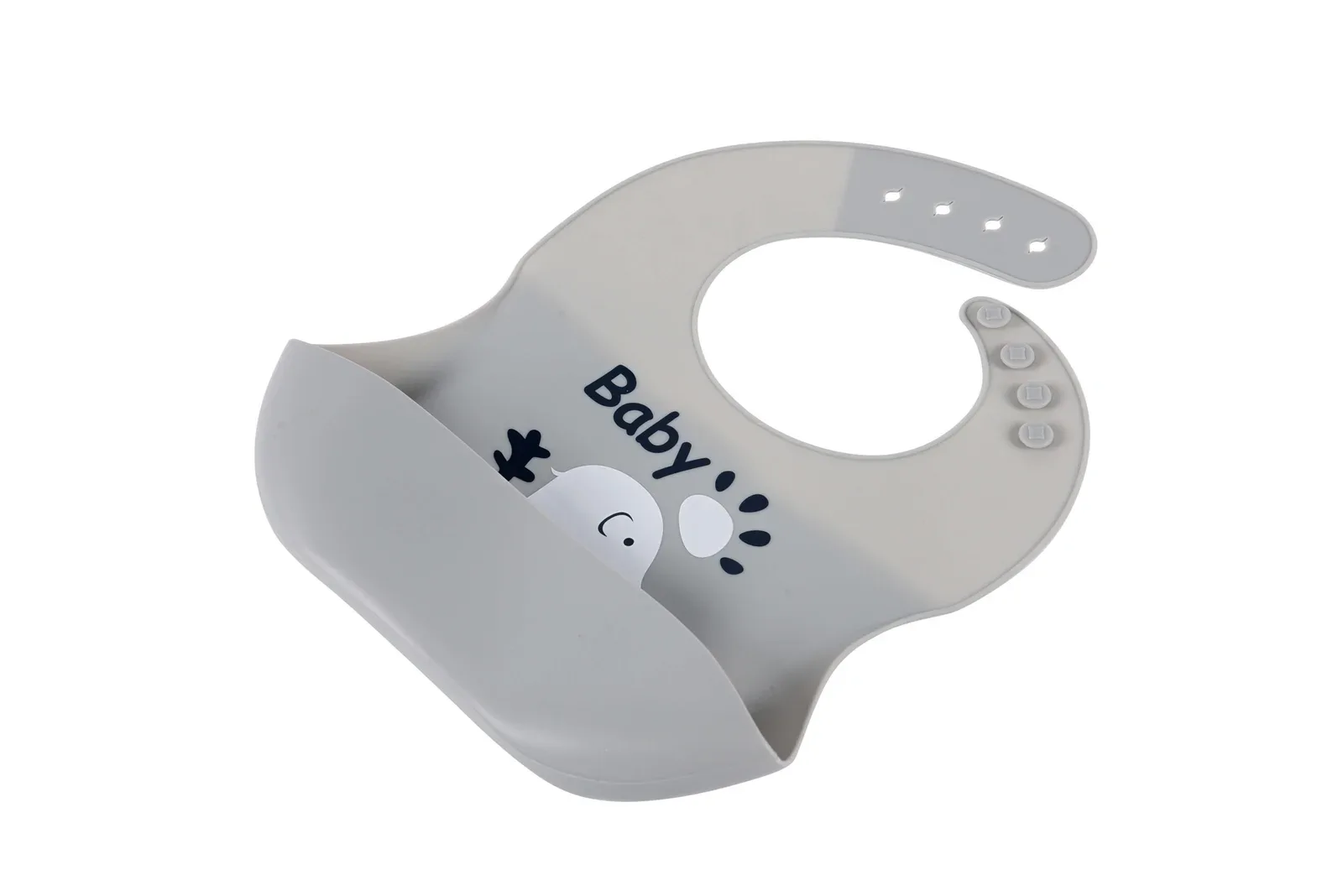
Bibs, suction plates, snack cups, teething-safe accessories.
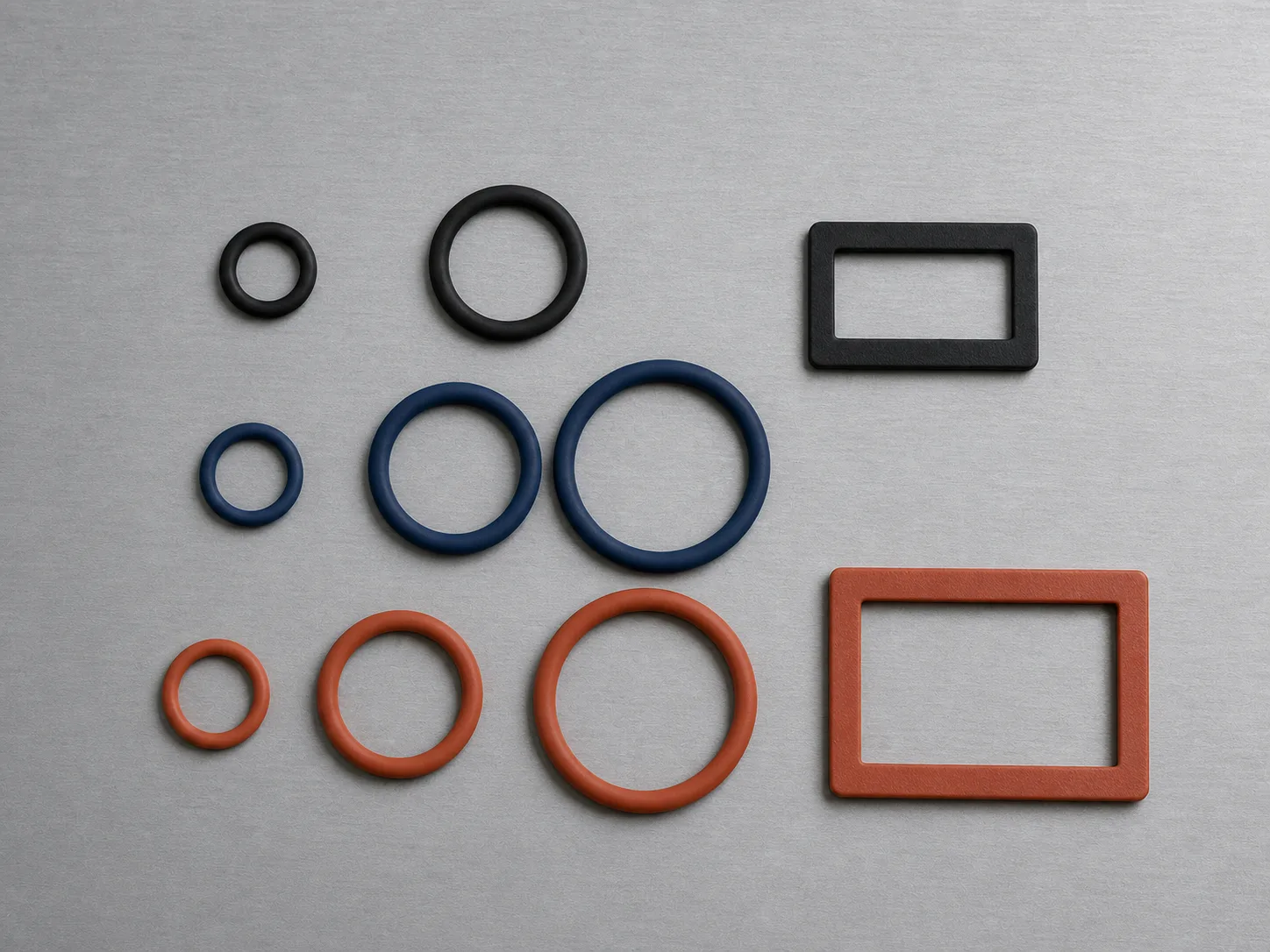
Sealing strips, O-rings, gaskets, tubing, extruded profiles.
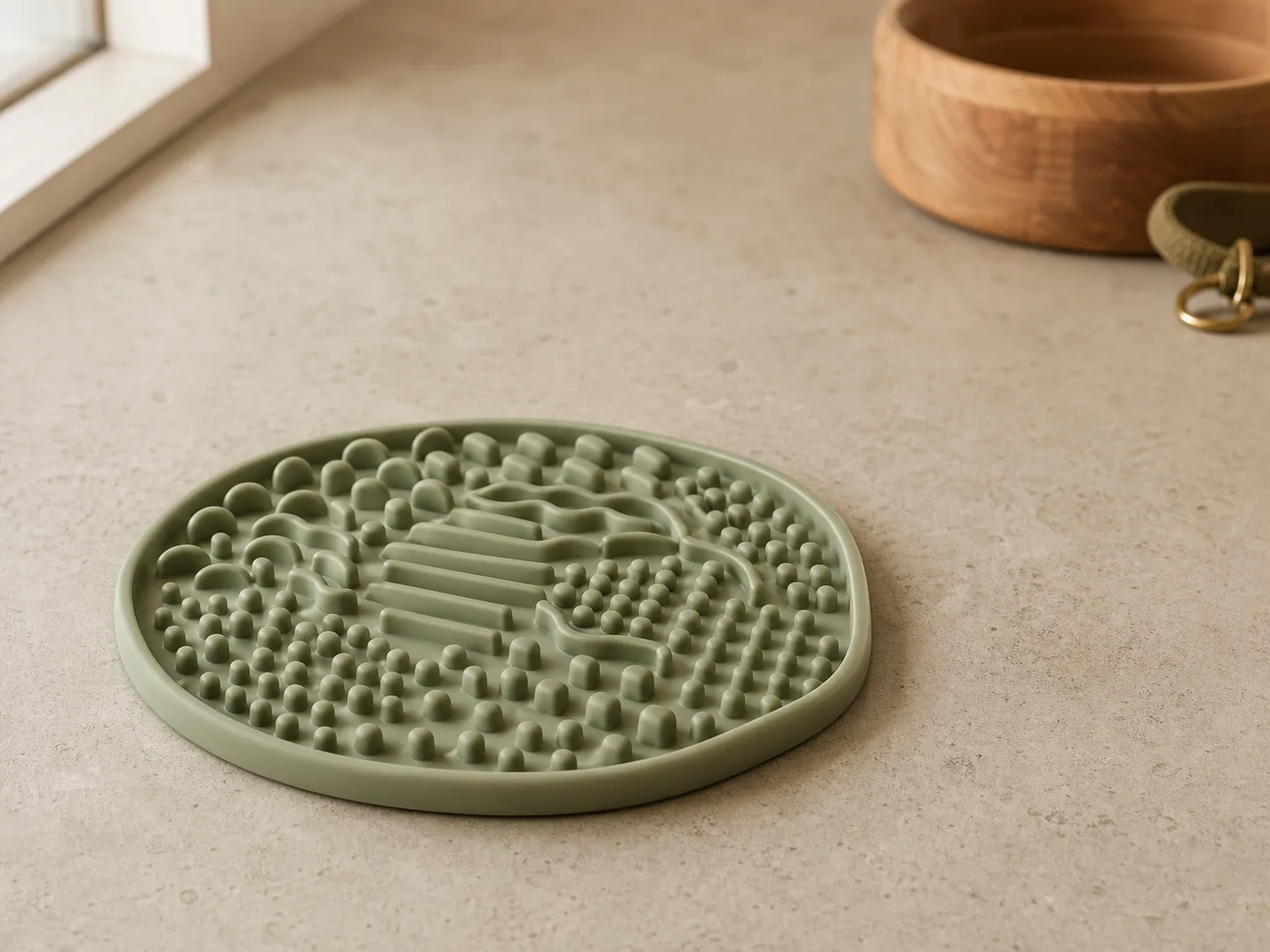
Lick mats, bowls, slow feeders, treat molds.
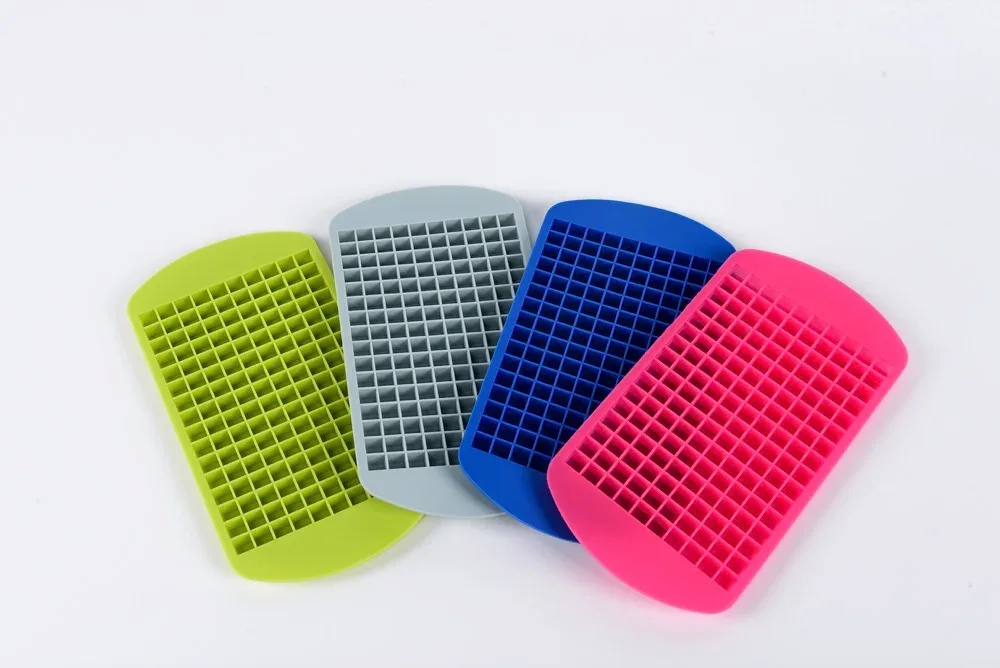
Stretch lids, drawer liners, drain covers, coasters.
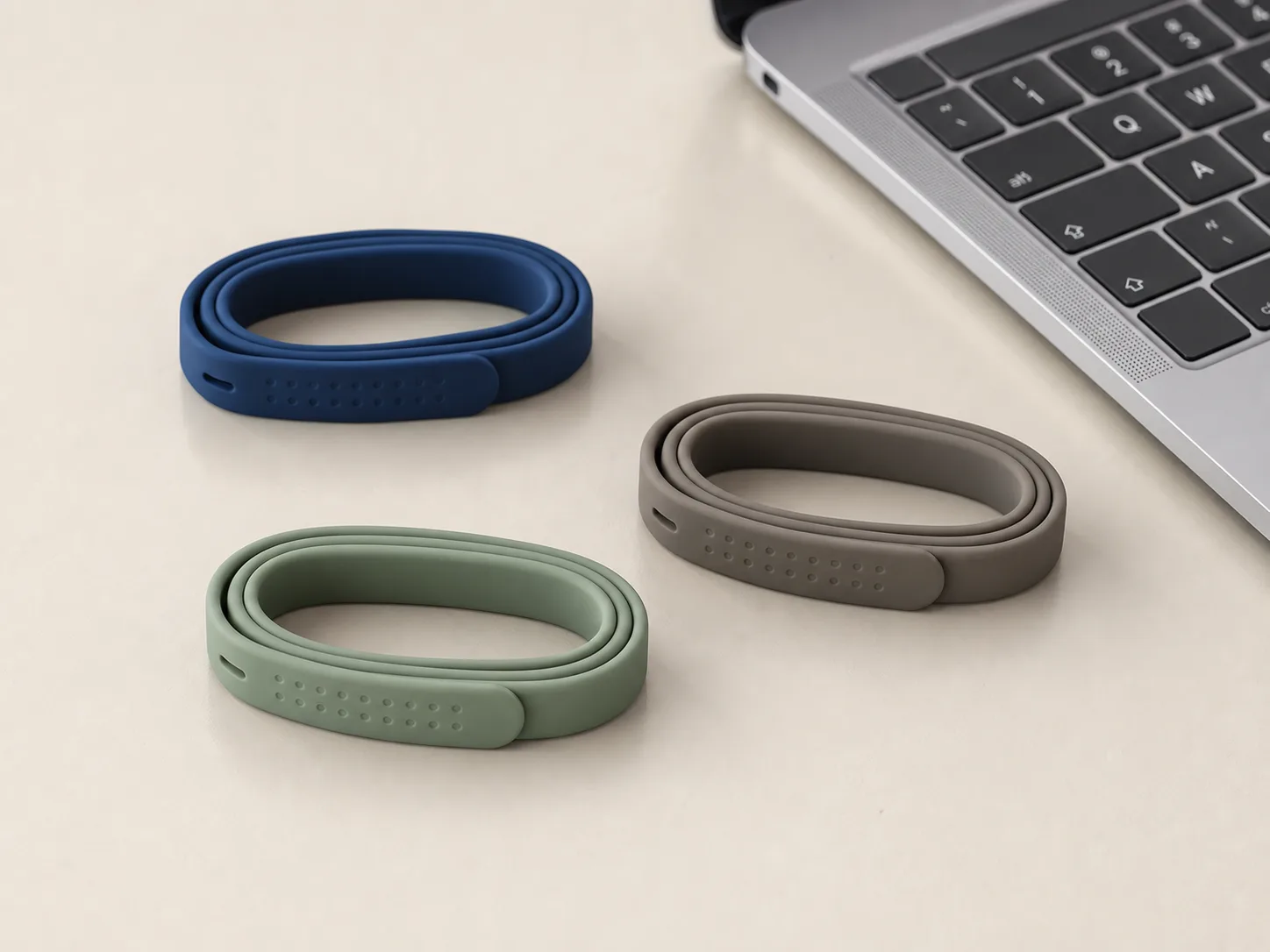
Keypads, cable protectors, wearable straps, gaskets.
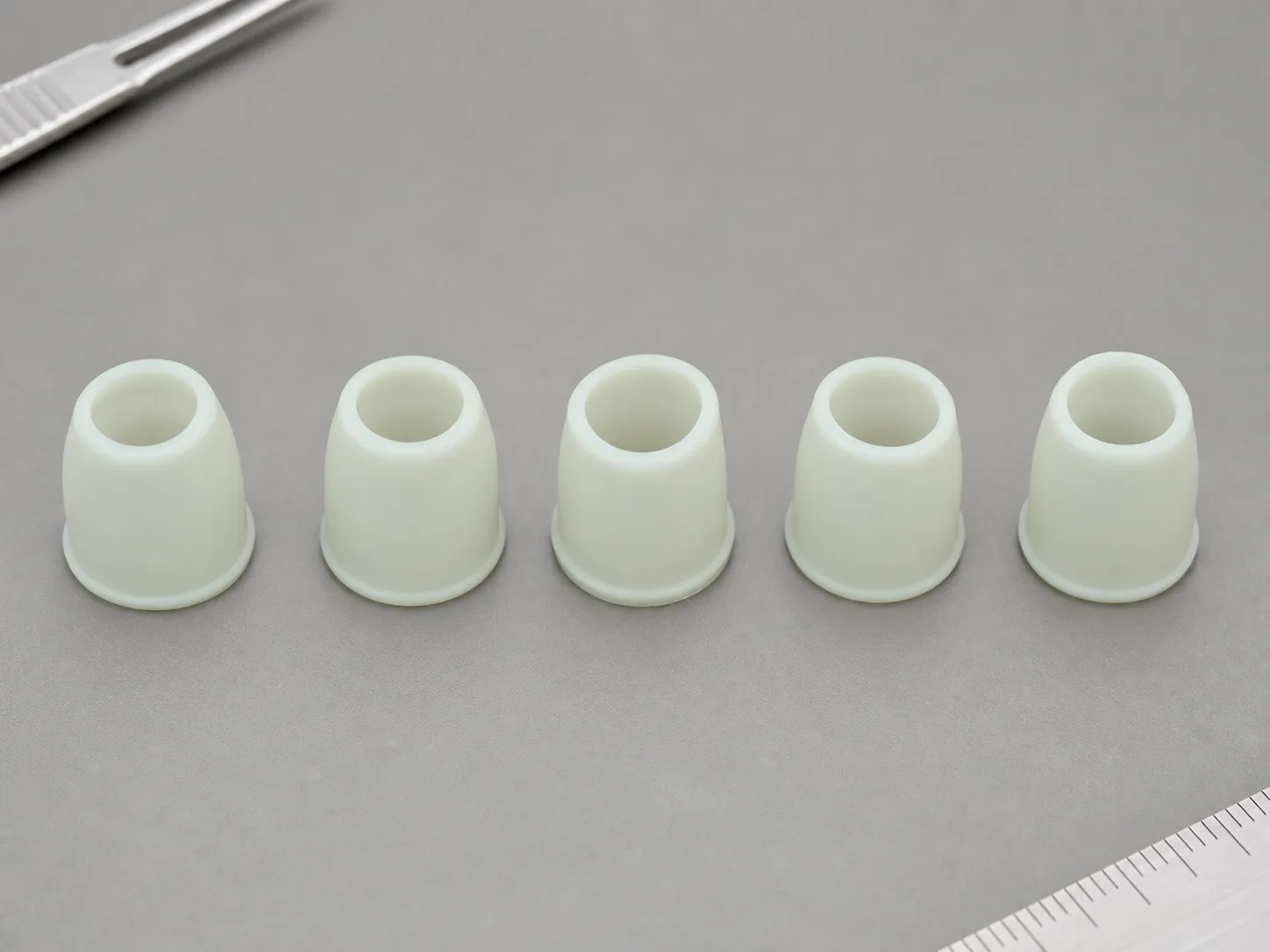
Silicone caps, sleeves, and non-device wellness parts.
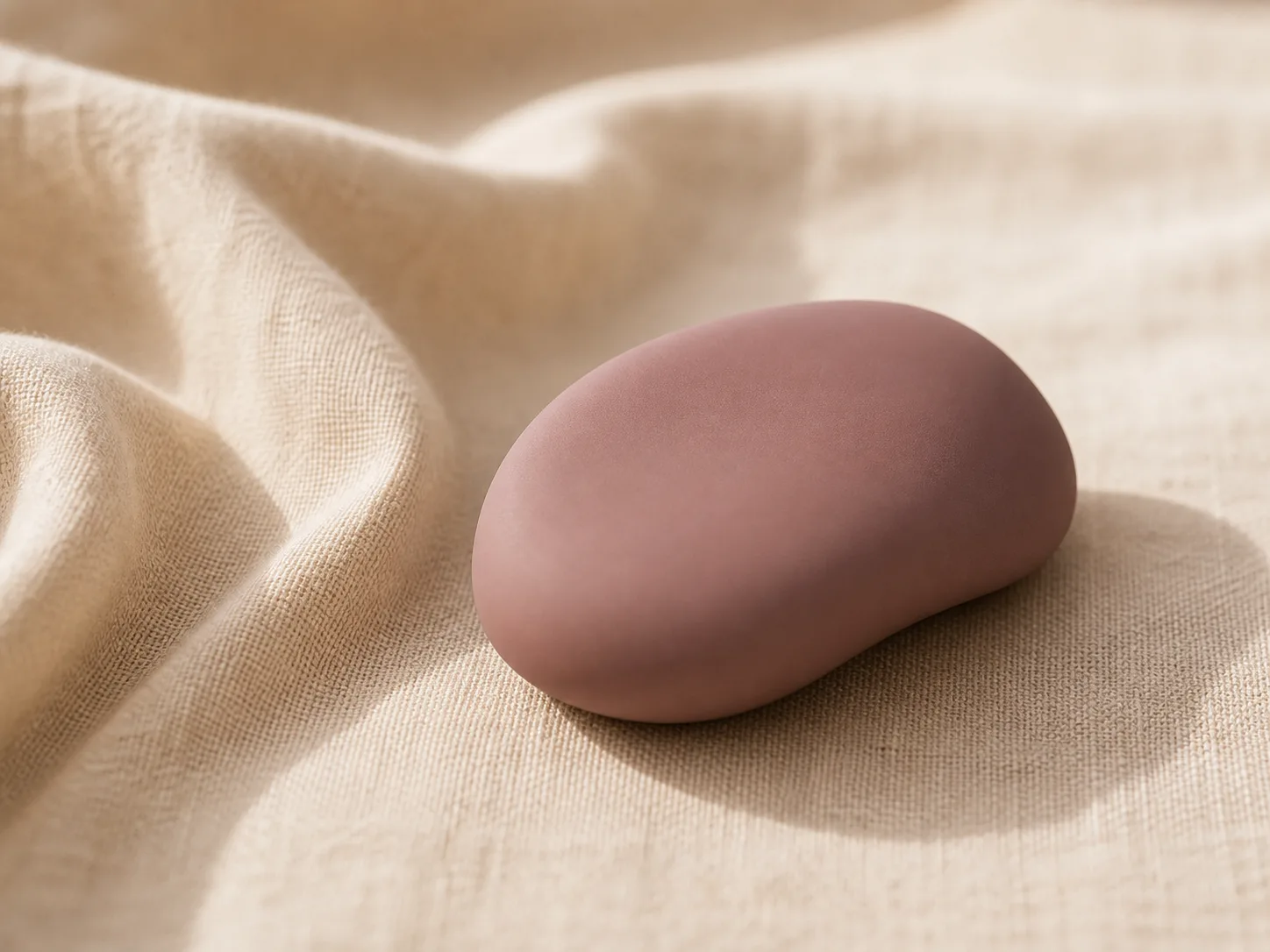
Skin-safe silicone for adult wellness brand programs.
Not seeing your category? Send us a brief. If it can be silicone, Wetop can almost certainly quote it.
Manufacturing capability
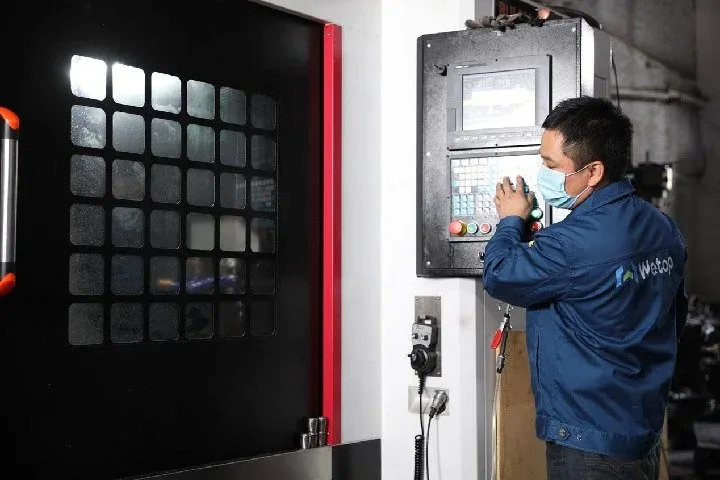
Molds cut here on 5-axis CNC. Parts cured on our compression and LSR lines. Post-cure oven on every batch. QC before the box closes. No subcontractors on your geometry.
 01
01 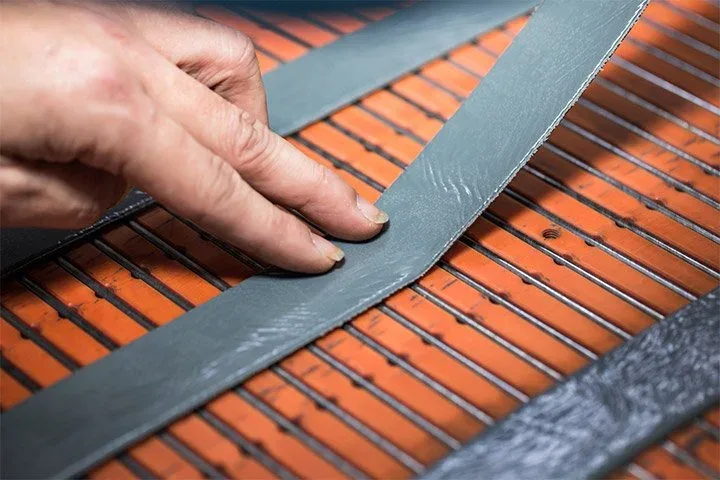 02
02 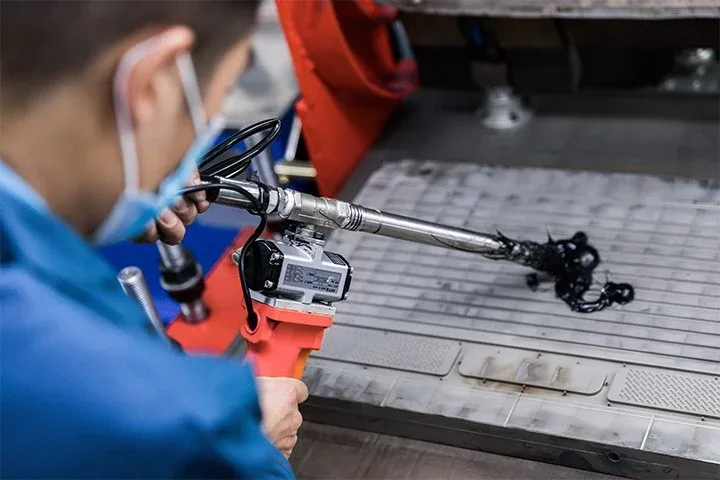 03
03 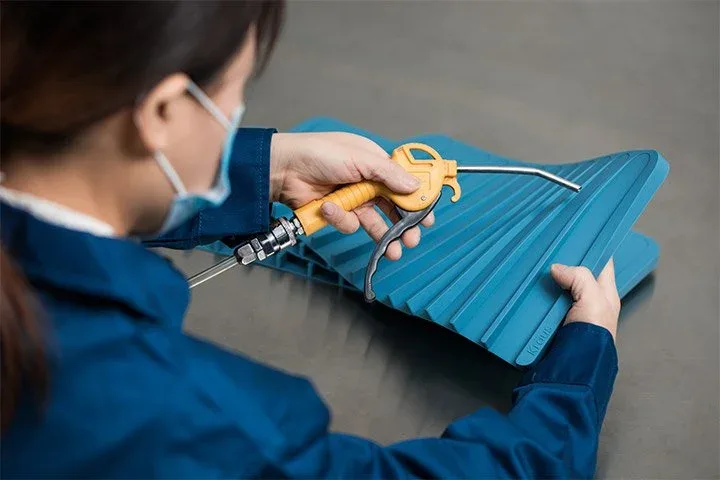 04
04 Compression presses for HCR and roll-up geometries. LSR injection for tight-tolerance kitchen and personal-care work. Every part leaves the press for a 4–6 hour post-cure oven — the step that lets us issue per-batch LFGB §30/31 test reports on organic volatiles.
Molds are cut in our own workshop on 5-axis CNC. Your tooling stays here, customer-segregated, for the life of the SKU. No partner factory.
How the engineering desk runs
When your CAD lands, an engineer reads it against the mold cavity budget, the target durometer, the compliance stack, and the volume tier. If the spec is complete, we return a mold cost, price brackets at MOQ 500 / 1,000 / 5,000, and a first-article lead time inside one business day.
If the spec has a gap — a wall section that will trap air, a corner radius the tool can’t hold, a Shore-A that fights the geometry — we return two to four engineering questions before quoting. That week-one dialogue is where the program either survives to production or avoids becoming a bad first article three months later.
Buyer Guides
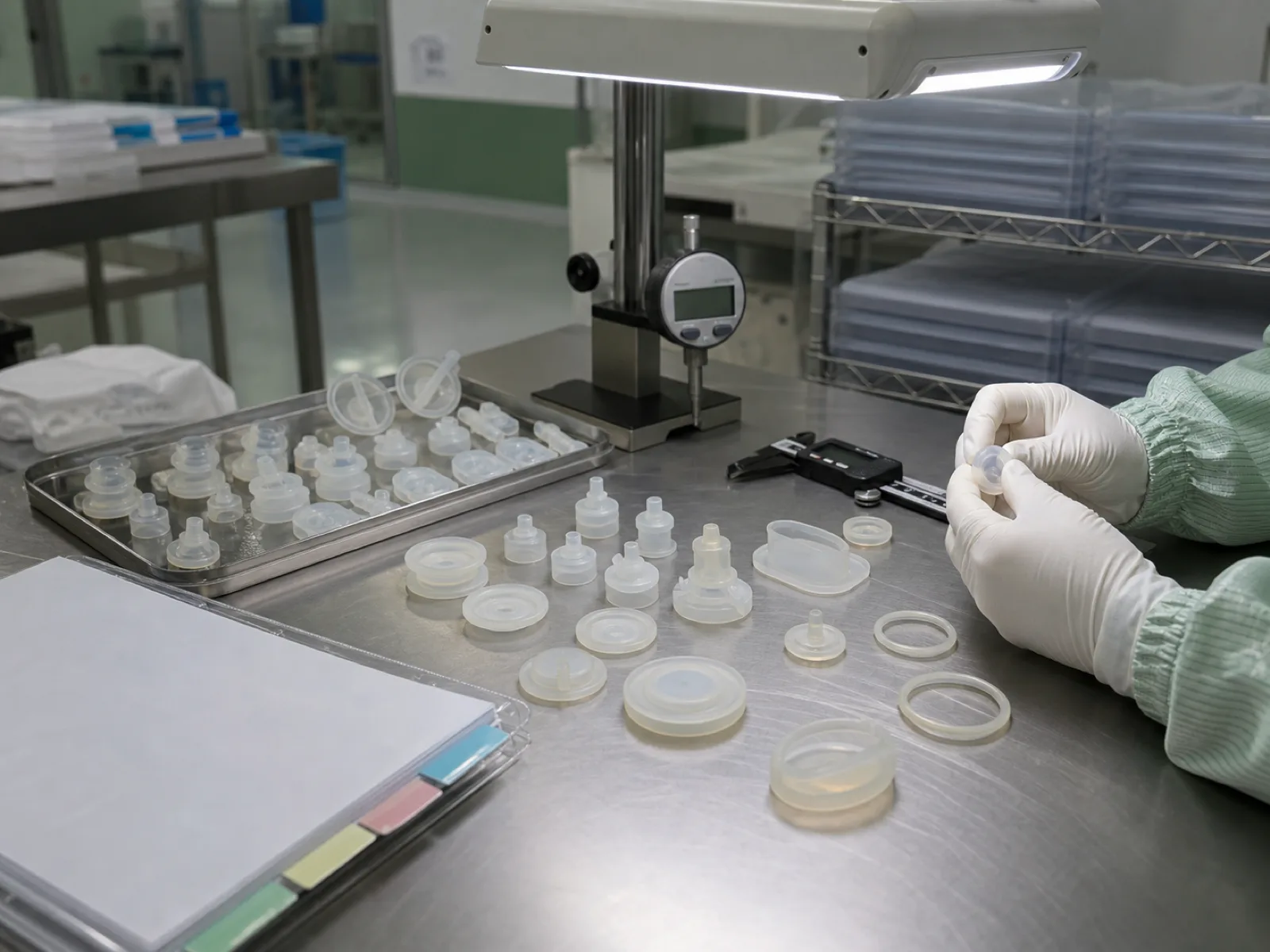
Engineer B2B guide to silicone medical device components: USP Class VI, ISO 10993 biocompatibility, LSR molding, cleanroom class, and OEM sourcing.
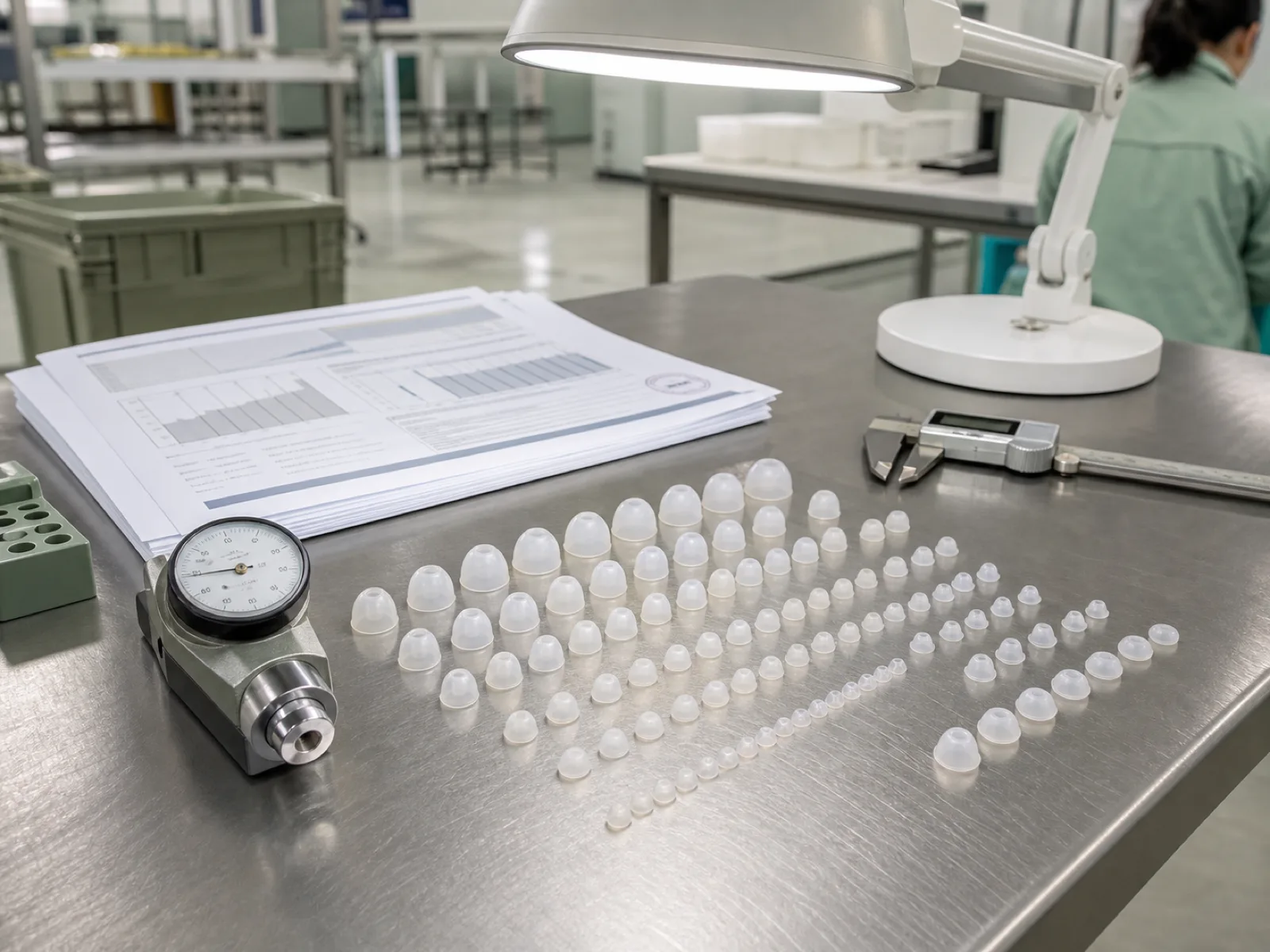
Engineer-authored B2B guide to hearing aid silicone ear tips — LSR grade selection, ISO 10993 biocompatibility, USP Class VI, Shore A, dome geometry, MOQ.
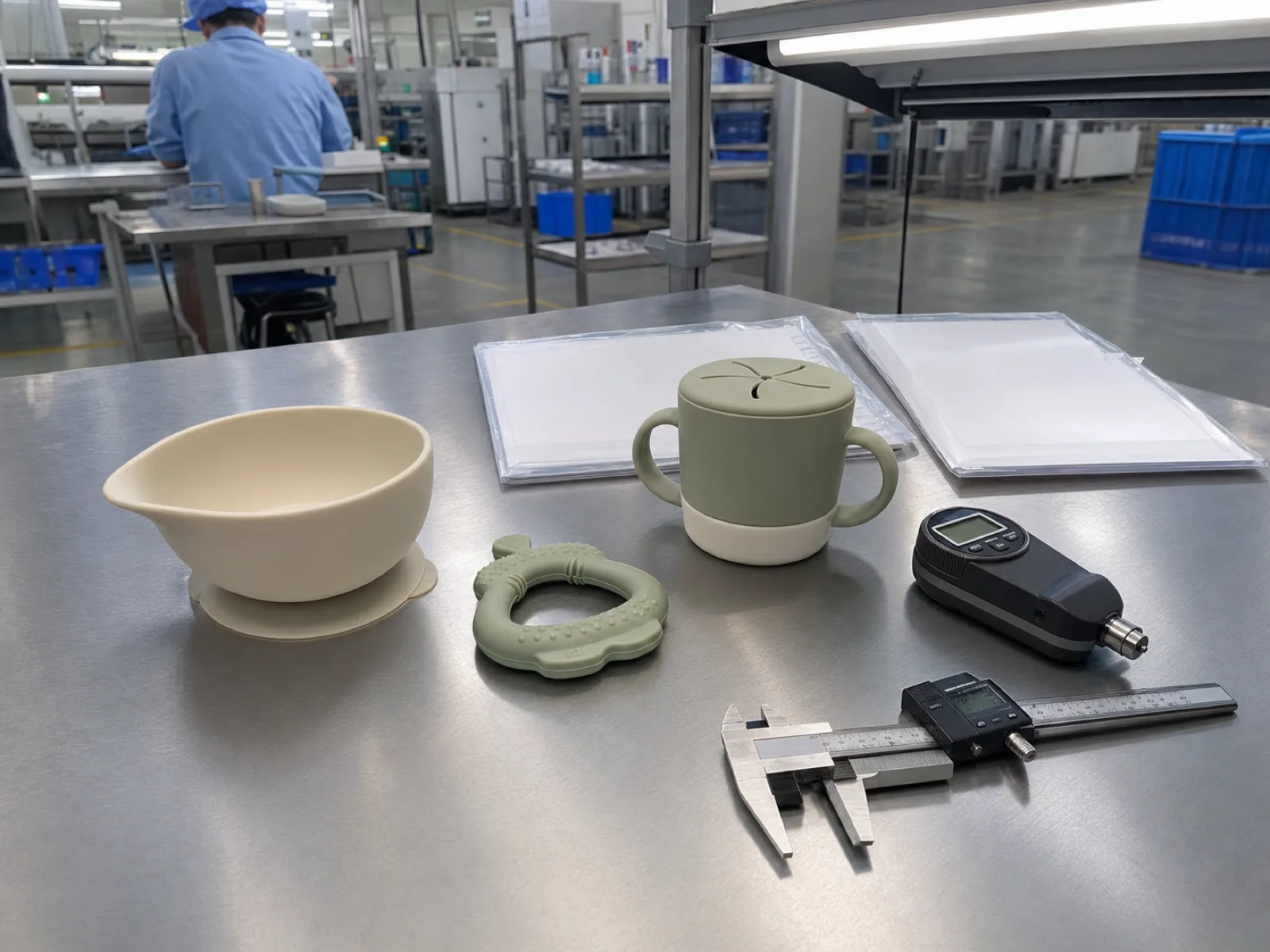
Engineer-authored guide to choosing a China silicone baby products manufacturer — FDA, LFGB, EN 14350, USP Class VI, platinum-cure, MOQ, and OEM tooling.
FAQ · 20 questions
Twenty questions from real RFP calls — MOQ economics, certifications, IP protection, lead times, FBA / chain logistics, and the engineering decisions inside a program.
We manufacture silicone products for retail brands, private-label programs, and industrial customers across many categories — most engagements are under mutual NDA. Out of respect for our customers we do not publish named brand references on this site; specific customer references can be shared under NDA during your RFP.
MOQ 500 is the volume at which we amortize a P20 hardened steel mold, run a dedicated press cycle, and issue per-batch FDA + LFGB test reports without operating at a loss. MOQ 100 in the wider market typically means order consolidation across buyers, tooling cost buried in 2-3× per-unit markup, or a soft prototype mold that degrades after 200 cycles.
Most customers find that more reassuring, not less. A generic third-party audit is a one-time snapshot; our customers audit the factory directly — we host roughly one customer audit per month. We provide ISO 9001, per-batch FDA 21 CFR 177.2600 and LFGB §30/31 reports, and a virtual factory walkthrough within 24 hours of request.
Yes. Tooling is quoted separately as a one-time line item ($1,200–$3,500 for single-cavity P20, $5,000–$15,000 for multi-cavity). We run 50–100 piece validation against the mold. Tooling cost is refundable against the first 5,000 production pieces.
Yes — refundable against the first 5,000 pieces from that mold as a credit against per-unit price (typically 5–10% off the first production run). After 5,000 pieces, tooling is fully amortized and per-unit pricing drops to volume tier.
Yes — non-detect PFAS reports from accredited third-party labs on every production batch where the program requires it. Silicone (PDMS) is intrinsically outside the 2025 EU PFAS definition; where processing aids, inks, or coatings could carry PFAS we document their substitution per batch.
Cumulative tooling and process expertise across kitchen and cookware (drying accessories, molds, drinkware, food covers), children's products (bibs, plates, snack cups), silicone accessories (sealing strips, O-rings, gaskets, tubing), pet products, home and lifestyle, consumer electronics accessories, healthcare-adjacent parts, and adult wellness. Programs that match existing capability sample in 7–15 days; new programs typically 18–25 days for tooling.
Both, by program. Default for premium and PFAS-conscious programs is platinum-cured (USP Class VI-compatible, no cure byproducts, no first-heat odor). Default for mid-tier programs is post-cured peroxide (PFAS-free process aids verified, 4–6 hour post-cure mandatory). Cure system is specified on the master-batch lot certificate for every batch.
Pre-pack AQL 1.5 per ISO 2859-1, General Inspection Level II. Major defect rate <0.4% in 2024–2025 production; minor <1.2%. First-article batches receive 100% visual + dimensional inspection. Master-batch lot numbers tie every defect to the production cycle in our 36-month retention log.
Yes, up to about 45 inches diagonal in one piece on our largest presses. Beyond 45 inches we move to two-piece snap-together construction with the seam concealed under structural features. Press platen dimensions, not silicone chemistry, set the upper bound.
Silicone: master-batch mixed to Pantone TPX or TPG within ±0.5 ΔE. Stainless components: PVD coating or powder-coat applied before overmold, color-matched to the silicone master-batch. We cross-check the first-article sample under a D65 light box before approving production.
Shore A 40–80 across our compression and LSR lines depending on the application. Soft mats, cushions, and children's bibs run 40–55. Food-contact accessories and drinkware run 50–65. Structural parts, grip sleeves, and gaskets run 60–75. Industrial seals, O-rings, and commercial-grade parts run 70–80. Durometer choice is engineering-led — we help match the number to the geometry, load, and use case.
Yes — common for brand programs where each SKU pairs with a coordinated color (matte black, brushed-stainless grey, cinder grey, fireclay cream). We schedule color-grouped runs back-to-back to minimize purge waste. Per-SKU MOQ 500 still applies; the constraint is the press cycle per geometry, not the PO total.
Default is FOB Yantian (90 min from factory). FOB Shekou and FOB Hong Kong available. EXW Dongguan for customers consolidating with other PRD suppliers. DDP to US (Amazon AWD direct drop or your 3PL) is supported through our forwarder network.
Yes. We barcode (UPC/EAN/FNSKU), apply Amazon-required suffocation warnings, palletize to Amazon TI/HI specs, and drop direct to AWD or your 3PL. For Tier 2 retail chain programs we run the equivalent: chain RTI carton dimensions, peg-hook hangtag formats, per-chain barcode symbology.
Existing mold: 7–10 days from RFP-signed to first article at your office. New P20 mold: 18–25 days. The bottleneck is mold cutting (7–8 days) and CAD sign-off rounds (2–3 rounds at 24–48 hrs). After first-article approval, mass production runs 30–45 days plus 25–35 days sea freight to US/EU.
Standard — mutual NDA before any CAD work begins. We host the customer's spec under controlled access in our engineering system, segregate the mold in customer-only mold storage, and retain master-batch lot records for 36 months. Counter-NDA reciprocity is the default.
Three layers. (1) Molds physically segregated in customer-only storage racks, labeled by program code only. (2) CAD hosted in access-controlled engineering systems — not on the press floor, not in a shared cloud folder. (3) Brand-marked product ships only to that brand's designated freight forwarder. Mid-program design changes require written approval and we re-tool rather than overwrite the original cavity.
Depends on the failure mode. If the mold cut is out-of-spec versus the signed CAD, we re-cut at our cost. If the CAD was right but the customer spec was incomplete, re-tooling is quoted as a change order (typically 30–60% of original tooling). Minor cavity adjustments run 3–5 days at our cost.
Yes. Under the October 2025 EU PFAS proposal, silicone (PDMS backbone, no C-F bonds) is outside the PFAS definition. Where processing aids, inks, or release agents could carry PFAS, we document their substitution per batch. For the EU FCM ban effective 12 Aug 2026, our compliance documentation is ready today.
Request a quote
Every Wetop program is custom-tooled to a customer's spec. To scope your program we need your CAD file (STEP · IGES · DWG) or a written brief, your target volume, and any compliance requirements (FDA, LFGB, EN 14350, RoHS, and so on). We reply with a mold cost estimate, price brackets at MOQ 500 / 1,000 / 5,000, and 2–4 engineering questions about edge cases in your spec.
Describe your program and attach CAD or reference files. An engineer replies within one business day.
An engineer will reply from inquiry@wetopsilicone.com within one business day.
Or email inquiry@wetopsilicone.com