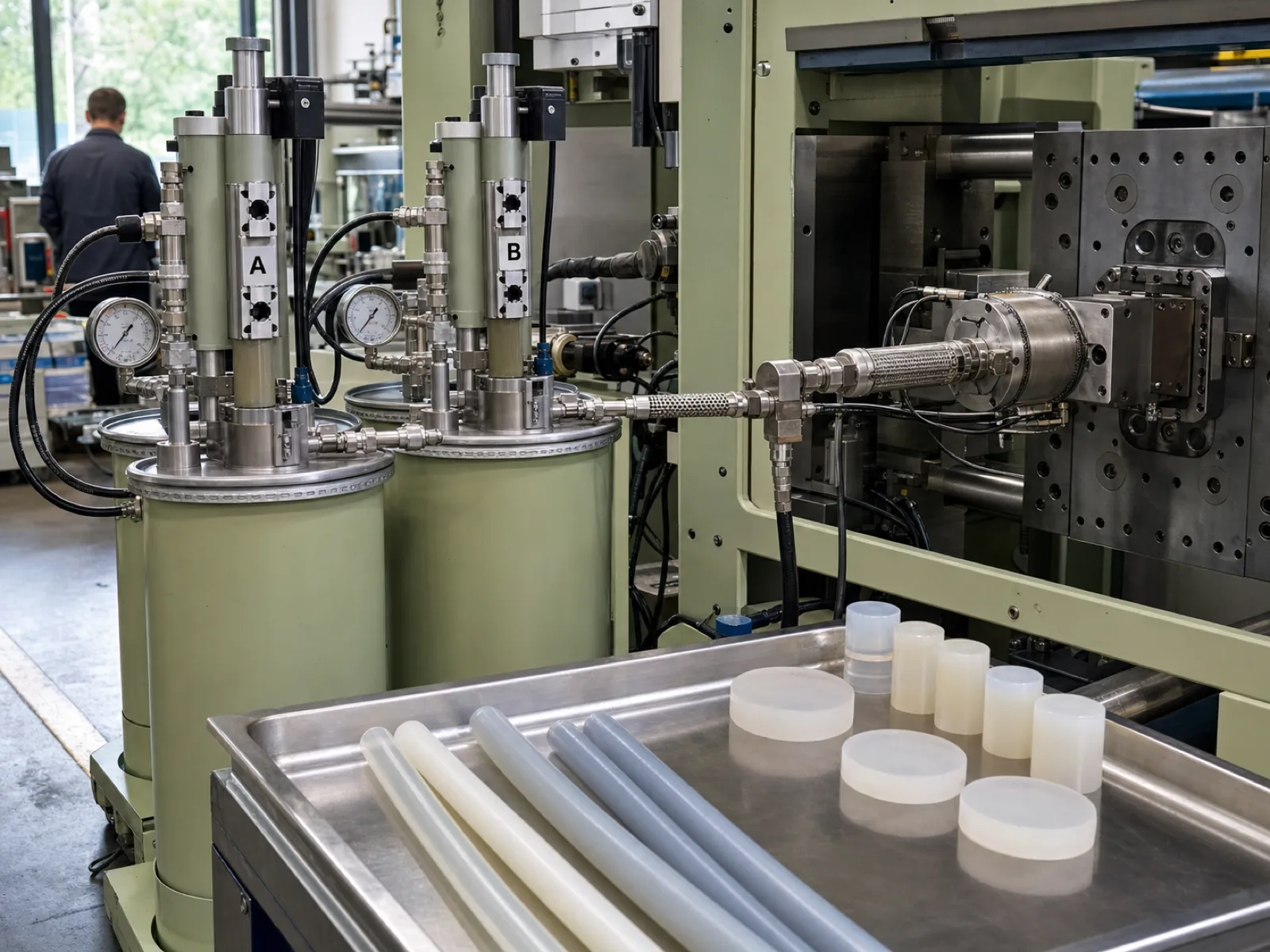
Sourcing an adult toy manufacturer in China for a body-safe intimate wellness brand is a materials-science and compliance problem before it is a price problem. The only defensible material is platinum-cured liquid silicone rubber (LSR) validated to ISO 3533:2021 and ISO 10993 biocompatibility, molded in dust-controlled conditions and post-cured to strip volatile siloxanes. This guide walks brand founders through material selection, ISO clause requirements, tooling economics, MOQ math, region-specific import compliance, and IP-protection workflow at the engineering level a Protolabs-style customer would recognize.
## Who this guide is written forThis guide is written for intimate wellness brand founders, product managers, and sourcing engineers evaluating a China-based silicone OEM for a body-contact product line. It assumes a B2B customer building a defensible brand, not a reseller, and treats every decision at the material-science, tooling-economics, and regulatory-compliance level rather than at the commodity-price level.
We use the phrase *customer brands who OEM body-safe silicone products* throughout because that is what a serious factory produces. The end-use category is regulated in most target markets, and the wrong material choice or wrong compliance package will trigger customs seizures, retailer chargebacks, or a class-action complaint that no per-unit price saving can offset. ## Material selection: only platinum-cured LSR clears the barPlatinum-cured liquid silicone rubber is the only material that meets ISO 3533:2021 chemical safety criteria, USP Class VI biological reactivity, and REACH SVHC restrictions simultaneously. Peroxide-cured HCR leaves 2,4-dichlorobenzoic acid residues detectable by GC-MS; TPE (thermoplastic elastomer) contains phthalate or paraffin plasticizers that migrate under skin-temperature and cyclic mechanical stress. Neither is acceptable for body-contact intimate wellness OEM.
The relevant material comparison for a sourcing decision looks like this: | Property | Platinum-cured LSR | Peroxide-cured HCR | TPE | |---|---|---|---| | Cure by-products | None (Pt catalyst) | 2,4-DCBA residues | N/A | | Odor after post-cure | None | Characteristic acid | Waxy/plastic | | Extractables (USP <661>) | Pass | Marginal | Fail | | ISO 10993-5 cytotoxicity | Pass | Pass with post-cure | Fail | | ISO 10993-10 sensitization | Pass | Marginal | Fail | | Shore A range | 5-80 | 20-90 | 15-90 | | Compression set 22 h / 175°C | 15-25% | 25-40% | 60%+ | | Typical raw cost USD/kg | 6.50-9.80 | 4.20-6.10 | 2.80-4.50 | Peroxide-cured HCR (high consistency rubber) is still used by low-cost factories because it accepts compression molding on old equipment, but the residual odor and marginal extractables profile fail retailer-grade audits. Our [platinum vs peroxide cure guide](/guide/platinum-cured-vs-peroxide-cured-silicone/) covers the chemistry in detail. ## ISO 3533:2021 — the clause-level requirementsISO 3533:2021 (Sex toys — Design and safety requirements) is the international standard governing this product category. Its clauses set mandatory design and material criteria, and any China-based OEM claiming intimate wellness capability must be able to name specific clauses and show test evidence. Buyers should require a compliance matrix mapping each clause to the manufacturer's process control or test method.
Key clauses a sourcing engineer should verify: - **Clause 5.3 — Chemical safety.** Cross-references REACH Annex XVII phthalate limits (BBP, DBP, DEHP, DIBP each <0.1% w/w), primary aromatic amine limits, and heavy metals per EN 71-3. - **Clause 5.4 — Mechanical safety.** Minimum edge radii, pinch-point exclusion, and pull-tension requirements on any component intended for external body contact. - **Clause 5.5 — Cleanability.** Surface finish specification and validation that the product can be cleaned per manufacturer instructions without material degradation. - **Clause 5.6 — Electrical safety** (when motorized). References IEC 60335-1 for low-voltage battery-powered products. - **Clause 6 — Consumer information.** Labeling, materials disclosure, and cleaning instructions. A factory that responds to the question "which ISO 3533 clauses does your compliance package address?" with silence, or with a generic ISO 9001 certificate, is not qualified for this category. This is the single fastest filter a brand founder can apply.
ISO 10993 is the biological evaluation framework used to characterize body-contact materials. For intimate wellness OEM, the mandatory subset is ISO 10993-5 (cytotoxicity), ISO 10993-10 (sensitization), and ISO 10993-23 (irritation). Testing is performed on cured samples from the actual production compound, not on raw material data sheets, and should be repeated annually and after any raw-material lot change.
Testing lab cost and lead time (2026 market rates from ISO 17025 accredited labs): | Test | Method | Cost USD | Lead time | |---|---|---|---| | Cytotoxicity | ISO 10993-5, MEM elution | 850-1,200 | 10-14 days | | Sensitization | ISO 10993-10, GPMT or LLNA | 1,600-2,400 | 25-35 days | | Irritation | ISO 10993-23 (replaces -10 skin) | 1,100-1,600 | 15-20 days | | Extractables screen | USP <661>, GC-MS + ICP-MS | 900-1,400 | 15-20 days | Budget USD 3,500-6,000 per full retest cycle. A serious factory will offer to share the cost or absorb it entirely if the compound and process are locked; a factory that pushes 100% of biocompatibility cost onto the brand is either running very thin margins or is not confident the compound will pass. ## MOQ math: what "500 units" actually meansThe realistic MOQ for LSR injection-molded intimate wellness OEM is 3,000-5,000 units per SKU per color once hardened-steel tooling is amortized. Compression molding on aluminum tooling can reach 500-1,000 units but multiplies cycle time by 4-6x and raises per-unit labor. Any factory quoting sub-500 MOQ on true LSR without shared cavities is either subsidizing the tool amortization into per-unit price or batching your order into another buyer's mold — an IP-leakage red flag.
The break-even math from the factory side: - **Hardened-steel single-cavity tool:** USD 12,000. At 60-second cycle and 22 shots per hour on a 24-hour shift, one machine produces 528 units/day. Amortizing tooling across 5,000 units adds USD 2.40/unit; across 20,000 units it drops to USD 0.60/unit. - **Aluminum pilot single-cavity tool:** USD 3,500. Amortizing across 1,000 units adds USD 3.50/unit; across 5,000 units drops to USD 0.70/unit but the aluminum tool degrades past 8,000-12,000 shots. - **Compression mold on HCR (not recommended for body-safe):** USD 1,800 tool, 8-minute cycle, 30 units/hour on a manual press. We break down the full pricing ladder in [silicone OEM pricing structure](/guide/silicone-oem-pricing-structure/). For intimate wellness specifically, the tooling economics push serious brands toward the 5,000-unit MOQ threshold within the first 12 months. ## Cleanroom and post-cure — non-negotiable process controlBody-contact silicone must be molded in a Class 100,000 (ISO 8) dust-controlled environment on dedicated platinum-cure lines, then post-cured at 200°C for four hours to strip residual volatile siloxanes D4, D5, and D6 below GC-MS detection limits. Factories running mixed platinum and peroxide production, or omitting post-cure to save energy cost, will produce parts that fail extractables testing regardless of raw material grade.
Cross-contamination is a real risk: sulfur, tin, and amine compounds present anywhere in the workshop will poison the platinum catalyst and cause under-cure or surface tack. A qualified factory maintains physical separation between platinum-cure and peroxide-cure areas, dedicates barrels and metering pumps to platinum LSR only, and stages incoming raw material in an air-locked cleanroom.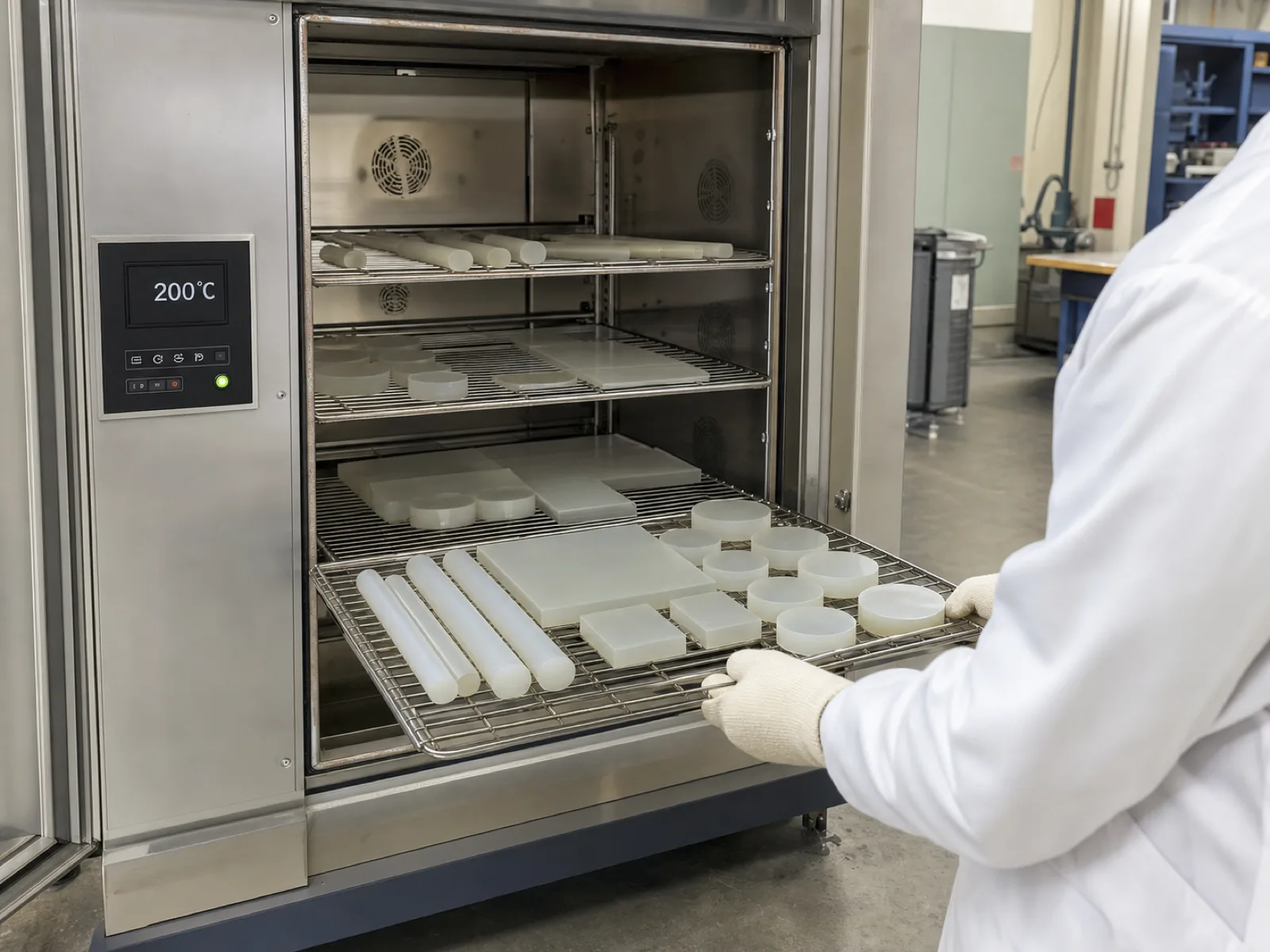
Import compliance is category-specific and market-specific: intimate wellness products are not medical devices in the US unless they carry therapeutic claims, so FDA clearance is not required. What is required includes CPSIA general certification, California Prop 65 phthalate limits, EU REACH SVHC screening plus GPSR technical documentation, UK UKCA marking, and Australian consumer goods labeling. Factories should provide a Declaration of Conformity and third-party test reports for each destination market.
Market-by-market summary: | Market | Governing framework | Key documentation | |---|---|---| | United States | CPSC + California Prop 65 | General Certificate of Conformity (GCC), Prop 65 phthalate test report | | European Union | REACH + GPSR 2023/988 | SVHC screening, GPSR technical file, EU responsible person | | United Kingdom | UK REACH + PSR 2005 | UKCA marking, UK-based responsible person | | Australia | ACL + AS/NZS labeling | Country-of-origin marking, materials disclosure | | Canada | CCPSA | Substance restrictions per Canada Consumer Product Safety Act | The [FDA vs LFGB silicone](/guide/fda-vs-lfgb-silicone/) guide addresses the common confusion around food-contact certifications sometimes cited by adult wellness factories — those are useful signals of raw material quality, but they do not substitute for CPSC or REACH compliance in this category. ## Tooling workflow: CAD → SLA → aluminum pilot → hardened steelStandard tooling progression runs from CAD freeze to SLA resin prototype (5-7 days) to aluminum pilot mold for 100-500 first-article samples (18-25 days) to hardened-steel production mold (35-45 days). Total elapsed time from CAD freeze to first mass shipment is 90-120 days for a single-cavity single-color SKU. Multi-shot or overmolded designs add 30-45 days.
Tooling cost bands (2026 quotes for a typical intimate wellness geometry, 50-150 g shot weight, moderate undercut requiring a single side-action): - **SLA resin prototype (RIM or vacuum-cast):** USD 400-900, 5-7 days - **Aluminum pilot mold, single cavity:** USD 2,800-6,500, 18-25 days - **Hardened-steel production mold, single cavity:** USD 8,000-14,000, 35-45 days - **Hardened-steel production mold, four cavity:** USD 18,000-32,000, 45-55 days - **Two-shot LSR + rigid-core overmold:** add USD 12,000-25,000 and 20-30 days The [MOQ and lead time silicone OEM](/guide/moq-and-lead-time-silicone-oem/) guide covers cavitation economics for higher-volume programs. ## IP protection: NDA, tooling ownership, dedicated cavitiesBrand IP protection in a sensitive category requires a defensible workflow: mutual NDA signed before CAD exchange, tooling ownership clause naming the customer brand as sole owner of both cavity and storage location, segregated production runs with no shared cavities, and a destruction certificate for reject and short-shot parts. Written promises without audit rights and physical verification are not sufficient.
Practical checklist for a first factory audit: 1. Verify tooling storage room is locked and access-logged, with customer-branded cavities physically labeled and segregated. 2. Confirm the factory does not maintain a "catalog" of shared cavities that customers can order from — a common practice at the low end of the market and a direct IP-leakage vector. 3. Require in writing that all short-shot, flash, and reject parts are ground and returned for material recovery, not resold. 4. Include a right-to-audit clause with 30-day notice for annual verification. 5. Register the industrial design in the target markets before shipping T2 samples out of the factory — do not rely on the NDA alone for design protection. ## Quality control and batch traceabilityBatch-level quality control includes Shore A durometer verification (±3 points from spec) per ASTM D2240, tensile and tear per ASTM D412 and D624 on slabs from the same shot, AQL 1.5 major / 4.0 minor visual inspection, dimensional CMM sampling per FAI protocol, and TGA volatile screening. Every production lot receives a Certificate of Analysis referencing the raw-material lot number, cure profile, and post-cure record.
A serious factory maintains sample retention of one part per 1,000 units for two years, allowing forensic investigation if a field complaint requires root-cause analysis. Ask to see the retention library on your first audit; a factory that cannot produce parts from a shipment made 12 months earlier is not running a traceable process. ## Multi-shot and electronics integrationMulti-shot molding for rigid-core plus soft-skin designs requires either a two-shot LSR press (rare in China, USD 400K+ machine cost) or a two-step insert-molding workflow using an adhesion primer. Electronics integration for motorized products adds sealed-cavity design, IPX7 waterproof validation per IEC 60529, and battery-safety documentation to UL 1642 or IEC 62133. Verify a candidate factory has completed at least three similar programs before committing tooling capital.
The engineering constraints stack quickly: a wireless-charging coil buried in silicone requires a 2.5-4.0 mm silicone skin over the coil for adequate coupling; a lithium battery adjacent to a heat-generating motor requires either passive heat-sinking or thermal-shutdown firmware; and IPX7 immersion testing requires molded-in gasket seats with tight tolerance control at the seam. ## What to ask on a factory audit call - Can you name three ISO 3533:2021 clauses your compliance package addresses, and show the test evidence? - What is your annual biocompatibility retest cadence, and do you absorb or pass through the cost? - What is your platinum-cure line separation from peroxide-cure production? - What is your post-cure profile (temperature, time, ventilation) and what volatile targets do you test against? - Do you offer dedicated cavity storage with customer-branded labeling and access logging? - What is your reject-part destruction protocol and certificate? - Can you provide a Certificate of Analysis with raw-material lot traceability for every shipment? Any factory that hesitates or deflects on more than two of these questions is not the right partner for a body-safe intimate wellness OEM program. ## Common failure modes we see in transferred programsBrand founders who transfer an intimate wellness program from a first-round OEM to a second-round factory almost always cite the same four failure modes: residual odor after 30-day off-gassing, dimensional drift beyond ±0.15 mm across production runs, color-batch inconsistency on custom Pantone matches, and a compliance package that will not survive a European retailer audit. Each traces to a specific root cause upstream of the molding cell.
Residual odor is a post-cure and material-grade problem. A factory running four-hour post-cure at 200°C on true medical-grade LSR produces parts with no detectable siloxane volatiles within 24 hours of demolding; parts that still off-gas at day 30 either skipped post-cure, used food-grade rather than medical-grade compound, or contain a colorant masterbatch with residual solvent. Dimensional drift is a tooling and cure-profile problem. Aluminum tooling degrades past 8,000-12,000 shots and starts producing parts at the upper end of the tolerance band; hardened-steel tooling maintains ±0.05 mm across 200,000+ shots. If a brand is seeing drift on aluminum tooling past shot 10,000, the fix is to graduate to steel, not to renegotiate the tolerance spec. Color-batch inconsistency is a masterbatch-metering problem. A serious factory uses a gravimetric or volumetric masterbatch dosing pump synchronized to the LSR metering pumps, holding pigment ratio within ±0.2% shot-to-shot. Manual color addition — still common at low-cost factories — produces visible ΔE variation across a single production run and is unacceptable for a retail brand where multiple SKUs must match under store lighting. Compliance package fragility is a documentation and testing-lab problem. A retailer audit will ask for the raw material certificate of compliance, the finished-part biocompatibility report (not the raw material report), the extractables screen against the target market's regulation, and the responsible-person appointment for EU or UK sale. Factories that provide only the raw-material data sheet and a generic ISO 9001 certificate will fail the audit — this is one of the most common reasons brands transfer. ## Next step If you are evaluating manufacturing partners for an intimate wellness brand and want an engineering-grade conversation about material selection, tooling economics, and compliance workflow — not a stock catalog quote — [contact our engineering team](/contact/) with your CAD, target market, and annual volume estimate. We respond to qualified brand inquiries within one business day with a technical scoping document, not a price list.