---
title: "Platinum-Cured vs Peroxide-Cured Silicone — OEM Decision"
description: "Platinum-cure is PFAS-free, lower-odor, and EU-premium compliant. Peroxide-cure is 15-25% cheaper. When each makes sense for a silicone kitchenware program."
primaryKeyword: "platinum vs peroxide cured silicone"
secondaryKeywords:
- "platinum cured silicone food grade"
- "peroxide cured silicone safety"
- "PFAS free silicone OEM"
- "USP Class VI silicone manufacturer"
searchIntent: "commercial"
category: "Manufacturing"
author:
name: "Wetop Silicone Engineering Team"
credential: "ISO 9001 certified silicone OEM, founder-led since 2008"
datePublished: 2026-05-16
dateModified: 2026-05-16
heroImage: "/images/guides/platinum-cured-vs-peroxide-cured-silicone-hero.webp"
heroImageAlt: "Platinum-cured and peroxide-cured silicone gum samples side-by-side on a stainless steel lab bench"
keyTakeaways:
- "Platinum-cured silicone uses a platinum catalyst to crosslink the polymer; peroxide-cured uses organic peroxide. The cure chemistry, not the silicone itself, determines food-contact behavior."
- "Platinum-cure is inherently PFAS-free, has no organoleptic 'first-heat odor', and meets USP Class VI medical-grade requirements. EU premium retail and PFAS-conscious US buyers increasingly require it."
- "Peroxide-cure is 15-25% cheaper per unit and adequate for most retail kitchen accessory programs. Without proper post-cure, residual peroxide decomposition byproducts can cause a slight acidic odor on first heating."
- "Wetop runs both. Standard programs (Tier 2 retail accessory, sink-brand mid-tier) use post-cured peroxide. Premium programs (PFAS-free positioning, EU premium retail, medical-adjacent) use platinum-cure."
faqs:
- question: "Is platinum-cured silicone actually safer than peroxide-cured?"
answer: "Both are food-safe when properly post-cured. The difference is byproducts. Peroxide-cure produces small amounts of organic decomposition byproducts (which is why post-cure ovens are mandatory in our process). Platinum-cure produces no comparable byproducts. For sensitive applications — direct-with-food medical, infant feeding, PFAS-conscious premium retail — platinum-cure removes a category of risk entirely. For most retail kitchen accessories, both materials clear FDA + LFGB testing when post-cured correctly."
- question: "Does platinum-cured silicone cost a lot more?"
answer: "15-25% per-unit premium typically. The platinum catalyst is more expensive than peroxide, the cure cycle is slightly slower, and the supplier base is narrower. For premium retail programs (top-tier housewares caliber, EU premium, Whole Foods orbit) the premium is recoverable in retail price-band positioning. For mid-tier or commodity programs, peroxide-cure with proper post-cure is the right choice."
- question: "How can I tell which cure my supplier is using?"
answer: "Ask for the compound house's cure-system documentation, the master-batch lot cert, and an independent PFAS non-detect test report. Platinum-cure compounds are typically labeled (the supplier is selling on the premium positioning). If the supplier hesitates on this question or claims 'food-grade silicone' without specifying cure chemistry, you should assume peroxide-cure with unknown process-aid history."
- question: "Is there ever a reason to NOT use platinum-cure?"
answer: "Cost-led programs where retail price-point and unit margin are the dominant constraints. Peroxide-cured silicone with disciplined post-cure (4-6 hour residual VOC removal) and verified PFAS-free process aids is genuinely fine for the wider housewares retail market. The platinum premium pays back when your retail tier requires the documentation."
- question: "What does 'post-cure' actually do and why does it matter?"
answer: "Post-cure is a 4-6 hour oven cycle at 180-200°C after molding. It drives off residual volatile compounds — oligomers in both cure systems, plus peroxide decomposition byproducts in peroxide-cure. Without post-cure, silicone products fail LFGB §30/31 organic volatile testing and produce a slight first-heat odor. We run post-cure on every batch as standard. Suppliers that skip post-cure to save 4-6 hours of oven time and energy are the ones whose products generate consumer complaints about odor at first use."
recommended: true
---
The single most-common spec question on RFQs above the commodity tier is *"do you run platinum-cure or peroxide-cure?"* — usually from a procurement manager who has been told one is "safer" without knowing why. Here is the engineering reality, the cost difference, and when each makes commercial sense.
Platinum-cured silicone uses a platinum catalyst and is inherently PFAS-free, lower-odor, and USP Class VI medical-grade compatible. Peroxide-cured silicone uses organic peroxide as the crosslinker and is 15-25% cheaper, adequate for most retail when properly post-cured. The choice is positioning-driven, not safety-driven.
## What's actually different between the two cure chemistries?
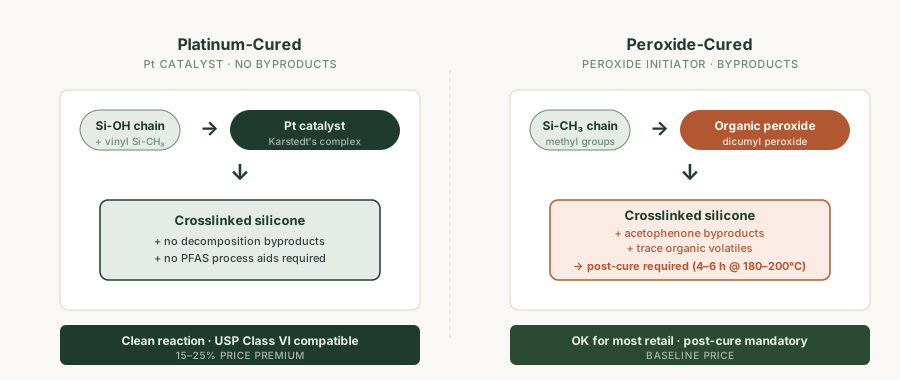
Both materials start as the same silicone polymer (polydimethylsiloxane). The difference is the catalyst that triggers crosslinking — the chemical step that turns the gummy raw material into a solid molded part. The two reactions look like this side-by-side:
The platinum catalyst drives a hydrosilylation reaction with no decomposition byproducts. The peroxide initiator produces acetophenone and trace organic volatiles, which is why post-cure is mandatory on peroxide programs.
| Property | Platinum-Cured | Peroxide-Cured |
|---|---|---|
| Catalyst | Platinum complex (Karstedt's catalyst) | Organic peroxide (typically dicumyl peroxide) |
| Cure byproducts | None (cleaner reaction) | Trace organic decomposition products |
| Post-cure required | Optional (improves final properties) | Required (removes peroxide byproducts) |
| Color of unmolded gum | Highly transparent / water-clear | Slightly off-white / yellowish |
| Organoleptic profile | No first-heat odor | Slight acidic odor on first heating (without post-cure) |
| PFAS process aids | Not required | Sometimes historically used; PFAS-free alternatives now standard |
| USP Class VI / medical grade | Yes (standard offering) | Possible but rare |
| Typical cost premium | 15-25% over peroxide-cure | Baseline |
The chemistry difference matters for one category of applications: where **direct food contact at high temperatures, medical contact, or PFAS-conscious retail positioning** is the spec. For everything else, properly post-cured peroxide-cure silicone is functionally equivalent.
## When platinum-cure is the right answer
- **Premium retail positioning** (top-tier housewares-brand caliber, EU premium retailers, Whole Foods orbit) — PFAS-free documentation is increasingly a hard spec.
- **EU programs** — LFGB §30/31 organic volatile testing is stricter than FDA, and platinum-cure clears it more reliably.
- **Infant feeding, medical-adjacent, or direct-with-hot-food applications** — the cleaner organoleptic profile removes a category of consumer complaints.
- **Multi-year program with brand reputation exposure** — the 15-25% premium is a small insurance policy against a future PFAS-related recall.
## When peroxide-cure with disciplined post-cure is fine
- **Tier 2 retail accessory programs** at typical Home Depot / Lowe's / Wayfair / Bed Bath caliber where the retail price-band doesn't justify the platinum premium.
- **Cost-led programs** where retail price-point is the dominant constraint.
- **Wider housewares retail** at the $15-30 USD price point.
Wetop runs both. We default to platinum-cure for any program where the spec calls for PFAS-free documentation or EU premium retail positioning. Default to peroxide-cure (with mandatory 4-6 hour post-cure and PFAS-free process aids verified) for everything else. The supplier discipline matters more than the cure chemistry choice — peroxide-cure done right is genuinely fine; peroxide-cure done lazily (skipping post-cure, using legacy PFAS process aids) is the actual problem in the wider market.
## Post-cure is the hidden quality variable
Both cure systems benefit from post-cure (4-6 hours at 180-200°C). For peroxide-cure it's mandatory — without it the silicone fails LFGB §30/31 testing and produces a slight first-heat odor that generates retail returns. For platinum-cure it's optional but improves mechanical properties.
The reason cheaper suppliers skip post-cure is straightforward: oven time costs energy and capacity. A 4-hour post-cure cycle on a thousand-piece batch means a thousand-piece batch sitting in an oven for 4 hours that could otherwise be running the next batch. Factories optimizing for cost-per-piece sometimes shortcut this step. We don't. Every batch leaves Wetop post-cured.
## What to demand from any silicone OEM
1. **Cure chemistry specified on the master-batch lot cert** — not "food-grade silicone" without further qualification.
2. **Per-batch FDA 21 CFR 177.2600 + LFGB §30/31 third-party reports** — these test for residual volatiles, which catches under-post-cured product.
3. **PFAS non-detect test report on request** — for any premium-retail program.
4. **Post-cure cycle documentation** (temperature, duration) — should be 180-200°C for 4-6 hours.
5. **Cure-system traceability** to the compound house and the lot it came from.
Suppliers who can't or won't provide these are the ones whose downstream retail audits go badly.
## What we OEM
Wetop runs both cure systems. Default for premium / PFAS-free / EU programs is platinum-cure with USP Class VI compatible compound. Default for mid-tier retail programs is post-cured peroxide-cure with PFAS-free process aids verified per batch. MOQ 500 per SKU on either cure system. Per-batch FDA + LFGB testing. Per-batch PFAS non-detect testing available on request.
Sourcing a program where cure chemistry matters? Email [inquiry@wetopsilicone.com](mailto:inquiry@wetopsilicone.com) with your spec and target retail tier — we'll come back with a cure recommendation and a per-batch documentation packet.