Buyer Guide · commercial intent
Silicone O-Ring Specifying Guide — VMQ, Sizing, Certs
 Buyer Guide
 A silicone o-ring is a molded VMQ elastomer seal that holds -60 °C to +230 °C in air, resists ozone and UV, and clears FDA / LFGB / USP Class VI when the right cure system and post-cure are used. Spec it with AS568 or ISO 3601 sizing, 70 Shore A as default hardness, and 15-25 % radial squeeze inside a 65-80 % filled gland. Choose peroxide-cured for industrial hot-air service, platinum-cured for medical, food-contact, and CIP/SIP steam applications.
Silicone o-rings look like a simple commodity part until an OEM buyer needs to actually spec one — cure system, dash number, gland squeeze, compression set target, and certification bundle all interact, and the wrong combination fails 6 months into service. This guide walks the specification decisions from a factory engineer’s desk: compound chemistry (VMQ vs PVMQ vs HCR), sizing standards (AS568 vs ISO 3601), certification stack (FDA 21 CFR 177.2600 / LFGB / USP Class VI / NSF-61 / ISO 10993), and process choice (compression molding vs HCR injection vs LSR) — plus the MOQ and lead-time economics that separate a real factory quote from an Alibaba listing.
What is a silicone o-ring and when should you spec one over NBR or FKM?
A silicone (VMQ) o-ring is a torus-shaped elastomer seal designated MQ / VMQ / PVMQ / FVMQ per ASTM D1418[^astm-d1418]. Spec it when the service window is hot air, hot water, steam, ozone, UV, or food/medical fluids; skip silicone for mineral oil (use NBR), fuels or brake fluid (use FKM), and aromatic solvents.
Silicone rubber sits in the ASTM D1418 M-family (saturated methylene backbone) with a polysiloxane main chain. The most common grade for o-rings is VMQ — vinyl-methyl silicone, cured with either peroxide or platinum catalyst. PVMQ substitutes some methyl groups with phenyl groups to extend low-temperature performance to -100 °C for aerospace and cryogenic sealing. FVMQ adds fluorine to the side chain for solvent resistance (rare in commodity o-rings, common in fuel-system seals). Compared to nitrile (NBR), silicone gives up oil resistance but wins on heat and ozone; compared to fluoroelastomer (FKM), silicone loses on chemical breadth but costs a third as much and clears food/medical certs FKM cannot.
The classic mistake is choosing silicone by temperature range alone. A -60 °C to +230 °C envelope on the data sheet does not mean the ring will survive that range in your fluid. Silicone swells 20-40 % in mineral oils within 168 hours per ASTM D471, loses tensile strength in concentrated acids, and shows compression-set drift above +200 °C without a proper post-cure. Match the compound to the fluid, not the number.
What temperature and hardness envelope does a silicone o-ring actually hold?
A standard 70 Shore A peroxide-cured VMQ o-ring holds -60 °C to +230 °C in dry air continuously and to +300 °C intermittently. Platinum-cured LSR o-rings hold the same envelope with lower compression set and cleared USP Class VI. In pressurized steam, the practical ceiling drops to +180 °C for long service life above 5,000 hours.
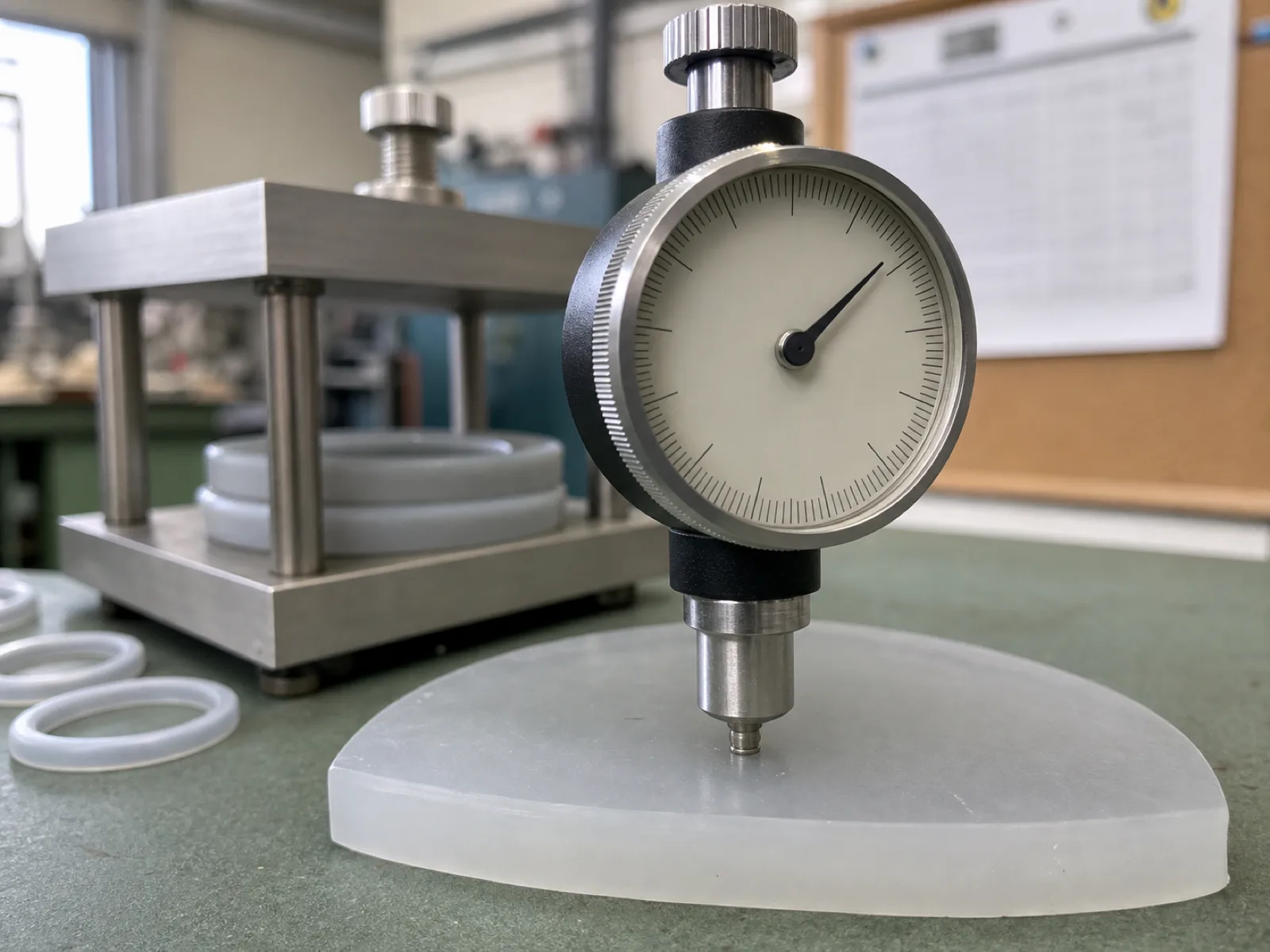
Shore A hardness sets sealing force, extrusion resistance, and compression set behavior. The table below is what our engineering desk uses when a buyer’s drawing calls out “silicone, standard hardness” without a number.
| Shore A | Use case | Compression set (22h/175 °C, ASTM D395-B) | Extrusion resistance |
|---|---|---|---|
| 40-50 | Low-closure covers, gaskets, static seals with generous gland | ≤ 15 % (best) | Poor — extrudes above 3 bar |
| 60-65 | Dynamic seals with low friction demand, food-contact spouts | ≤ 20 % | Fair |
| 70 (default) | General purpose static + light dynamic, 90 % of spec sheets | ≤ 25 % | Good |
| 75-80 | High-differential static seals (> 10 bar), high-vibration | ≤ 30 % | Excellent |
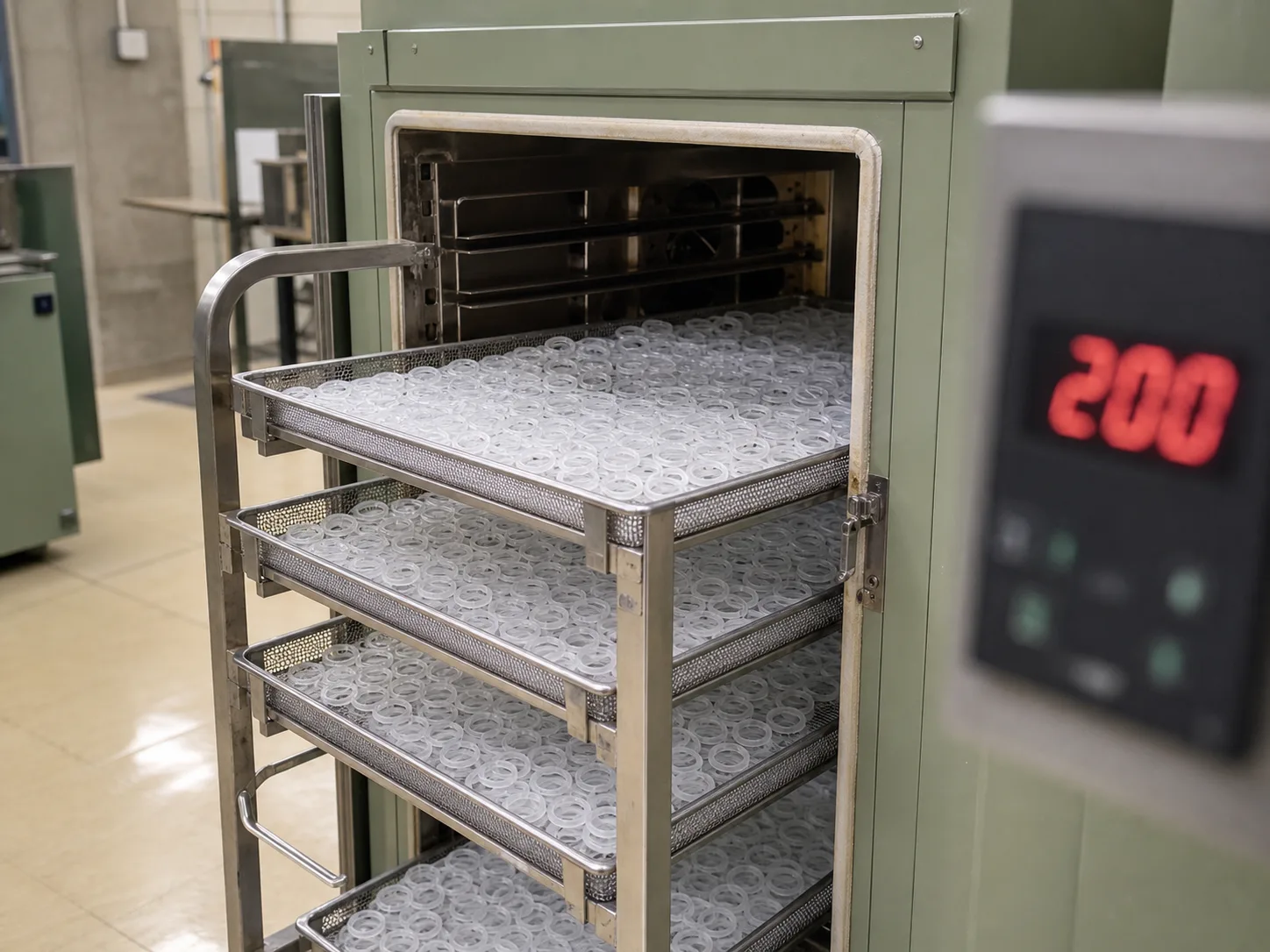
Temperature ceiling depends on cure system and post-cure quality. Peroxide-cured VMQ that skipped the 4-hour 200 °C post-cure will lose 30-40 % of tensile strength within 500 hours at +200 °C because residual peroxide by-products continue to attack the crosslink network. Platinum-cured VMQ shows almost no such drift — the hydrosilylation reaction leaves no volatile by-product to purge.
How do you spec size on a silicone o-ring — AS568 vs ISO 3601?
Spec AS568 dash numbers when the drawing package is US or aerospace (SAE AS568E[^sae-as568]) — dash numbers encode both ID and cross-section. Spec ISO 3601-1[^iso-3601] G- or R-series when the drawing is metric European. Always cite ID × CS in millimeters as backup so the factory can cross-reference across catalogs regardless of the numbering system.
AS568 groups o-rings by cross-section into series: -001 to -050 are 1/32 in CS, -100 series 3/32 in, -200 series 1/8 in, -300 series 3/16 in, -400 series 1/4 in. Inside each series, ID climbs in fixed increments. An AS568-214 is a 1/8 in CS ring at approximately 1.234 in ID — every factory carries the mold. When you deviate from a stocked AS568 size the cost goes up because a new compression cavity plate is cut.
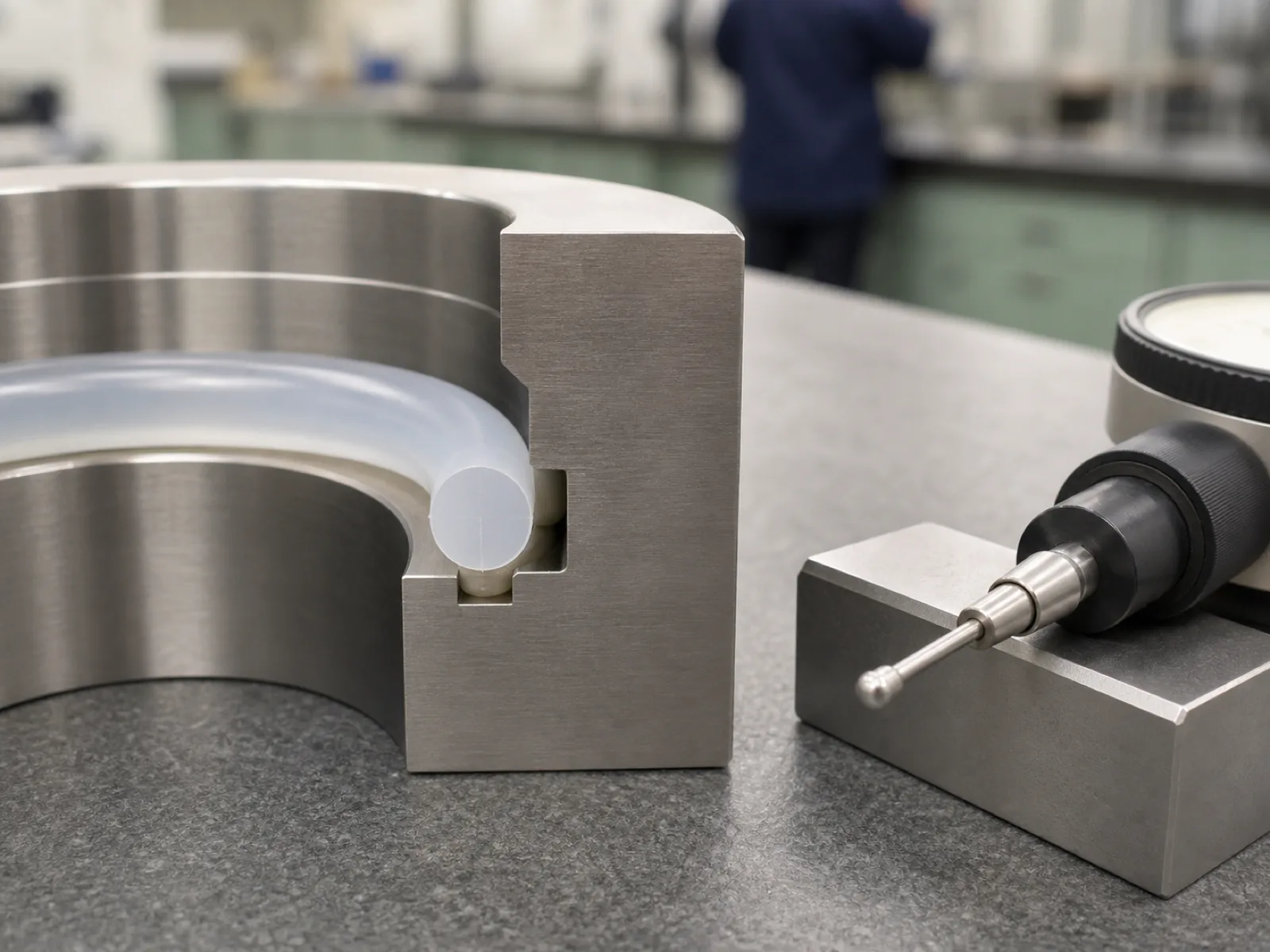
ISO 3601-1 covers the same design space with G-series (general purpose) and R-series (aerospace) tables. The dimensional catalog is denser at metric-friendly IDs (5.0, 10.0, 15.0 mm) than AS568 — for European drawings this is the natural fit. For gland design the two standards agree on 15-30 % radial squeeze and 65-80 % gland fill for static seals; silicone tolerates the higher end of that squeeze range better than NBR because its lower modulus produces less scraping load.
Gland design tips specific to silicone: allow 0.005-0.010 in extra clearance vs NBR on dynamic surfaces because silicone tears easier than nitrile at edge contacts; break gland corners with a 0.02 in radius minimum so the ring does not shear on installation; and specify a chamfer of at least 15° on any part the ring rolls over during assembly.
VMQ vs PVMQ vs HCR vs LSR — which chemistry do you actually spec?
Spec VMQ for 90 % of o-rings — general-purpose vinyl-methyl silicone. Spec PVMQ when the low-temperature service dips below -60 °C. HCR (high-consistency rubber) and LSR (liquid silicone rubber) are process categories, not chemistries — HCR compression-molds, LSR injection-molds. Both can be VMQ or PVMQ chemistry underneath.
The names collapse quickly if you keep the axes straight: chemistry is what’s in the polymer backbone (V, PV, F for vinyl / phenyl / fluoro modifiers to methyl silicone), and form is how it arrives at the press (HCR is a doughy gum you compression-mold; LSR is a two-part pumpable liquid you inject). Most o-ring compounds are VMQ HCR, compression-molded. A high-volume medical o-ring might be VMQ LSR, injection-molded. A cryogenic o-ring for LNG service is PVMQ HCR, compression-molded. Do not confuse designation letters (D1418 chemistry) with process choice.
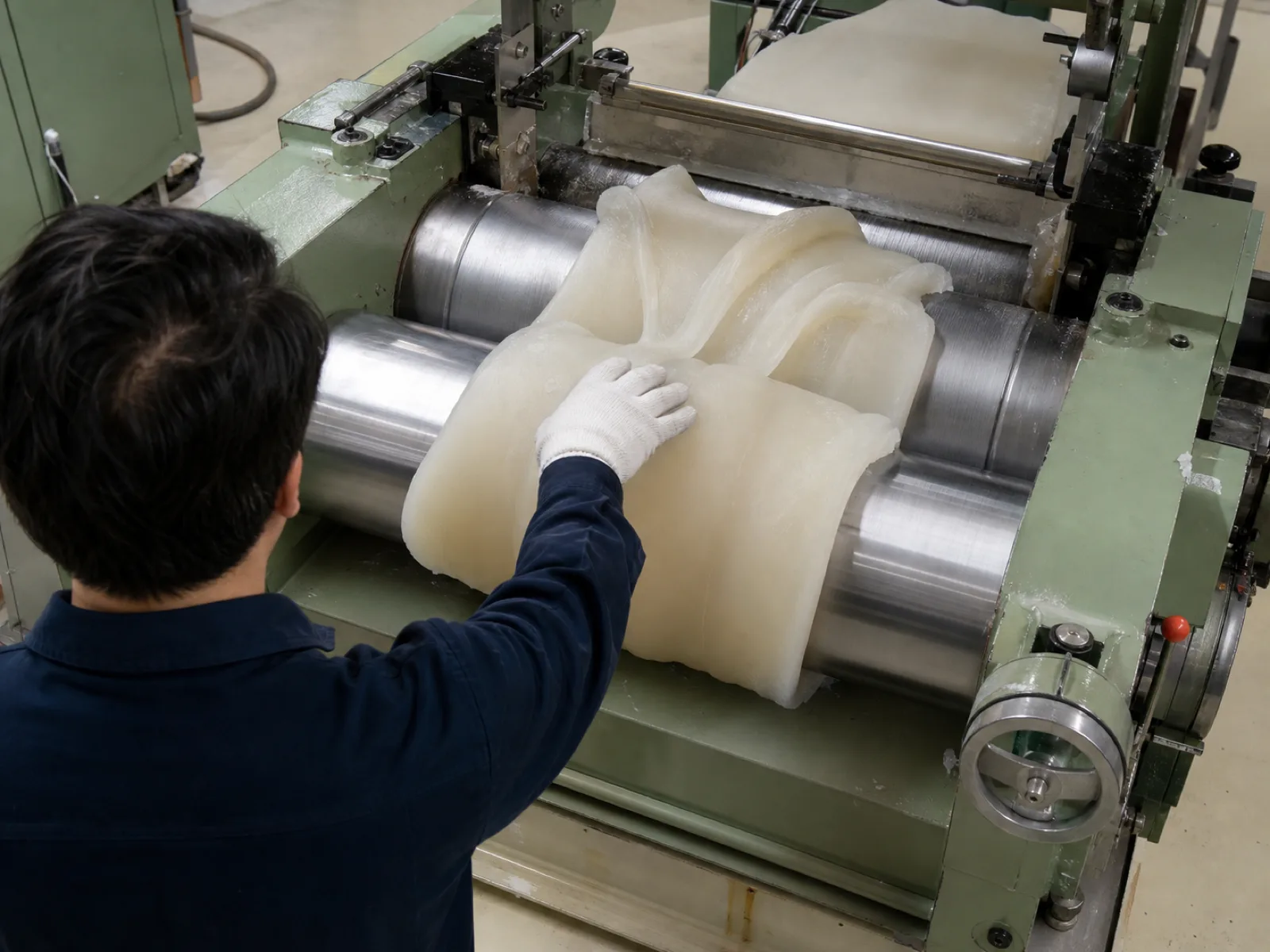
Fillers matter as much as chemistry for o-ring performance. Precipitated silica (untreated) gives higher tensile strength; treated fumed silica gives better dielectric properties and lower water absorption; carbon-black-filled silicone is only used for conductive gaskets, not o-rings. When a data sheet quotes 9 MPa tensile it is a reinforced compound (typically 30-45 phr silica); a gum silicone without silica reinforcement barely hits 3 MPa and will not survive gland installation.
Peroxide-cured vs platinum-cured — which cure system fits the application?
Peroxide-cured VMQ is 15-25 % cheaper and fits industrial hot-air, ozone, and general-purpose seals — but requires a 4-hour post-cure at 200 °C to drop volatiles below 0.5 % and clear FDA / LFGB. Platinum-cured VMQ (Pt-catalyzed hydrosilylation) leaves zero peroxide by-products, clears USP Class VI[^usp-class-vi] out of the mold, and is mandatory for medical, food-contact, and CIP/SIP steam service.
Peroxide crosslinking uses 2,4-dichlorobenzoyl peroxide or dicumyl peroxide to abstract hydrogens from the methyl side chains and form C-C crosslinks. The by-products are chlorobenzoic acid or acetophenone, which stay in the rubber until baked off in the post-cure. Miss the post-cure and those by-products cause the LFGB §30/31 extraction test to fail on the total-organic-carbon fraction. Peroxide-cured compounds smell faintly acidic straight out of the press; a properly post-cured ring is odorless.
Platinum-cured compounds use a Karstedt-type Pt(0) catalyst that drives Si-H + Si-vinyl addition, forming Si-CH₂-CH₂-Si crosslinks with no by-product. Cost adder is 15-25 % on the raw compound, but you skip the post-cure oven step entirely for many applications. Trade-off: platinum catalyst is inhibited by sulfur, tin, amines, and some heavy metals — contamination during compounding kills the cure. This is why platinum-cured lines run in dedicated cells with separate rollers and press platens.
Which certifications do silicone o-rings need — FDA, LFGB, USP, NSF, ISO 10993?
Match the certification to the buyer's regulator: FDA 21 CFR 177.2600[^fda-177-2600] for US food contact, LFGB §30 & §31 (BfR XV[^bfr-xv]) for EU food contact, USP Class VI + ISO 10993-5[^iso-10993-5] for medical, NSF/ANSI 61[^nsf-61] for potable water. A factory that issues per-batch test reports beats one that only shows a nameplate certificate.
Certifications differ in what they test and what they promise. FDA 21 CFR 177.2600 is a materials-plus-extraction rule: the compound formulation must sit on the FDA positive list, and the finished ring must pass 7 hours in n-hexane (fatty extraction) and 24 hours in distilled water (aqueous). Total extractables must fall below 20 mg/inch² and 175 mg/inch² respectively. LFGB uses BfR Recommendation XV as its silicone-specific baseline and layers §30/31 sensory + extraction requirements on top — often the tougher test because volatile content is capped at 0.5 %.
| Certification | Regulatory home | Typical buyer | What the factory must provide |
|---|---|---|---|
| FDA 21 CFR 177.2600 | US FDA | US food & beverage OEM | Compound letter + per-batch extraction test to 3rd-party lab |
| LFGB §30/§31 (BfR XV) | German BfR / EU | EU food-contact brand | Full BfR XV compliance letter + per-batch test |
| USP Class VI | US Pharmacopeia | Medical device OEM | Cytotoxicity + acute systemic + intracutaneous test reports |
| ISO 10993-5 / -10 | ISO | Medical device OEM | In-vitro cytotoxicity + skin sensitization data |
| NSF/ANSI 61 | NSF International | Potable water fitting maker | Third-party audited annual + component listing |
| REACH Annex XVII | EU / ECHA[^echa-reach] | Any EU importer | D4/D5/D6 siloxane content declaration |
The important discipline: a real cert requires per-batch documentation. If a supplier only shows you the compound manufacturer’s certificate (Dow Corning / Wacker / Shin-Etsu letter), that covers the raw material — not your finished o-ring. Ask for the extraction test on the actual batch. Our engineering desk includes this per-batch report in every food-contact silicone o-ring shipment.
Chemical, media, and CIP/SIP compatibility for silicone o-rings
Silicone o-rings excel in hot air, hot water, steam (peroxide-cured with post-cure), ozone, UV, dilute acids and bases, ethanol, and aqueous food fluids. They fail in mineral oils, gasoline, jet fuel, brake fluid, ketones, aromatic and chlorinated solvents, and concentrated inorganic acids. CIP/SIP cycles up to 135 °C are fine on platinum-cured VMQ with proper hardness; peroxide grades work below 121 °C.
A quick decision map when a fluid is not on a standard chart:
- Aqueous, pH 4-10, up to 180 °C → VMQ 70 Shore A works.
- Steam, saturated, up to 135 °C, dairy or pharma → platinum-cured VMQ 70-75 Shore A.
- Vegetable oil, hot, food contact → post-cured peroxide VMQ, FDA + LFGB.
- Mineral oil, hydraulic fluid → not silicone. Spec NBR or HNBR.
- Fuel, aromatic solvent → not silicone. Spec FKM (Viton) or FVMQ if silicone properties are still required.
- Dilute HCl / NaOH at ambient → VMQ works. Concentrated → not silicone.
- Ozone-rich environment (air near HV corona) → VMQ preferred; NBR would crack fast.
For CIP/SIP applications the swap point between peroxide and platinum cure sits around 121 °C: peroxide-cured VMQ retains sealing force well below that; above 121 °C the residual peroxide by-products migrate into hot condensate and both fail the extraction test and accelerate compression-set drift.
Compression, HCR injection, or LSR — how does the process choice hit tooling cost and MOQ?
Compression molding sits at $800-$2,500 mold cost, cycle 3-6 min, MOQ 500-1,000 on stocked sizes and 3,000+ on custom, dimensional ±0.1 mm. HCR injection molding sits at $3k-$8k mold cost, 60-120 s cycle, best for 50k-500k pcs. LSR injection sits at $8k-$25k for hot-runner + cold-deck tooling, 20-45 s cycle, only pencils out above 250k pcs — where the ±0.03 mm tolerance and zero flash pay back the tooling.
| Process | Tooling cost | Cycle time | Tolerance | MOQ economic | Flash |
|---|---|---|---|---|---|
| Compression molding | $800-$2,500 | 3-6 min | ±0.1 mm | 500-100,000 pcs | Visible, needs trim |
| HCR injection | $3,000-$8,000 | 60-120 sec | ±0.05 mm | 50,000-500,000 pcs | Minimal |
| LSR injection | $8,000-$25,000 | 20-45 sec | ±0.03 mm | 250,000+ pcs | Flash-free |
The MOQ mistake we see most often: a buyer with a 5,000-pc annual volume asks for LSR because “medical grade needs LSR.” Not true — HCR compression-molded platinum-cured VMQ clears USP Class VI just as cleanly and doesn’t need $18k of injection tooling. LSR only wins when volume covers the tooling amortization inside the buyer’s target price. Our engineering desk sizes the process to volume, then re-checks tolerance requirements — not the other way around.
The RFQ workflow — how a factory quotes a silicone o-ring the right way
A complete silicone o-ring RFQ includes: ID × CS in mm (plus AS568 or ISO reference), Shore A target, cure system, service temperature and fluid, annual volume, target certifications, and any color match. From that spec a factory quotes tooling cost, per-piece price at 3 volume tiers, sampling lead time (7-15 days on stocked sizes, 25-35 days on new tooling), and the compliance packet list.
The RFQ checklist we hand to buyers when they first engage:
- Size — ID × CS mm, tolerance class, AS568 or ISO 3601 dash if applicable.
- Hardness — Shore A target ±5 (default 70 if unspecified).
- Cure system — peroxide (industrial) or platinum (food / medical / steam).
- Chemistry — VMQ default; PVMQ if service below -60 °C; FVMQ if solvent-facing.
- Service — temperature range, fluid, cycle count, pressure differential.
- Certifications — FDA / LFGB / USP Class VI / NSF-61 / REACH declarations required.
- Volume — annual estimate + first-order quantity.
- Color — translucent default; Pantone-matched adds 10-15 % material cost.
- Packaging — bulk poly bag / individually blistered / medical clean-pack.
- First-article inspection (FAI) — dimensions, hardness, compression set, extraction (if food/medical).
Sampling lead times run 7-15 days on stocked AS568 sizes and 25-35 days when new tooling is cut. Production lead times run 30-45 days after PO on stable orders. Batch documentation — mill sheet, cure record, post-cure log, per-batch extraction where required — accompanies every shipment.
Failure modes and how gland design prevents them
The three failures we see on returned silicone o-rings are compression set (over-squeeze + missed post-cure), ozone cracking (static strain at exposed edge — silicone actually resists this well; the fix is design, not compound), and extrusion (Shore A too soft for the pressure differential). Each has a design fix upstream of the mold.
Compression set is the slow flattening of the ring’s circular cross-section under constant squeeze at temperature. Design fix: hold squeeze at 15-25 % (not more), keep gland fill at 65-80 %, and never stack two rings in one groove. Process fix: never ship a peroxide-cured batch that skipped its 4-hour 200 °C post-cure — the compression-set number will drift within weeks.
Ozone cracking shows up as tiny transverse cracks perpendicular to strain lines. Silicone is inherently ozone-resistant so if you see this, the cause is a stress concentration at the gland edge or a chemistry mismatch (a batch of NBR labeled as silicone — which does happen with low-tier suppliers). Confirm the material with FTIR or a dielectric constant check.
Extrusion is the ring squeezing into the housing clearance gap under pressure. Above 10 bar differential a 70 Shore A ring may extrude; move to 80 Shore A or add a PTFE backup ring. Below 0 °C silicone stiffens and extrusion resistance improves — but so does the risk of leak on the low side.
Ready to spec your silicone o-ring program?
Bring the RFQ checklist above and the engineering desk will size the compound, cure system, and process against your volume in one round of conversation. We hold ISO 9001 compliance for the quality management system and issue per-batch FDA 21 CFR 177.2600, LFGB §30/31, and USP Class VI documentation on food and medical programs — the paperwork buyers actually need, not a nameplate certificate.
Talk to the engineering desk — or read our related guides on platinum-cured vs peroxide-cured silicone, the full silicone temperature range explainer, and FDA vs LFGB certification for silicone.
FAQ
-
What temperature range can a silicone o-ring actually handle?
Standard VMQ silicone o-rings hold -60 °C to +230 °C in dry air continuously. Specialty PVMQ (phenyl-modified) grades extend the low end to -100 °C for aerospace and cryogenic seals. Peroxide-cured VMQ can take intermittent spikes to +300 °C. In steam or hot water, the practical ceiling drops to +180 °C for long service life.
-
Do silicone o-rings work with oil, fuel, or hydraulic fluid?
No — silicone swells 20-40 % in mineral oils, fuels, and most hydraulic fluids and loses seal integrity within hours. Spec NBR for mineral oil or FKM (Viton) for fuels, brake fluid, and aromatic solvents. Silicone wins on hot air, hot water, steam (peroxide grades), ozone, UV, dilute acids/bases, and food or medical fluids.
-
How do I spec an AS568 dash number for a silicone o-ring?
AS568 dash numbers encode inner diameter and cross-section: -001 to -050 are 1/32 in cross-section, -100 series 3/32 in, -200 series 1/8 in, -300 series 3/16 in, -400 series 1/4 in. Cite ID × CS in the RFQ (e.g., 25.0 × 3.0 mm) and note AS568-214 if you want direct catalog interchange. For metric-only markets use ISO 3601-1 G-series or R-series.
-
What Shore A hardness should I choose for a silicone o-ring?
Standard is 70 Shore A — best balance of sealing force, compression set, and durability across most gland designs. Drop to 50 Shore A for low-closure-force covers, low-friction dynamic seals, and thin-wall housings. Raise to 80 Shore A for high-pressure differential seals (>10 bar) or where extrusion into the gap becomes a risk. Softer silicone shows lower compression set at low temperatures; harder silicone resists extrusion but transmits more force.
-
Peroxide-cured or platinum-cured silicone o-rings — which do I need?
Peroxide-cured (dicumyl peroxide or 2,4-dichlorobenzoyl peroxide catalyst) is 15-25 % cheaper and works fine for industrial hot-air, ozone, and general purpose seals. It requires a 4-hour post-cure at 200 °C to drive volatiles below 0.5 % and to unlock LFGB §30/31 and FDA extraction compliance. Platinum-cured (Pt-catalyzed hydrosilylation) is required for USP Class VI biocompatibility, low-extractable food contact, medical, and CIP/SIP steam service — it cures with zero peroxide by-products and passes ISO 10993-5 cytotoxicity out of the mold.
-
What's the minimum order quantity for a custom silicone o-ring?
For a stocked AS568 size in standard 70 Shore A translucent VMQ, MOQ is 500-1,000 pcs — the same compound the factory already runs. For a custom color, custom hardness, or a non-standard cross-section that needs a new compression mold, MOQ jumps to 3,000-10,000 pcs to amortize the $800-$2,500 aluminum mold. LSR injection tooling only pencils out above 250,000 pcs per size.
-
How do I prevent compression set failure on a silicone o-ring?
Compression set is the permanent deformation that shows up after prolonged squeeze at temperature. To keep it below 25 % after 22 hours at 175 °C (ASTM D395 Method B), spec a post-cured peroxide compound or a platinum-cured grade — the post-cure step drives out volatiles that otherwise plasticize the crosslink network. Design-side: keep squeeze at 15-25 % (not more), fill the gland to 65-80 % (not 100 %), and avoid stacking two rings in the same groove.
-
Which certifications does a food-contact silicone o-ring need?
FDA 21 CFR 177.2600 (rubber articles for repeated use, aqueous + fatty extraction) is the US floor. LFGB §30 & §31 (BfR XV) is the EU equivalent and often the tougher test — factories must issue per-batch extraction reports to a certified lab. For dairy, pharma, and BPT (bulk pharma transfer) tubing, add USP Class VI and ISO 10993-5. For potable water spec NSF/ANSI 61. Trade-only claims ("food-safe") without a per-batch test report are not a real certification.
-
Compression molding, injection molding, or LSR for silicone o-rings — how do I choose?
Compression molding: lowest tooling cost ($800-$2,500 per multi-cavity mold), best for 500-100,000 pcs, cycle 3-6 min per shot, ±0.1 mm tolerance, some visible flash. Injection molding of HCR: mid tooling ($3k-$8k), better tolerance ±0.05 mm, 60-120 sec cycle, cost-effective 50k-500k. LSR (liquid silicone rubber) injection: highest tooling ($8k-$25k for hot-runner + cold-deck), fully automated, ±0.03 mm, 20-45 sec cycle, only pencils out above 250k pcs per size.
-
Why is my silicone o-ring cracking or hardening in service?
Three common failure modes. (1) Ozone cracking — surface cracks perpendicular to strain, means silicone wasn't the issue but the design allowed static stress at an ozone-exposed edge; move to peroxide-cured VMQ, which is inherently ozone-resistant. (2) Thermal aging / hardening — usually a peroxide grade that skipped post-cure; require the 4-hour 200 °C post-cure on the process sheet. (3) Compression set + gland over-fill — the ring can't recover; drop hardness one step and re-check squeeze.
References
Authoritative sources cited in this guide
- ASTM International. ASTM D1418-22 — Standard Practice for Rubber and Rubber Latices — Nomenclature. https://www.astm.org/d1418-22.html — Defines VMQ, PVMQ, FVMQ, and other silicone rubber designations that appear on compound data sheets and RFQ specs.
- ASTM International. ASTM D395-18 — Standard Test Methods for Rubber Property — Compression Set. https://www.astm.org/d0395-18.html — Method B (constant deflection, 22 h at 175 °C) is the standard compression-set test for silicone o-rings.
- International Organization for Standardization. ISO 3601-1:2012 — Fluid power systems — O-rings — Inside diameters, cross-sections, tolerances and designation codes. https://www.iso.org/standards.html — Metric o-ring sizing standard; G-series (general purpose) and R-series (aerospace) tables are the counterpart to AS568.
- SAE International. SAE AS568E — Aerospace Size Standard for O-rings. https://www.sae.org/standards/content/as568e/ — The dash-number sizing standard (-001 to -932) referenced by every US catalog and every AS/military fluid-power drawing.
- US Food and Drug Administration. 21 CFR 177.2600 — Rubber articles intended for repeated use. https://www.ecfr.gov/current/title-21/chapter-I/subchapter-B/part-177/subpart-C/section-177.2600 — US food-contact regulation defining aqueous and fatty extraction limits for silicone rubber articles including o-rings.
- United States Pharmacopeia. USP <88> Biological Reactivity Tests, In Vivo — Class VI. https://www.usp.org/harmonization-standards/pdg/excipients/plastic-materials — USP Class VI is the pharmaceutical-grade biocompatibility test tier used to qualify platinum-cured silicone o-rings for medical device seals.
- International Organization for Standardization. ISO 10993-5:2009 — Biological evaluation of medical devices — Tests for in vitro cytotoxicity. https://www.iso.org/standard/36406.html — Cytotoxicity test required for medical-device silicone components including implantable and long-term contact o-rings.
- NSF International (ANSI-accredited). NSF/ANSI 61 — Drinking Water System Components — Health Effects. https://www.ecfr.gov/current/title-21/chapter-I/subchapter-B/part-177 — Required certification for silicone o-rings used in potable water systems in the US and Canada.
- German Federal Institute for Risk Assessment (BfR). BfR Recommendation XV — Silicones. https://www.bfr.bund.de/en/bfr_recommendations_on_food_contact_materials-243.html — Underlies LFGB §30/31 compliance for silicone food-contact articles in the EU market; caps volatile content and total extractables.
- European Chemicals Agency. REACH Annex XVII — Restrictions on manufacture, placing on the market and use. https://eur-lex.europa.eu/legal-content/EN/TXT/?uri=CELEX%3A32006R1907 — Governs D4/D5/D6 siloxane and other restricted substances relevant to silicone o-ring compound formulation and export to the EU.
Start a custom program
Send a brief. Get an engineer’s reply in one business day.
Every Wetop program is tooled from a customer’s specification. Send a CAD file (STEP · IGES · DWG) or a written brief and we’ll reply with a mold cost estimate, price brackets at MOQ 500 / 1,000 / 5,000, and any engineering questions.