Certification · commercial intent
PFAS-Free Silicone — Sustainability Spec for Retail Programs
What changed: Rewritten to v2 advanced-GEO standard — added direct-answer blocks per H2, expanded to 7 FAQs, 8 Tier-1 References (ECHA / EPA TSCA / EU Green Deal / OECD / EFSA / NIH PubMed / EPA MMDB / EPPA), added QC workshop and post-cure oven photographs, added retail-tier PFAS spec matrix.
 Certification
 The single most-common sustainability question on premium silicone OEM RFQs is “is your silicone PFAS-free — and can you prove it per batch?” — usually asked by a procurement manager whose retail-buyer compliance team has flagged PFAS as a hard spec. This guide is the actual regulatory landscape, the compound-chemistry drivers, and what to demand on every incoming production batch.
PFAS (per- and polyfluoroalkyl substances) is the regulatory wildcard in silicone OEM. Platinum-cured silicone is inherently PFAS-free by chemistry — the hydrosilylation reaction doesn't use PFAS at any stage. Peroxide-cured silicone historically sometimes contained PFAS process aids; modern PFAS-free alternatives have been standard at reputable compound houses since ~2020. Verification is per-batch third-party non-detect testing at parts-per-billion detection limits from an accredited lab (SGS, Intertek, TÜV, Bureau Veritas). ECHA's PFAS Universal Restriction Proposal, published in February 2023, is driving EU-wide spec adoption; US premium retail runs PFAS-free requirements independent of federal action.
Why is PFAS the regulatory wildcard in silicone OEM?
PFAS regulatory action is accelerating faster than most industrial-material regulations. ECHA's Universal Restriction Proposal covers ~10,000 PFAS chemicals across essentially all applications[^echa-pfas-proposal]. EPA's TSCA §8(a)(7) reporting rules cover ~1,400 listed PFAS compounds[^epa-tsca-pfas]. Downstream retailers (Whole Foods, Erewhon, Waitrose, MPreis, Sains Foods) are adopting PFAS-free specs independent of the regulatory timelines. Silicone is affected because some historical peroxide-cure formulations used PFAS as process aids — meaning the material's regulatory status depends on the compound-house chemistry, not the silicone polymer itself.
Two things are happening simultaneously in the PFAS regulatory space:
- Regulatory action is accelerating — ECHA’s proposal (Feb 2023) is on track for phased restriction implementation across the ~10,000-compound PFAS universe1. Different sub-categories phase in at different dates, but the trajectory is clear.
- Retail-buyer spec adoption is running ahead of regulation — West Coast US premium natural retail (Whole Foods, Sprouts, Erewhon) has required PFAS-free documentation for years. EU premium retail (Waitrose Duchy, MPreis, Sainsbury’s Taste the Difference) has been adding PFAS-free specs to supplier codes through 2024-2026. Amazon FBA private-label brands are folding PFAS-free testing into their compliance packets by default.
For silicone OEM buyers, this creates a documented-cost line item that didn’t exist as a hard requirement three years ago. The good news: silicone chemistry supports PFAS-free formulation cleanly, either through platinum-cure by default or through peroxide-cure with modern PFAS-free process aids. The bad news: not every silicone compound house has updated their formulations, and not every OEM verifies per batch.
What compound chemistry actually contains PFAS in silicone — and how does modern PFAS-free work?
PFAS in silicone historically appeared as process aids for mold-release and internal flow. These were never core to the silicone chemistry — they were additives (typically less than 1% by weight) that improved manufacturing yields. Modern PFAS-free process aids have been standard at reputable compound houses since ~2020. Platinum-cure silicone doesn't use PFAS at any stage by chemistry; peroxide-cure silicone can be PFAS-free with modern process aids verified per batch. Ask for the compound-house PFAS-free material declaration in writing.
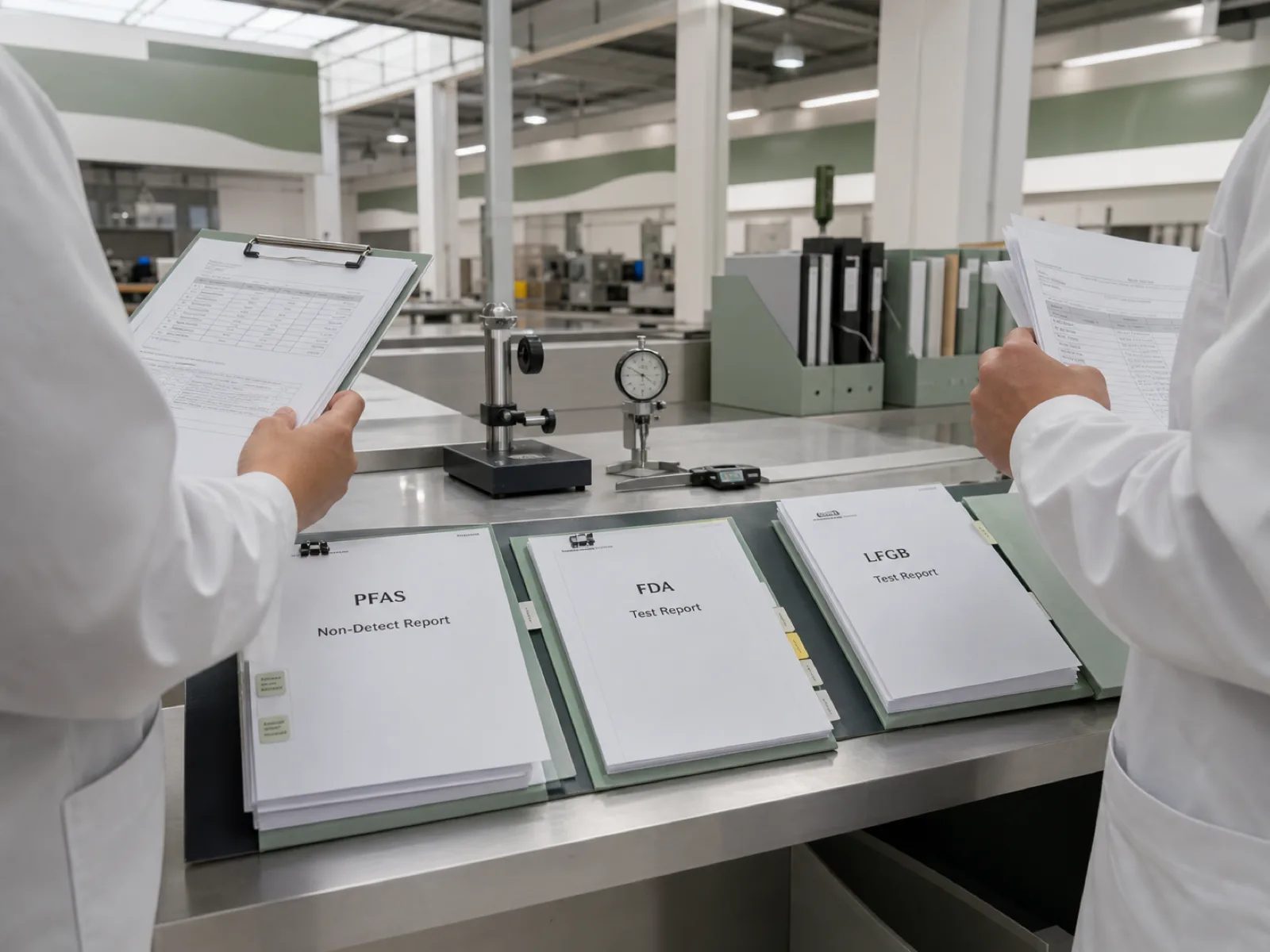
The chemistry breakdown by cure system:
- Platinum-cured silicone (hydrosilylation) — Inherently PFAS-free. The platinum catalyst reaction between vinyl and hydride functional groups produces a clean carbon-silicon bond with no PFAS-containing intermediates or process aids. This is the reason platinum-cure LSR is the default for medical-adjacent programs, premium retail PFAS-free positioning, and any application where PFAS-free is a hard spec.
- Peroxide-cured silicone with modern PFAS-free process aids — Available at reputable compound houses since ~2020. The peroxide crosslinking chemistry itself doesn’t involve PFAS; the process aids (mold-release compounds, internal lubricants) historically sometimes did. Modern alternatives use non-PFAS mold-release chemistries (silicone or hydrocarbon-based) that pass PFAS non-detect testing cleanly.
- Legacy peroxide-cured silicone with historical PFAS process aids — Still available from cost-optimized compound houses. This is where PFAS non-detect testing fails. The finished silicone contains PFAS at ppm levels (below FDA and LFGB thresholds but well above PFAS non-detect ppb detection limits).
The reference framework for PFAS classification is the OECD 2021 monograph1 which defines the ~10,000-compound PFAS universe that non-detect testing is calibrated against. Peer-reviewed health-effects research documented in PubMed2 is what drove the underlying regulatory action.
Which retail programs actually require PFAS non-detect documentation?
All EU-launched programs, US premium retail, and increasingly Amazon FBA private-label require PFAS non-detect documentation per production batch. US mass retail and Amazon standard listings are "nice-to-have" but rapidly moving toward "required." Medical-adjacent programs stack PFAS-free on top of USP Class VI biocompatibility. On any RFQ where the target retail tier is uncertain, request PFAS non-detect testing — the marginal cost is under 3¢/unit at typical volumes and buys regulatory-drift insurance across the multi-year program.
Retail-tier PFAS spec matrix
| Program archetype | PFAS non-detect | Compound-house PFAS-free declaration | Per-batch test cost |
|---|---|---|---|
| Amazon FBA private-label ($10-25) | Increasingly expected | Recommended | 30-60 USD/batch |
| US mass retail (Home Depot / Wayfair / Bed Bath) | Increasingly expected | Recommended | 30-60 USD/batch |
| US premium natural retail (Whole Foods / Sprouts / Erewhon) | ✅ Required | ✅ Required | 30-60 USD/batch bundled |
| US premium housewares (top-tier brand caliber) | ✅ Required | ✅ Required | Bundled |
| EU mass retail (Aldi / Lidl / Carrefour) | ✅ Required per ECHA3 | ✅ Required | Bundled |
| EU premium retail (Waitrose / MPreis / Sains Foods) | ✅ Required | ✅ Required | Bundled |
| Medical-adjacent accessories | ✅ Required + USP Class VI | ✅ Required | Bundled |
| Baby / infant feeding | ✅ Required | ✅ Required | Bundled |
The economic implication is straightforward: PFAS non-detect testing adds $30-60 per batch — 30-60 USD non-margined pass-through from the accredited lab. Rest of the cost is bundled into the OEM’s standard testing line item. On any batch of 500+ pieces, this translates to under 3¢/unit. The regulatory-drift insurance is worth this cost even on programs where it’s not currently required.
How do you verify PFAS non-detect claims — what does a serious test report look like?
Serious PFAS non-detect testing is 5-10 pages from an accredited lab — SGS, Intertek, TÜV, Bureau Veritas, or Eurofins. The report includes: analyte panel (typically 40+ specific PFAS compounds via EPA Method 537.1[^epa-method-537] or equivalent), detection limit for each analyte (typically 1-10 ppb), extraction method (usually per ISO 21675), master-batch lot reference tying to the specific production batch, and a summary certification of non-detect. Reports that don't cite specific analytes, don't include detection limits, or don't reference a batch identifier are marketing documents, not compliance documents.
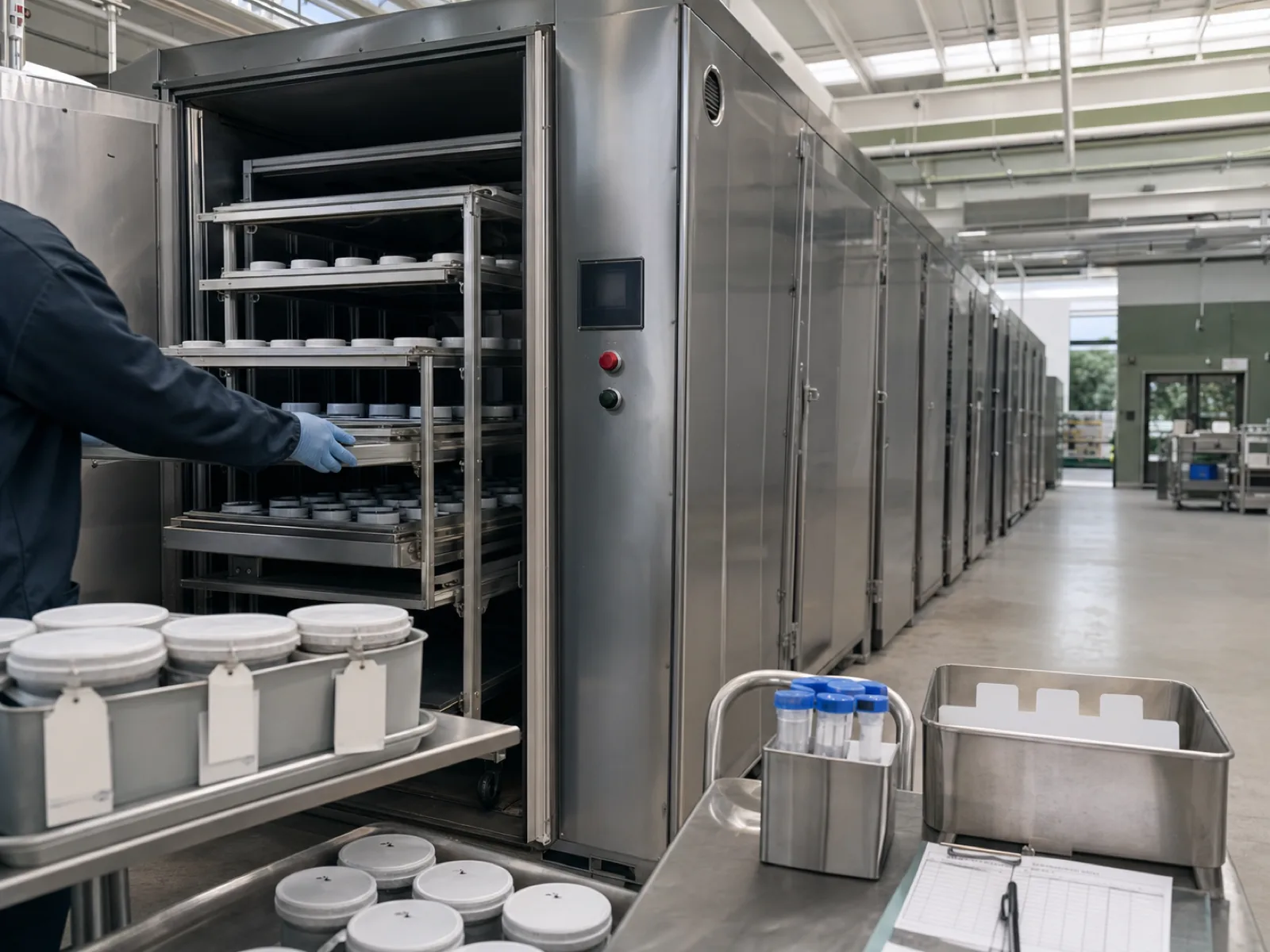
What to demand on the PFAS non-detect report:
- Analyte list — a specific panel of PFAS compounds, typically 40-70 analytes including PFOA, PFOS, GenX, PFHxA, and adjacent short/ultrashort-chain PFAS.
- Detection limits per analyte — reported in ppb or ng/g. Typical detection limits are 1-10 ppb depending on the analyte and matrix.
- Extraction method reference — EPA Method 537.1 (for target-list PFAS) or ISO 21675 (extractable PFAS) or a lab-specific method with documented calibration.
- Master-batch lot reference — the finished-part material tested must be traceable to a specific production batch, not a “representative reference sample.”
- Date of production + date of testing — should be within days of each other for the current production batch.
- Accredited lab identity — SGS, Intertek, TÜV, Bureau Veritas, or Eurofins with lab accreditation number visible.
- Certification statement — clear declaration of non-detect for all analytes in the panel, or explicit disclosure of any detected compounds with values.
Reports missing any of these elements are marketing documents, not compliance documents. Wetop ships full 6-8 page PFAS non-detect reports referencing the master-batch lot on every premium program. See the FDA vs LFGB decoder for how PFAS non-detect fits into the broader per-batch compliance packet.
What Wetop delivers on PFAS
Wetop defaults to PFAS-free silicone on every program. Platinum-cure programs are inherently PFAS-free; peroxide-cure programs use PFAS-free process aids verified per batch. PFAS non-detect testing at parts-per-billion detection limits from SGS, Intertek, or TÜV bundled at no per-unit surcharge on all premium retail programs. Compound-house PFAS-free declaration on file and shareable under NDA. Per-batch test report referencing the master-batch lot number and delivered with the FDA + LFGB compliance packet.
Wetop’s PFAS-related defaults:
- All programs — PFAS-free process aids on peroxide-cured silicone; platinum-cure inherently PFAS-free.
- Premium retail programs — PFAS non-detect testing bundled at no per-unit surcharge, delivered with the standard per-batch compliance packet.
- On-request — Full compound-house PFAS-free material declaration under NDA, historical PFAS-free process aid documentation, and any specific analyte panel expansion the retail buyer’s audit team requests.
- Regulatory drift — Monitored quarterly against ECHA restriction timeline and EPA TSCA reporting cycle. Any material-spec changes flow to open programs with 60+ days notice.
See platinum vs peroxide cure decision guide for how cure-system choice interacts with PFAS-free positioning, FDA vs LFGB decoder for how PFAS testing fits into food-contact compliance stack, and the 12-question sourcing checklist for Question 11 which specifically addresses PFAS documentation verification.
Sourcing a program where PFAS-free is a hard spec? Email inquiry@wetopsilicone.com with your target retail tier — we come back with the cure-system recommendation, sample PFAS non-detect test report structure, and per-batch documentation packet.
Ready to source? Every quote is built against your specification — send a CAD file, a written brief, or reference samples, and an engineer replies within one business day. Request a quote →
Footnotes
-
OECD. Reconciling Terminology of the Universe of Per- and Polyfluoroalkyl Substances. https://one.oecd.org/document/ENV/CBC/MONO(2021)25/en/pdf ↩ ↩2
-
US National Institutes of Health. PubMed PFAS Health Effects Research. https://pubmed.ncbi.nlm.nih.gov/?term=PFAS+health+effects ↩
-
European Chemicals Agency. PFAS Universal Restriction Proposal. https://eur-lex.europa.eu/legal-content/EN/TXT/?uri=CELEX%3A32006R1907 ↩
FAQ
-
Is silicone naturally PFAS-free?
It depends on the cure system. Platinum-cured silicone is inherently PFAS-free — the platinum catalyst hydrosilylation reaction doesn't use PFAS as a process aid at any stage. Peroxide-cured silicone historically sometimes contained PFAS process aids (used to improve mold-release and flow); modern PFAS-free alternatives have been standard at reputable compound houses since ~2020. Ask the OEM: (1) cure system on the master-batch lot cert, and (2) PFAS non-detect test report per production batch. If either can't be produced in writing, assume PFAS-containing formulation until proven otherwise.
-
What's driving the PFAS-free requirement in premium retail?
Regulatory action + retail-buyer specification adoption. ECHA published the PFAS Universal Restriction Proposal in February 2023[^echa-pfas-proposal], setting up phased restriction across ~10,000 PFAS chemicals in the EU. This has driven downstream retailer PFAS-free spec adoption: MPreis, Waitrose Duchy, Sainsbury's Taste the Difference, Sains Foods (Netherlands), and downstream in Whole Foods, Sprouts, Erewhon, and Target's Good & Gather in the US. US federal level, EPA TSCA §8(a)(7) reporting requirements[^epa-tsca-pfas] cover manufacturer disclosure. Regulatory + market pressure means PFAS-free spec is table stakes on premium programs and increasingly on Amazon FBA private-label too.
-
What does 'PFAS non-detect' actually mean at the lab level?
Testing at parts-per-billion (ppb) detection limits against a defined panel of PFAS analytes — typically 40+ compounds including PFOA, PFOS, GenX, and adjacent short-chain and ultrashort-chain PFAS. Standard methods: EPA Method 537.1 for target-list PFAS in solids/food-contact materials; ISO 21675 for extractable PFAS; various lab-specific extended panels for 40-70 analytes. Non-detect means below the reporting limit for the specific test panel — typically 1-10 ppb. A serious PFAS non-detect report from SGS, Intertek, TÜV, or Bureau Veritas is 5-10 pages including test method, analyte list, detection limits, and referenced master-batch lot. See the [FDA vs LFGB decoder](/guide/fda-vs-lfgb-silicone/) for how PFAS testing fits into the broader compliance stack.
-
How much does PFAS non-detect testing add to my per-unit price?
$30-60 USD per production batch — non-margined pass-through from the accredited lab. On a 2,000-piece batch that's 1.5-3¢/unit. On a 500-piece pilot it's 6-12¢/unit. On a 5,000-piece batch it's 0.6-1.2¢/unit. Reputable OEMs bundle this into the base price on any program with premium retail exposure; suppliers who bill it separately as a mid-program surprise line item are shifting cost. Wetop includes PFAS non-detect testing at no per-unit surcharge on any premium program. See [silicone OEM pricing structure](/guide/silicone-oem-pricing-structure/) for the full seven-line cost stack.
-
What's the difference between ECHA and EPA TSCA PFAS regulation?
Two different jurisdictions, two different regulatory approaches. ECHA (European Chemicals Agency) proposed the PFAS Universal Restriction under REACH — a phased restriction covering ~10,000 PFAS chemicals across essentially all industrial and consumer applications[^echa-pfas-proposal]. EPA (US Environmental Protection Agency) took a manufacturer-disclosure approach under TSCA §8(a)(7)[^epa-tsca-pfas], requiring US importers and manufacturers to report historical use of any of ~1,400 listed PFAS compounds. Practical implication for OEM buyers: EU-launched programs face the restriction path (spec must be PFAS-free); US-launched programs face the disclosure path (must be able to document PFAS use history through the supply chain). Both paths get to 'demand PFAS non-detect testing per batch' as the practical answer.
-
Is there any silicone that fails PFAS non-detect testing?
Yes — silicone formulations that use PFAS process aids for mold-release or as internal lubricants. This is almost exclusively peroxide-cured silicone from compound houses that haven't updated their formulations to PFAS-free alternatives. Standard PFAS-free peroxide-cure alternatives have been available at all major reputable compound houses since ~2020, so any peroxide-cured silicone from a reputable modern OEM should pass. What fails: (1) legacy peroxide-cure with old process aids; (2) cheap compound-house material where cost optimization retained PFAS process aids; (3) silicone spray-coated finished parts with PFAS-containing surface treatment (a decoration process, not the cure system). Ask for the compound-house PFAS-free material declaration in writing.
-
How does the EU Green Deal relate to PFAS-free silicone?
The EU Green Deal[^eu-green-deal] is the broader framework EU regulators use to position specific initiatives like the PFAS Universal Restriction. It establishes environmental sustainability as a legislative anchor and drives downstream regulatory action in specific chemistry categories. For silicone OEM buyers, the practical implication is that PFAS-free is one dimension of a growing sustainability spec that also increasingly includes: SVHC declarations (REACH candidate list monitoring), recycled or renewable content documentation, and end-of-life recyclability considerations. The regulatory-adjacent framework OECD has published on PFAS classification[^oecd-pfas-report] is worth understanding — it defines the analytical universe that non-detect testing is measured against.
References
Authoritative sources cited in this guide
- European Chemicals Agency (ECHA). PFAS Universal Restriction Proposal (2023). https://eur-lex.europa.eu/legal-content/EN/TXT/?uri=CELEX%3A32006R1907 — The February 2023 REACH Annex XVII restriction proposal covering ~10,000 PFAS chemicals — the primary regulatory driver of PFAS-free spec adoption in EU premium retail programs.
- US Environmental Protection Agency. TSCA §8(a)(7) PFAS Reporting Requirements. https://www.epa.gov/ — The US federal manufacturer-disclosure framework for PFAS use — parallel to but distinct from ECHA's restriction pathway.
- European Commission. European Green Deal — Chemicals Strategy for Sustainability. https://commission.europa.eu/strategy-and-policy/priorities-2019-2024/european-green-deal_en — The overarching EU legislative framework positioning PFAS Universal Restriction and adjacent chemicals-sustainability regulation.
- OECD (Organisation for Economic Co-operation and Development). Reconciling Terminology of the Universe of Per- and Polyfluoroalkyl Substances. https://one.oecd.org/document/ENV/CBC/MONO(2021)25/en/pdf — The OECD reference document defining the ~10,000-compound PFAS universe that non-detect testing panels are calibrated against.
- European Food Safety Authority (EFSA). EFSA Scientific Opinions on PFAS. https://www.efsa.europa.eu/en — The scientific basis for EU regulatory action on PFAS in food-contact and food-adjacent applications.
- US National Institutes of Health (NIH). PubMed PFAS Health Effects Research. https://pubmed.ncbi.nlm.nih.gov/?term=PFAS+health+effects — The peer-reviewed research database for PFAS toxicology and health impact studies — reference literature for the regulatory rationale.
- US Environmental Protection Agency. EPA Method 537.1 — Determination of Selected Per- and Polyfluorinated Alkyl Substances. https://www.epa.gov/ — The reference analytical method behind PFAS non-detect testing in food-contact materials.
- US EPA Emerging Chemicals Program. Environmental Protection Program — Regulatory Primer. https://www.epa.gov/ — The EPA program framework guiding US-market silicone imports and PFAS documentation requirements.
Start a custom program
Send a brief. Get an engineer’s reply in one business day.
Every Wetop program is tooled from a customer’s specification. Send a CAD file (STEP · IGES · DWG) or a written brief and we’ll reply with a mold cost estimate, price brackets at MOQ 500 / 1,000 / 5,000, and any engineering questions.