Buyer Guide · commercial intent
Silicone Slow Feeder OEM Guide — Engineering Brief
 Buyer Guide
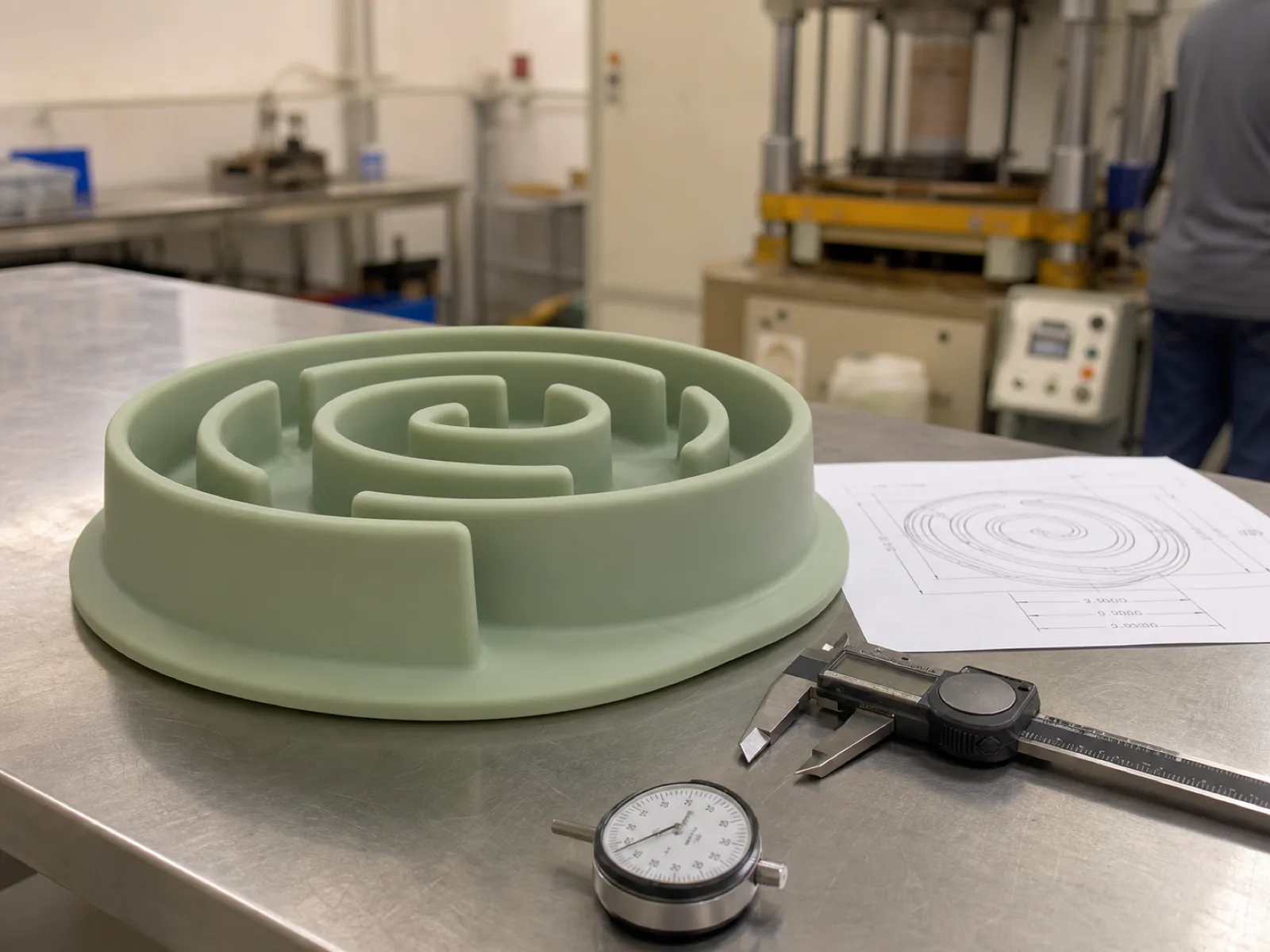
 A silicone slow feeder is a one-piece platinum-cured silicone bowl or mat with raised maze ridges that force a dog or cat to work kibble out channel by channel, extending meal duration 5-10x versus a flat bowl. For OEM buyers, the useful specification is not "food-grade silicone" — it is a defensible packet of FDA 21 CFR 177.2600 test data, an ASTM D2240 Shore A hardness call-out for the suction base, and a ridge geometry engineered to the target species and kibble size. Wetop molds this category on our compression line in Dongguan with a 500-unit MOQ, per-lot test reports, and a 4-6 hour post-cure that is the single non-negotiable step separating a shippable slow feeder from a returnable one.
Slow-feeder listings on Chewy, Petco, and Amazon Pet are one of the fastest-growing silicone kitchen-adjacent categories, and the top pages selling them share three problems: they hide the cure chemistry, they cite no third-party test data, and they describe ridge geometry qualitatively when a serious pet brand needs measurable specs to defend the SKU to a category buyer. This brief is written for the sourcing lead, product engineer, or founder building or refreshing a private-label lineup — not for the pet owner comparing bowls at retail. Every claim below carries a number, a standard reference, or a process spec that Wetop’s engineering desk can hold against a purchase order.
Why does a silicone slow feeder actually reduce bloat and choking risk?
Peer-reviewed veterinary work identifies fast eating as a modifiable risk factor for gastric dilatation-volvulus (GDV), especially in deep-chested large breeds[^nih-gdv][^avma-gdv]. A silicone slow feeder does not treat GDV — it addresses one input by forcing the dog to work kibble out ridge by ridge, typically stretching a 60-second meal to 5-10 minutes.
The mechanism is mechanical, not pharmacological. A flat bowl lets a motivated dog inhale kibble in single mouthfuls; a slow feeder replaces those mouthfuls with a sequence of tongue-and-lip scoops that pull kibble out of narrow channels one to three pieces at a time. The AVMA’s clinical guidance for owners of at-risk breeds explicitly includes slowing eating rate as a practical intervention alongside multiple small meals and post-meal rest1. For an OEM buyer, the relevant point is that the claim is defensible with citations — provided the ridge geometry actually delivers the slowdown. That geometry is the next section.
Cats are a smaller but growing subsegment. Feline listings on Amazon and Chewy tend to specify shorter ridges (6-9 mm) and narrower channels (10-14 mm) sized to smaller kibble and a flatter tongue mechanic. The compliance packet is identical to the canine SKU.
What ridge height and channel spacing actually slow eating 5-10x?
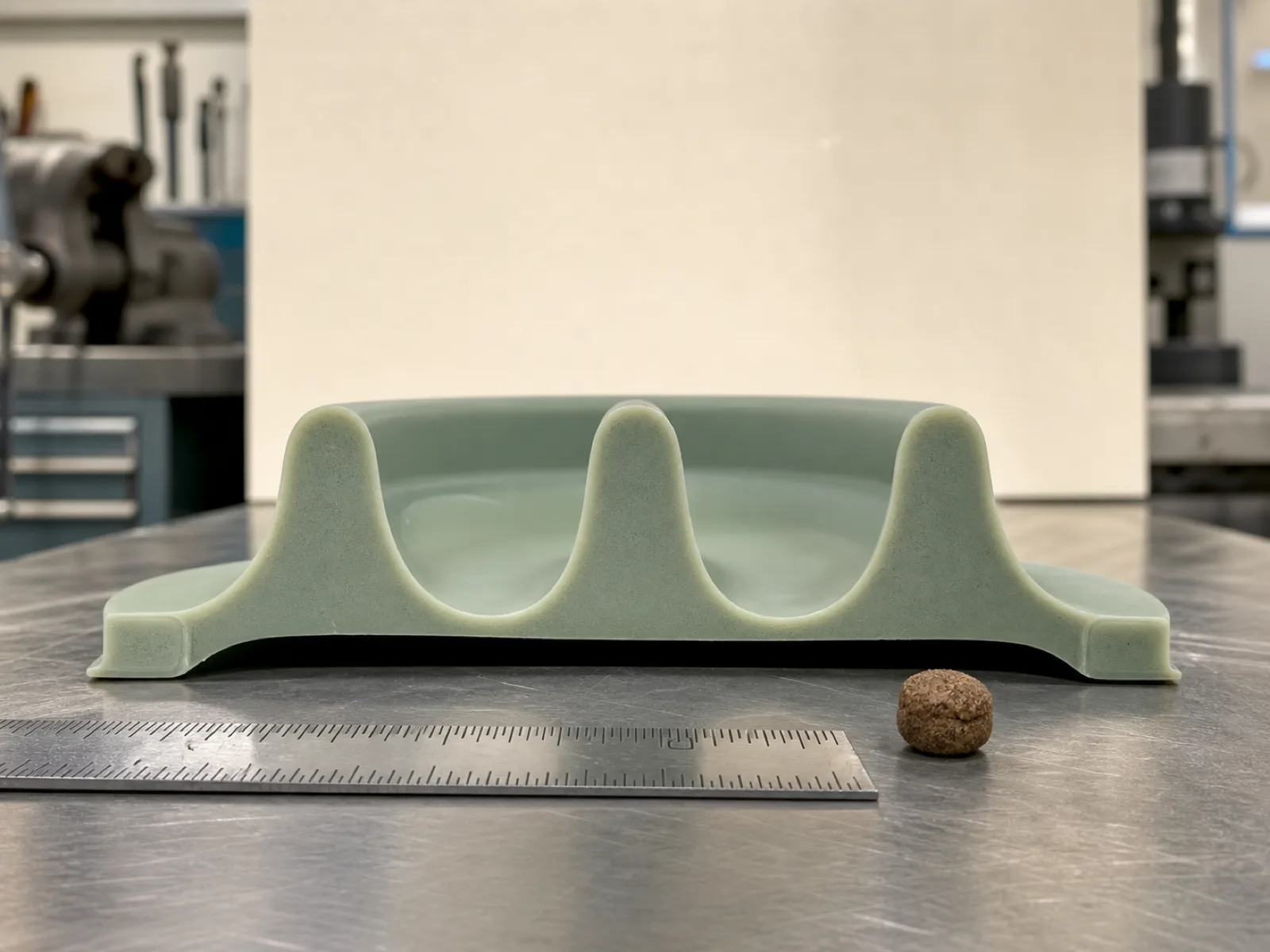
Wetop's engineering baseline for medium and large dogs is 12-16 mm ridge height with 18-22 mm channel spacing and an R2 mm crown radius. Below 8 mm ridges the tongue clears kibble too fast; above 18 mm dogs flip or refuse the bowl. Small breeds move to 8-10 mm ridges and 14-16 mm channels.
The critical dimension is not the ridge height in isolation — it is the ratio of ridge height to channel width relative to kibble diameter. Most premium dry dog food sits in the 8-14 mm kibble-diameter range; the channel needs to admit one to three pieces at a time so the dog can extract them, but not so many that the maze collapses into a flat feed. Ridge crowns are radiused (typically R2 mm) so the tongue scoops without abrasion; a sharp crown produces licking-refusal within a few meals.
Wetop’s compression tooling holds ridge-to-ridge tolerance at ±0.15 mm across a 240 mm bowl. That tolerance matters because a 0.5 mm ridge-height drift across cavities produces visibly inconsistent product on a retail hangtag and generates warranty claims. On steel tools we hold ±0.10 mm; on aluminum prototype tools ±0.20 mm is realistic and adequate for a first production run.
| Target species / breed size | Ridge height | Channel width | Ridge crown radius | Base diameter |
|---|---|---|---|---|
| Cat / toy dog (< 5 kg) | 6-9 mm | 10-14 mm | R1.5 mm | 140-170 mm |
| Small dog (5-10 kg) | 8-10 mm | 14-16 mm | R2 mm | 170-200 mm |
| Medium dog (10-25 kg) | 12-14 mm | 18-20 mm | R2 mm | 200-240 mm |
| Large dog (25-40 kg) | 14-16 mm | 20-22 mm | R2 mm | 240-280 mm |
| Giant breed (40 kg+) | 14-18 mm | 20-24 mm | R2.5 mm | 280-320 mm |
Platinum-cured vs peroxide-cured — which food-grade silicone does a slow feeder actually need?
Only platinum-cured food-grade silicone belongs in a slow feeder. Peroxide cure leaves acidic byproducts that migrate under repeated saliva contact and hot dishwasher cycles, causing odor, bloom, and yellowing. Platinum cure is inert, clears FDA 21 CFR 177.2600[^fda-177-2600] cleanly, and holds appearance across 500+ dishwasher cycles.
The chemistry matters because slow feeders live in a punishing environment: daily saliva exposure, a dishwasher sanitize cycle at 70-85 °C, and often a freezer round when owners use them for wet-food puzzle feeding. Peroxide-cured silicone (still common in low-cost Alibaba listings because it is cheaper to press) uses dicumyl peroxide or 2,4-dichlorobenzoyl peroxide as the cross-linker, both of which leave acidic residues. Those residues migrate and, over weeks, produce the sour smell and yellow tint that drive Chewy and Amazon returns.
Platinum-cured silicone uses a hydrosilylation reaction catalyzed by a platinum complex; the reaction leaves no migratory byproducts. The trade-off is cost — platinum catalyst is expensive and the compound runs 15-25 % higher per kilogram than peroxide grades. For a slow feeder the math is straightforward: the platinum premium is 8-15 cents per unit at retail, and it eliminates the top return driver.
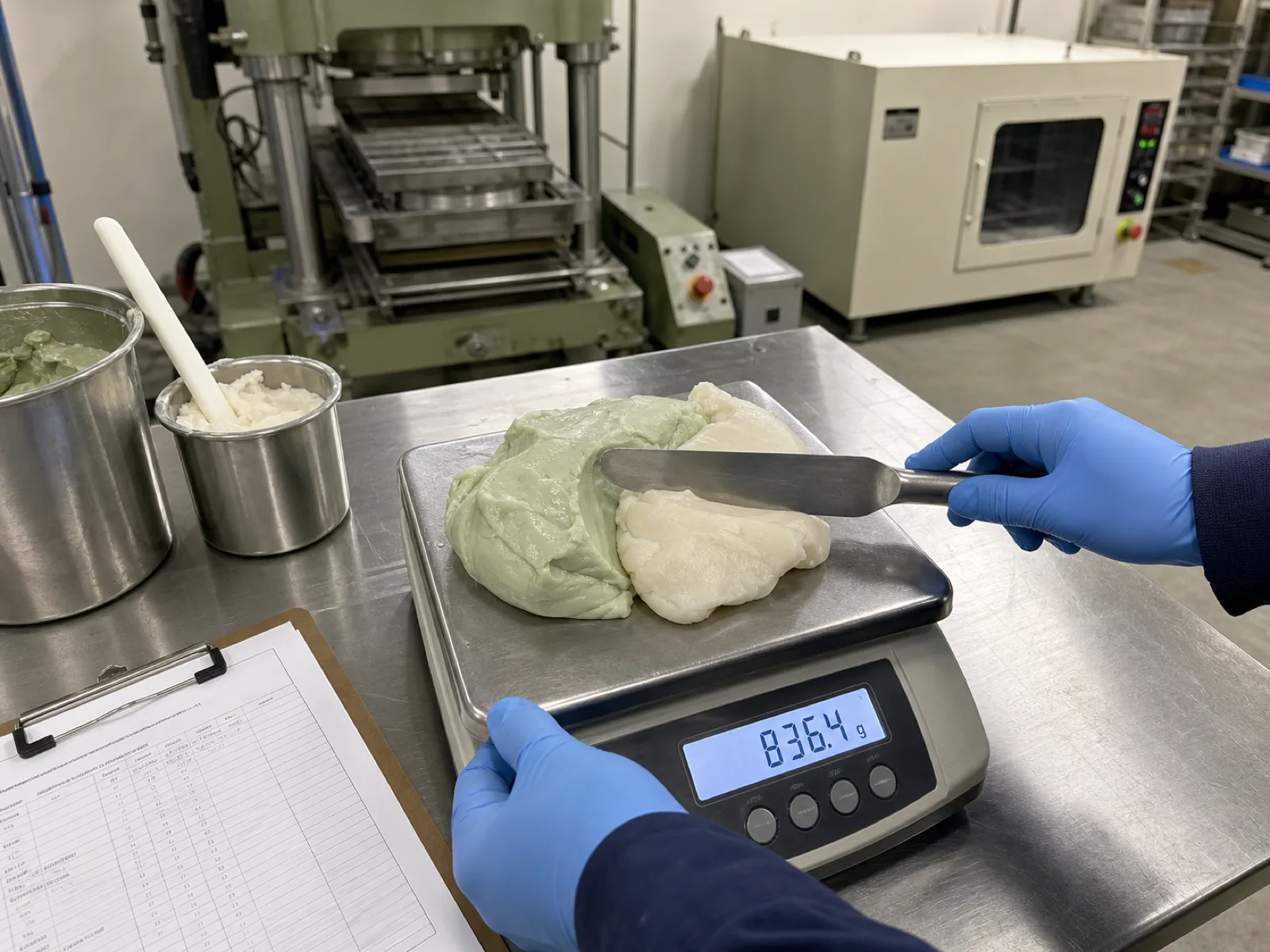
For an RFQ, the specification a serious pet brand writes is: “Platinum-cured food-grade silicone rubber, compression molded. Per-lot test report against FDA 21 CFR 177.2600 with n-hexane and 8 % ethanol food simulants at 40 °C / 240 h. Reject any lot exceeding overall migration limits.” That single line eliminates the majority of low-tier bids and forces the factory to actually run the cure system the packet claims.
What FDA and LFGB test packet does a pet brand actually need on file?
For US retail: FDA 21 CFR 177.2600[^fda-177-2600] migration test with n-hexane and 8 % ethanol simulants at 40 °C / 240 h, plus California Prop 65 heavy-metal statement. For EU retail: LFGB §30/§31 tests derived from BfR Recommendation XV[^bfr-xv], plus REACH SVHC declaration[^echa-reach]. All reports must be tied to the production lot code, not a generic material data sheet.
The distinction between a generic material data sheet and a per-lot test report is where most low-tier factories lose the deal with a serious pet brand’s compliance team. A material data sheet says “this compound has been tested for food contact” — it does not prove that the material in the container this month was actually mixed and cured to the same spec. A per-lot report tests the finished product from the specific production run and ties the result to a lot code laser-marked on the bowl.
Wetop’s default test cadence is one FDA 21 CFR 177.2600 report per production lot per SKU, one LFGB §30/§31 report per calendar year per compound family (renewed on formulation change), and one Prop 65 heavy-metals scan per lot. Reports are issued by SGS, Intertek, or TÜV — buyer’s choice. The compliance packet also includes an ISO 9001 QMS certificate2 confirming that batch traceability, sub-supplier control, and non-conformance logging are in place.
| Market | Required test | Standard | Frequency | Typical lab |
|---|---|---|---|---|
| US retail | Overall migration | FDA 21 CFR 177.26003 | Per production lot | SGS / Intertek |
| US retail | Heavy metals | California Prop 65 | Per production lot | SGS / Intertek |
| EU retail | Overall + specific migration | LFGB §30/§31 (BfR XV)4 | Annual per compound; on formulation change | TÜV / SGS |
| EU retail | SVHC declaration | REACH Annex XIV / XVII5 | Annual, tracked at 0.1 % w/w | Self-declared, lab-verified |
| Global | Shore A hardness | ASTM D22406 | Per production lot | In-house + third-party audit |
| Global | Tensile / elongation | ASTM D4127 | Per compound qualification | Third-party |
How does the suction base actually grip wet tile without frustrating the dog?
Suction is a durometer plus surface-finish problem. A 40-45 Shore A[^astm-d2240] silicone base with a continuous 4-6 mm wide contact ring and a lapped mold finish (Ra ≤ 0.4 µm) pulls vacuum on wet ceramic, sealed hardwood, and stainless. A base above 55 Shore A or with a matte contact ring will not seal — no matter how thick the base is.
The physics is simple: the contact ring has to deform enough under the bowl’s own weight (and the dog’s downward feeding pressure) to expel air from a thin gap, then hold vacuum. A hardness of 40-45 Shore A gives enough compliance without letting the base sag under load. A lapped mold finish transfers to the silicone as a near-mirror surface that seals against microscopic tile roughness; a matte or sparked mold finish transfers texture that lets air whistle back in the moment the dog tugs sideways.
Slow feeders that flip on first use almost always trace to one of three defects: base too hard (60+ Shore A because the factory used a stiffer compound to save on cure time), contact ring too narrow (< 3 mm), or mold finish left rough because polishing was skipped to shave two days off tooling. Wetop’s default spec: 40 Shore A base, 5 mm continuous contact ring, EDM finish stepped down to a lapped SPI A-2 in the ring only. The maze body runs 60-70 Shore A so the ridges hold shape under tongue pressure.
The design tension between base and body is why a slow feeder is more manufacturing-intensive than a plain silicone mat. Two hardness zones on a single molded part typically require either overmolding (two-shot press) or a co-cured insert. Wetop runs the latter — the base and body are co-cured in one compression cycle from two color-matched compounds — which holds cost within 12-18 % of a single-hardness part.
What is the actual MOQ, tooling cost, and lead time for a private-label lineup?
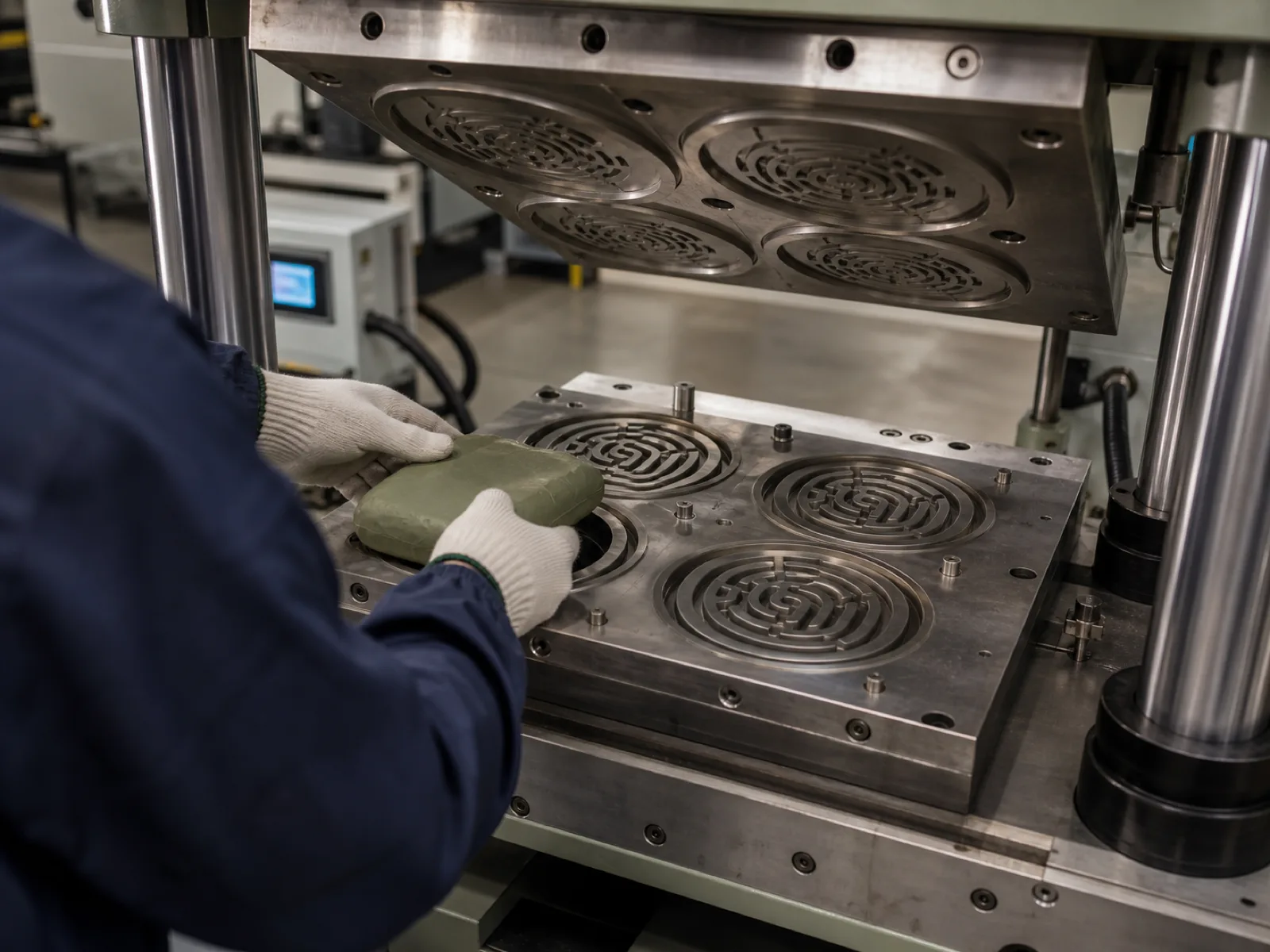
Wetop's MOQ is 500 units per SKU per Pantone-matched color. A three-size lineup (small / medium / large) on one shared tool base with three cavity inserts hits an aggregate 1,500-unit minimum. Aluminum prototype tooling runs 800-2,400 USD per cavity with an 18-25 day lead time; production steel tooling runs 3,500-8,000 USD with a 30-40 day lead time.
Tooling amortization is the number that actually determines landed cost. A single aluminum-cavity tool at 1,500 USD amortizes across roughly 5,000 units before the per-piece tooling contribution drops below 0.05 USD; below that the price stabilizes. For a first-year private-label launch projecting 8,000-15,000 units across three sizes, an aluminum tool base is the right call. Steel tooling makes sense at 20,000+ annual units per size or when tolerance drift on aluminum (typically after 30,000-50,000 cycles) starts driving QC rejects.
Typical program economics for a three-SKU launch:
| Line item | Aluminum prototype tooling | Production steel tooling |
|---|---|---|
| Tool cost per SKU (single-cavity) | 800-2,400 USD | 3,500-8,000 USD |
| Tool cost per SKU (4-cavity, higher volume) | 2,400-4,800 USD | 8,000-16,000 USD |
| Tool lead time | 18-25 days | 30-40 days |
| T1 sample after tool approval | 3-5 days | 3-5 days |
| First production run (500-1,500 units) | 25-35 days from PO | 30-45 days from PO |
| Break-even units to stabilize per-piece cost | ~5,000 | ~15,000 |
| Cavity life before drift-driven refresh | 30,000-50,000 cycles | 250,000+ cycles |
Sample flow: T0 concept + engineering drawing (Wetop-drafted, 3-5 days from brief) → T1 tooling drawing sign-off (buyer, 2-5 days) → T2 cavity cut → T1 sample (aluminum tool, 3 days after cut) → sample-approval iteration (typically 1-2 rounds) → bulk PO release. Total: 6-9 weeks from brief to bulk shipment on aluminum tooling; 8-12 weeks on steel.
What customization does an OEM slow feeder actually support at MOQ?
At 500-unit MOQ per SKU per color, Wetop includes Pantone-matched masterbatch, in-mold debossed logo, laser-marked lot code on the underside, custom hangtag, and retail-ready carton. Second-color overmolding (two-shot process) and specialty finishes (soft-touch matte, food-safe metallic pigment) require an incremental 1,000-unit MOQ per color.
The Pantone match runs to a ΔE ≤ 1.5 in D65 light-box comparison against the buyer’s chip; on saturated colors (deep navy, sage, brand red) Wetop holds ΔE ≤ 2.0. In-mold debossing is engraved into the cavity — no separate deboss operation — so it is free at any volume once the tool is cut. Laser-marked lot codes are added post-press with a fiber laser at 3-4 mm character height, providing full batch traceability back to the platinum-cure lot, the QC sheet, and the third-party test report.
Retail-ready packaging Wetop supports in-house: kraft-paper hangtag with weight-tier size icon, kibble-capacity marker, and cleaning-instruction printed inline; poly bag with vent hole; folded corrugated carton with barcode. Amazon and Chewy packet requirements (FNSKU labels, prep-service compliance) are supported at the pack-out stage. If the private-label lineup needs a two-color logo insert (typically brand mark in a contrast color), that runs through the two-shot cell at a 12-18 % cost premium and adds four to seven days to the run.
Why do slow feeders develop odor, bloom, or yellow tint — and how does post-cure prevent it?
Odor, bloom, and yellowing are all cure-cycle failures, not material failures. Silicone leaving the press still holds residual cross-linker and low-molecular-weight silicone chains that outgas over weeks. A 4-6 hour post-cure at 200 °C drives these off. Skipping post-cure to shave 6-8 hours of lead time is the top return driver on Amazon and Chewy pet listings.
Post-cure is the single most under-discussed step in silicone slow-feeder manufacturing, and it is the one Wetop refuses to compromise on. In the press, cure completes to roughly 92-96 % cross-link density in 5-8 minutes at 180-200 °C — enough to demold and hold shape, not enough to drive out volatiles. The remaining 4-8 % of cross-linking, plus the residual chain fraction, needs a secondary thermal cycle in an oven at 200 °C for 4-6 hours. During that dwell, low-MW cyclosiloxanes (D3-D6) and any leftover platinum-catalyst byproducts volatilize off. The finished part is dimensionally stable, odor-free, and holds appearance for the life of the SKU.
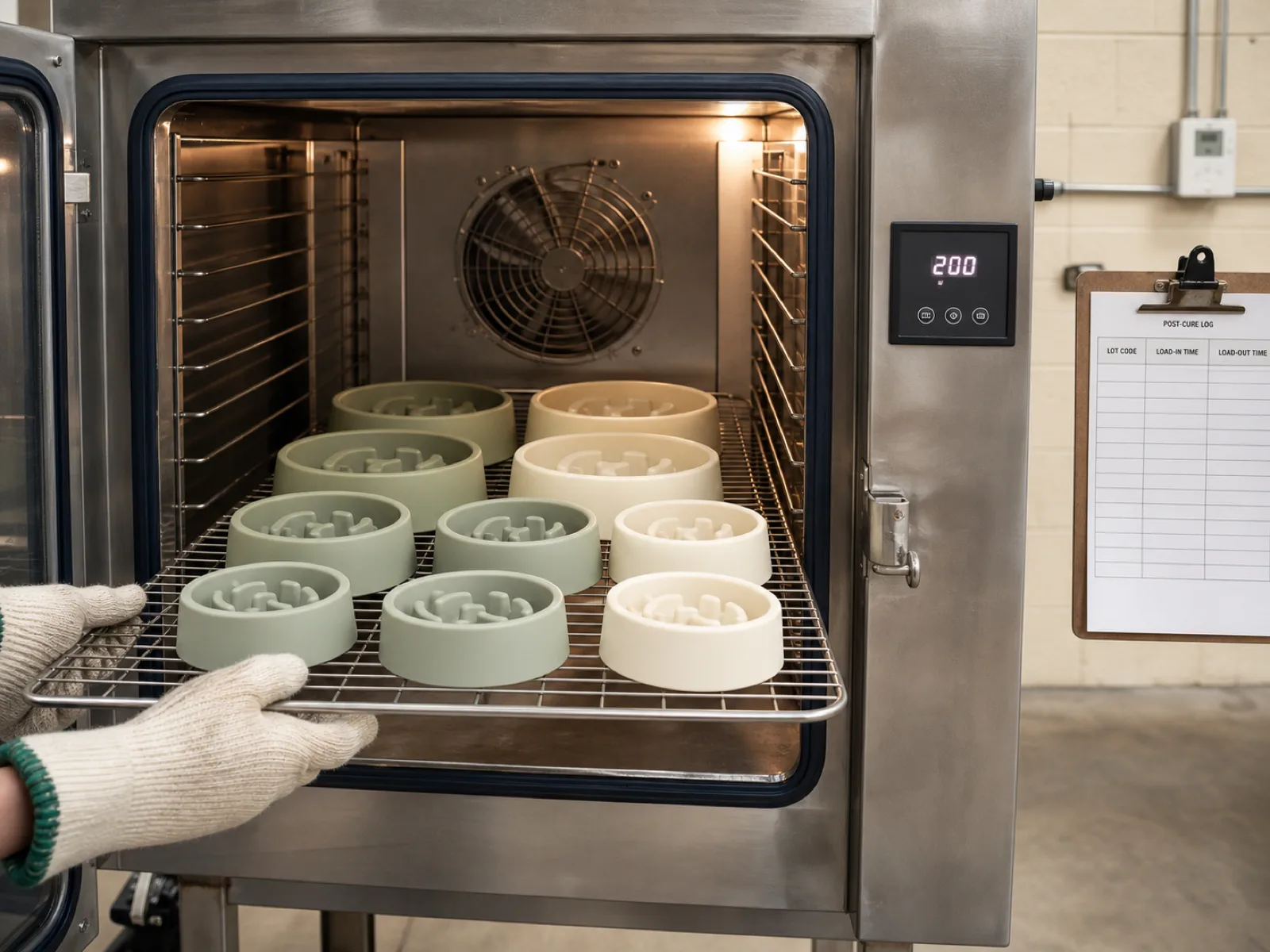
Wetop’s post-cure log is part of the compliance packet: oven ID, load-in time, load-out time, and thermocouple trace signed off by the shift lead. Any lot missing a valid post-cure record is held from shipment. This is not exotic — it is what ISO 90012 batch-traceability requires — but it is the discipline that separates a factory writing a defensible packet from one that will produce an odor complaint in month three.
Sizing, capacity, and SKU strategy for a private-label lineup
A retail-ready lineup ships small (≤ 10 kg dogs, 1-1.5 cup capacity), medium (10-25 kg, 2-3 cup), and large (25 kg+, 3-4 cup) SKUs off three cavity blocks in one shared tool base. That's the minimum viable range; four-SKU lineups add either a cat/toy SKU or a giant-breed SKU, and premium lineups add a wet-food puzzle variant.
The three-size baseline covers roughly 85 % of the US dog population by weight distribution and matches the size architecture Chewy and Petco category buyers expect on a hangtag. Capacity is specified against standard cup-based dry-food dosing (240 mL / cup) — a medium-breed feeder needs to hold a typical single meal of 2-3 cups without ridge-overflow, but not so much that a small dog would need to lift its head. Overflow is worse than under-capacity: kibble that sits on top of the ridges defeats the slow-feed mechanism entirely.
Adjacent SKUs to consider at MOQ: a matching silicone placemat with a raised lip to catch kibble that dogs work out onto the floor (same food-grade compound, no new tooling if it shares the base geometry), and a travel version with a foldable rim. The travel SKU is a small-volume opportunity but a strong halo product for a pet brand’s DTC channel.
References
The engineering positions above trace to the following standards and peer-reviewed sources:
Ready to spec a silicone slow feeder program?
If you’re building a new private-label slow-feeder lineup — or refreshing an existing one that keeps returning on odor or suction failure — Wetop’s engineering desk will draft the ridge geometry, cavity layout, and compliance packet against your target species, kibble spec, and retail channel. Send the brief through the contact form with target volume, size range, and preferred cure system, and expect a drafted engineering drawing within three business days. For the underlying compound and packet decisions, the platinum vs peroxide cure guide, the FDA vs LFGB comparison, and the logo customization guide are the three companion reads.
Footnotes
-
Bloat and Gastric Dilatation-Volvulus (GDV) — clinical overview. American Veterinary Medical Association. https://www.avma.org/resources/pet-owners/petcare/bloat-and-gastric-dilatation-volvulus ↩
-
ISO 9001:2015 — Quality Management Systems — Requirements. International Organization for Standardization. https://www.iso.org/standard/62085.html ↩ ↩2
-
21 CFR 177.2600 — Rubber articles intended for repeated use. US Food and Drug Administration. https://www.ecfr.gov/current/title-21/chapter-I/subchapter-B/part-177/subpart-C/section-177.2600 ↩
-
BfR Recommendation XV — Silicones. German Federal Institute for Risk Assessment. https://www.bfr.bund.de/en/home.html ↩
-
REACH — Regulation (EC) No 1907/2006. European Chemicals Agency. https://eur-lex.europa.eu/legal-content/EN/TXT/?uri=CELEX%3A32006R1907 ↩
-
ASTM D2240 — Standard Test Method for Rubber Property — Durometer Hardness. ASTM International. https://www.astm.org/d2240-15r21.html ↩
-
ASTM D412 — Standard Test Methods for Vulcanized Rubber and Thermoplastic Elastomers — Tension. ASTM International. https://www.astm.org/d0412-16r21.html ↩
FAQ
-
How much does a silicone slow feeder actually slow a dog's eating?
Independent veterinary studies of slow-feed bowls with maze or ridge geometry report 5-10x longer meal duration versus a flat bowl. The multiplier depends on ridge height, channel width, and kibble size — a well-engineered silicone slow feeder with 12-16 mm ridges holds most dry kibble diameters and forces the tongue-scoop pattern that extends the meal.
-
Do slow feeder bowls actually reduce bloat (GDV) risk in dogs?
Peer-reviewed veterinary literature identifies fast eating as one of several modifiable risk factors for gastric dilatation-volvulus (GDV), particularly in deep-chested large breeds. A silicone slow feeder does not treat GDV, but slowing intake is one of the practical interventions veterinarians recommend alongside multiple small meals and post-meal rest.
-
Is a silicone slow feeder dishwasher safe every day?
Yes — platinum-cured food-grade silicone is stable from -40 °C to 230 °C, which covers residential dishwasher cycles (typically 60-75 °C wash, 70-85 °C sanitize). Peroxide-cured silicone can bloom after repeated wet-heat cycles. Specify platinum cure on the RFQ and require the FDA 21 CFR 177.2600 test report tied to the actual production lot.
-
What ridge height and spacing does a silicone slow feeder need to actually work?
Wetop's engineering baseline is 12-16 mm ridge height with 18-22 mm channel spacing for medium and large dogs, and 8-10 mm ridge height with 14-16 mm spacing for small breeds. Below 8 mm the tongue clears kibble too fast; above 18 mm dogs get frustrated and flip the bowl or refuse to feed.
-
How does the suction base on a silicone slow feeder actually grip the floor?
Grip is a combination of Shore A hardness, contact-ring geometry, and surface finish. A 40-45 Shore A silicone base with a 4-6 mm wide continuous contact ring and a lapped mold finish (Ra ≤ 0.4 µm) seals against wet ceramic tile, sealed hardwood, and stainless. A matte or textured contact ring will not pull vacuum.
-
What is the MOQ for a private-label silicone slow feeder from a real factory?
Wetop's MOQ is 500 units per SKU per Pantone-matched color. A three-size lineup (small / medium / large) built on one shared tool base with three cavity inserts hits an aggregate 1,500-unit minimum. Custom Pantone masterbatch and in-mold debossed logo are included at that tier without a separate setup fee.
-
How long does silicone slow feeder tooling take, and what does it cost?
For a single-cavity aluminum compression tool: 18-25 days from art-approval to T1 sample, tooling cost typically 800-2,400 USD depending on cavity count and undercut complexity. For a 4-cavity steel tool suited to 20,000+ annual units: 30-40 days, 3,500-8,000 USD. Tooling amortizes across the first ~5,000 units.
-
Can a silicone slow feeder replace a stainless slow-feed insert for a large breed?
For dogs under 40 kg, a single-piece silicone slow feeder with a 4-5 cup capacity and a suction base performs equivalently to a stainless insert dropped in an existing bowl. For 40 kg+ deep-chested breeds, a hybrid design — silicone maze layer with a weighted stainless outer ring — resists flipping better and is a specify-able OEM configuration.
-
Why do some silicone slow feeders develop an odor or yellow tint over time?
Both failure modes trace to an incomplete post-cure. Silicone leaving the press still holds residual cross-linker and low-molecular-weight silicone chains that outgas over weeks. A 4-6 hour post-cure at 200 °C drives these off. Skipping post-cure to shave 6-8 hours off lead time is the single most common quality shortcut and the top return driver on Amazon and Chewy listings.
-
What does a compliant retail packet for a silicone slow feeder actually include?
For US retail (Chewy, Petco, Amazon): FDA 21 CFR 177.2600 test report against the production lot, California Prop 65 statement, kibble-capacity and cleaning-instruction hangtag, weight-tier size icon, and a lot-code laser marked on the underside. For EU (Zooplus, EU Amazon): LFGB §30/§31 report, REACH SVHC declaration, and an EU importer address on the label.
References
Authoritative sources cited in this guide
- US Food and Drug Administration. 21 CFR 177.2600 — Rubber articles intended for repeated use. https://www.ecfr.gov/current/title-21/chapter-I/subchapter-B/part-177/subpart-C/section-177.2600 — The federal migration-limits regulation any US pet brand shipping silicone food-contact articles must have on file per production lot.
- International Organization for Standardization. ISO 9001:2015 — Quality Management Systems — Requirements. https://www.iso.org/standard/62085.html — The documented QMS Wetop's compression + LSR lines are certified against, including batch traceability and lot-code retention required for pet-category retail chains.
- ASTM International. ASTM D2240 — Standard Test Method for Rubber Property — Durometer Hardness. https://www.astm.org/d2240-15r21.html — The Shore A hardness test protocol referenced in every slow-feeder base and maze-body durometer spec on Wetop's engineering drawings.
- ASTM International. ASTM D412 — Standard Test Methods for Vulcanized Rubber and Thermoplastic Elastomers — Tension. https://www.astm.org/d0412-16r21.html — Tensile-strength and elongation-at-break test methodology used to validate that a slow-feeder body will not tear when a dog flips or drags it.
- German Federal Institute for Risk Assessment (BfR). BfR Recommendation XV — Silicones. https://www.bfr.bund.de/en/home.html — The material-composition and migration-testing framework LFGB §30/§31 tests are built against — the compliance backbone for EU pet retail listings.
- National Center for Biotechnology Information (NIH/PubMed). Non-dietary risk factors for gastric dilatation-volvulus in large and giant breed dogs (Glickman et al., PubMed). https://pubmed.ncbi.nlm.nih.gov/11132881/ — The peer-reviewed veterinary literature identifying fast eating as a modifiable risk factor for GDV in deep-chested breeds — the evidentiary basis for slow-feeder claims.
- European Chemicals Agency (ECHA). REACH — Registration, Evaluation, Authorisation and Restriction of Chemicals (Regulation EC 1907/2006). https://eur-lex.europa.eu/legal-content/EN/TXT/?uri=CELEX%3A32006R1907 — The EU chemicals regulation governing SVHC declarations required on any silicone pet product entering the EU retail channel.
- American Veterinary Medical Association. Bloat and Gastric Dilatation-Volvulus (GDV) — clinical overview. https://www.avma.org/resources/pet-owners/petcare/bloat-and-gastric-dilatation-volvulus — Owner-facing clinical guidance from AVMA on GDV risk factors and management practices, including eating-speed interventions.
Start a custom program
Send a brief. Get an engineer’s reply in one business day.
Every Wetop program is tooled from a customer’s specification. Send a CAD file (STEP · IGES · DWG) or a written brief and we’ll reply with a mold cost estimate, price brackets at MOQ 500 / 1,000 / 5,000, and any engineering questions.