Certification · commercial intent
Food Grade Silicone vs Medical Grade — OEM Buyer's Guide
 Certification
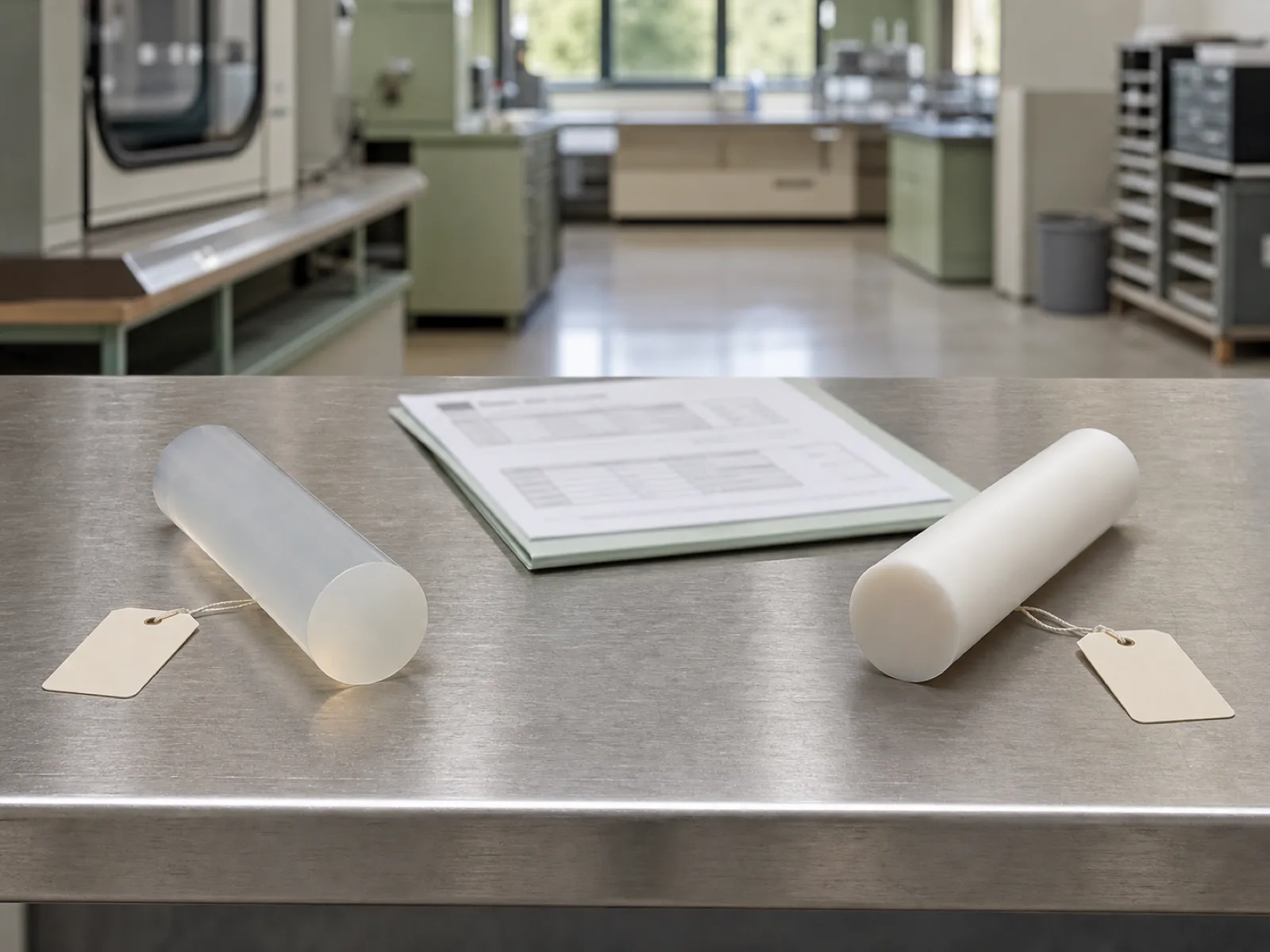
 The clearest question in a body-safe silicone RFQ is also the most-often confused: “is food-grade silicone enough, or do I need medical-grade?” For customer brands who OEM body-safe silicone products — the intimate wellness category especially — the answer is not a preference call. It’s a regulatory floor set by contact duration, contact tissue, and marketing claim. This guide is the engineering and compliance framework Wetop uses to score every incoming brief and route it to the right cure system, raw-resin qualification, and cleanroom cell.
Food-grade silicone is defined by FDA 21 CFR 177.2600, a compositional standard for repeated food-contact use. Medical-grade silicone is defined by USP Class VI (USP <88> in-vivo biological reactivity) plus the ISO 10993 biocompatibility panel — a testing standard applied to the finished part. For customer brands who OEM body-safe silicone products with mucosal contact exceeding 24 hours, medical-grade LSR with ISO 10993-5/-10 documentation is the audit floor, not an upgrade.
What is the regulatory delta between food-grade and medical-grade silicone?
Food-grade is compositional; medical-grade is biological. FDA 21 CFR 177.2600[^fda-177-2600] governs food-grade silicone as a composition-plus-extraction-limit standard for repeated food-contact use. Medical-grade silicone is qualified against USP Class VI (via USP <88> in-vivo biological reactivity[^usp-class-vi]) plus applicable ISO 10993 sub-parts run on finished-part material — a biological performance standard, not a composition list.
The confusion is fair. Both grades typically start with the same polymer — polydimethylsiloxane (PDMS) — and both can share the same raw silicone gum backbone. The regulatory framework applied on top is what separates them.
Food-grade path (21 CFR 177.2600):
- Composition must fall inside a defined ingredient list (base polymer plus permitted additives).
- Total extractables under standard extraction protocols (n-hexane, distilled water, 8% ethanol) must fall below specified limits.
- Applies to the raw material as compounded, with the assumption that repeated food contact under normal use conditions is safe.
- No biological testing on the finished part is required by the regulation itself.
Medical-grade path (USP Class VI + ISO 10993):
- USP <88>1 runs three in-vivo tests — systemic injection, intracutaneous reactivity, implantation — on extracts of the material at graduated temperatures. Passing all three at 121°C, 70°C, and 50°C extraction yields the “Class VI” designation.
- ISO 10993-1:20182 then applies a risk-based test matrix to the finished device: cytotoxicity (-5), irritation and sensitization (-10), systemic toxicity (-11), and further sub-parts based on contact category and duration.
- The tests are run on finished-part material — not just the raw resin — because pigments, mold-release agents, and processing conditions can shift the extractables profile.
The consequence for customer brands: a silicone product marketed as food-safe is proven at the compound level. A silicone product marketed as body-safe is proven at the finished-part level. Those are two different documents from two different laboratory workflows.
Which grade does an intimate wellness OEM program actually need?
For customer brands who OEM body-safe silicone products in the intimate wellness category, medical-grade LSR with ISO 10993-5/-10 documentation on finished-part material is the audit floor — not a premium upgrade. Once mucosal contact exceeds 24 hours or the finished product carries a body-safe marketing claim, food-grade documentation alone will not survive retailer compliance audit or major marketplace listing review.
Contact-tissue and contact-duration are the two decision variables. ISO 10993-1:2018 clause 52 defines three contact categories (surface, external communicating, implant) and three duration bands (limited < 24 h, prolonged 24 h to 30 days, long-term > 30 days). The applicable test panel escalates by cell in that matrix.
The intimate wellness category almost always lands in mucosal contact, prolonged duration — which activates:
| Contact scenario | Regulatory floor | Typical test panel |
|---|---|---|
| Skin contact, intermittent (< 24 h) | FDA 21 CFR 177.2600 food-grade may suffice | Compositional CoA + extractables report |
| Skin contact, prolonged (24 h – 30 d) | USP Class VI baseline | USP <88>1 + ISO 10993-5 |
| Mucosal contact, limited (< 24 h) | USP Class VI + ISO 10993-5/-10 | USP <88> + ISO 10993-53 + -104 |
| Mucosal contact, prolonged (24 h – 30 d) | USP Class VI + ISO 10993-5/-10/-11 | USP <88> + ISO 10993-5 + -10 + -115 |
| Implanted or long-term > 30 d | Full medical-device biocompatibility panel | ISO 10993-6, -10, -11 subchronic, submission-specific |
Beyond the regulatory floor, three commercial realities pull the audit up:
- Retail listing review — major intimate wellness marketplaces (specialty retailers and mainstream e-commerce category listings) require Class VI or ISO 10993 documentation on file at brand-buyer onboarding for body-safe finished products. Food-grade CoAs are rejected as insufficient.
- Product liability posture — under body-safe marketing claim, a food-grade certification is asymmetric evidence in an adverse-event review. Medical-grade documentation closes the exposure.
- Downstream regulatory drift — jurisdictions (EU, UK, several US states) are actively tightening consumer product safety review for mucosal-contact goods. Programs specified today at medical-grade absorb that drift without re-tooling.
The decision framework for a customer brand is not “food-grade vs medical-grade” as a cost-optimization choice. It’s “does the finished product’s contact tissue and marketing claim require medical-grade documentation?” — and for the intimate wellness category, the answer is almost always yes.
Why platinum-cure is mandatory for medical-grade — and peroxide-cure is disqualified
Peroxide-cured silicone rarely passes USP Class VI because peroxide decomposition byproducts (acetophenone, dicumyl fragments) create cytotoxicity signals in the extractables profile. Every medical-grade silicone program in the intimate wellness category runs on platinum-cured LSR — a two-part addition-cure system with zero volatile crosslinking byproducts. Suppliers who cannot attest to platinum-cure chemistry on the master-batch lot certificate cannot legitimately quote medical-grade production.
The chemistry gap between the two cure systems is covered in depth in the platinum-cured vs peroxide-cured silicone guide. For the medical-grade decision specifically, three points matter.
Extractables profile. USP <88> Class VI classification depends on the extractables profile of the finished part. Platinum-cure produces no crosslinking byproducts because the reaction is a clean addition (Si-vinyl + Si-H → Si-CH₂-CH₂-Si). Peroxide-cure produces radical decomposition fragments — chiefly acetophenone and α-methylstyrene from dicumyl peroxide — which post-cure drives off but never eliminates completely below detection thresholds required for USP Class VI extractables analysis.
Cure-cycle residuals. Even after 4-6 hour post-cure at 200°C, peroxide-cured silicone retains 0.3-0.8% residual organic volatiles measurable by gas chromatography–mass spectrometry (GC-MS). Platinum-cured LSR post-cured to the same schedule retains 0.05-0.15%. That order-of-magnitude gap is often what separates a passing USP <88> report from a failing one.
Regulatory audit language. Compound houses (Dow, Wacker, Momentive, Shin-Etsu) publish medical-grade LSR product lines with specific product codes — Dow Silastic Q7-series, Wacker SilBione LSR 4000-series, Momentive Silopren LSR 2000-series — that carry pre-qualified USP Class VI dossiers as a standard product deliverable. Peroxide-cured HCR does not have an equivalent product line at the medical-grade tier. A supplier quoting “medical-grade peroxide silicone” is not describing a real material.
Wetop’s medical-grade programs run exclusively on platinum-cured LSR from qualified compound-house lots, with the specific product code called out on the master-batch lot certificate and the raw-material CoA attached to every production batch.
What extractables and leachables thresholds separate the two grades?
Food-grade silicone allows up to 2-3% total volatiles post-cure; medical-grade platinum-cured LSR holds under 0.5% and typically under 0.15% for extractables measured by USP <88> and ISO 10993-18 protocols. The one order of magnitude tighter specification on the medical-grade raw resin is a large part of the 3-8× cost per kilogram — the compound house pays for the raw-material selection, cleanliness controls, and lot-level quality documentation that keeps the extractables below the medical-grade audit floor.
Three numerical anchors most brand buyers never see in a supplier deck:
- Total volatile siloxanes (D4, D5, D6) post-cure. Food-grade HCR: 1.5-3% by weight after 4-hour post-cure at 200°C. Medical-grade platinum LSR after equivalent post-cure: 0.05-0.15%. The gap is the raw-material selection at the compound house — medical-grade LSR uses higher-molecular-weight fractions of the polymer and stripping steps that food-grade production skips for cost.
- Extractables in isopropyl alcohol (representative solvent per ISO 10993-18). Food-grade: 200-500 ppm total. Medical-grade platinum LSR: 15-50 ppm. Same order-of-magnitude gap.
- Heavy metal residuals (lot CoA reference). Food-grade CoA reports lead, cadmium, mercury against 21 CFR 177.2600 limits. Medical-grade CoA reports the same suite against the tighter USP <661.1> Plastic Materials of Construction protocol, plus platinum catalyst residual (typically 5-15 ppm on medical LSR, characterized as inert).
The cost driver is the compound house’s discipline in maintaining these specs lot-to-lot. Medical-grade LSR pricing at $30-80/kg reflects raw-material qualification, cleanliness controls, and lot-level CoA documentation that food-grade HCR pricing at $8-15/kg does not carry.
LSR vs HCR — which process line for each grade?
Medical-grade silicone programs run almost universally on liquid silicone rubber (LSR) injection molding. Food-grade programs mix LSR and high-consistency rubber (HCR) — LSR for tight-tolerance high-cavitation SKUs, HCR compression molding for larger low-cavitation geometries like drying mats and sink grids. The process choice on medical-grade programs is driven by dimensional precision, cycle-time consistency, and cleanroom compatibility.
LSR injection molding is the natural match for medical-grade production for four engineering reasons:
- Cold-runner tooling and closed-loop metering deliver ± 0.05 mm dimensional tolerance on part-to-part output. Medical-grade programs that specify device-fit tolerances (retention rings, sealing lips, valve seats on body-contact fluid handling) live inside that window.
- Cycle-time consistency at 15-90 seconds at LSR press means high cavitation (16-64 cavity tools common) at moderate labor input. Medical-grade programs justify the tooling investment because the extractables profile out of an LSR press is inherently lower than HCR compression.
- Cleanroom compatibility. LSR presses can be enclosed inside ISO Class 7 or Class 8 cleanroom cells because the process is fully closed from barrel to demold. HCR compression presses expose the uncured gum to the shop floor, which is difficult to reconcile with cleanroom particulate specifications per ISO 14644-16.
- Automated demold and secondary operations. Medical-grade LSR cells typically integrate robotic demold, in-line vision inspection, and post-cure conveyors — the labor and handling variability drops, which stabilizes the finished-part CoA batch-to-batch.
Food-grade programs on HCR compression (drying mats, sink grids, most kitchen accessories) do not need any of the above and would not amortize the cost. Wetop runs both cell types on the same floor — HCR compression cells for food-grade kitchenware programs, platinum LSR injection cells for medical-grade OEM.
What cleanroom infrastructure does medical-grade silicone actually require?
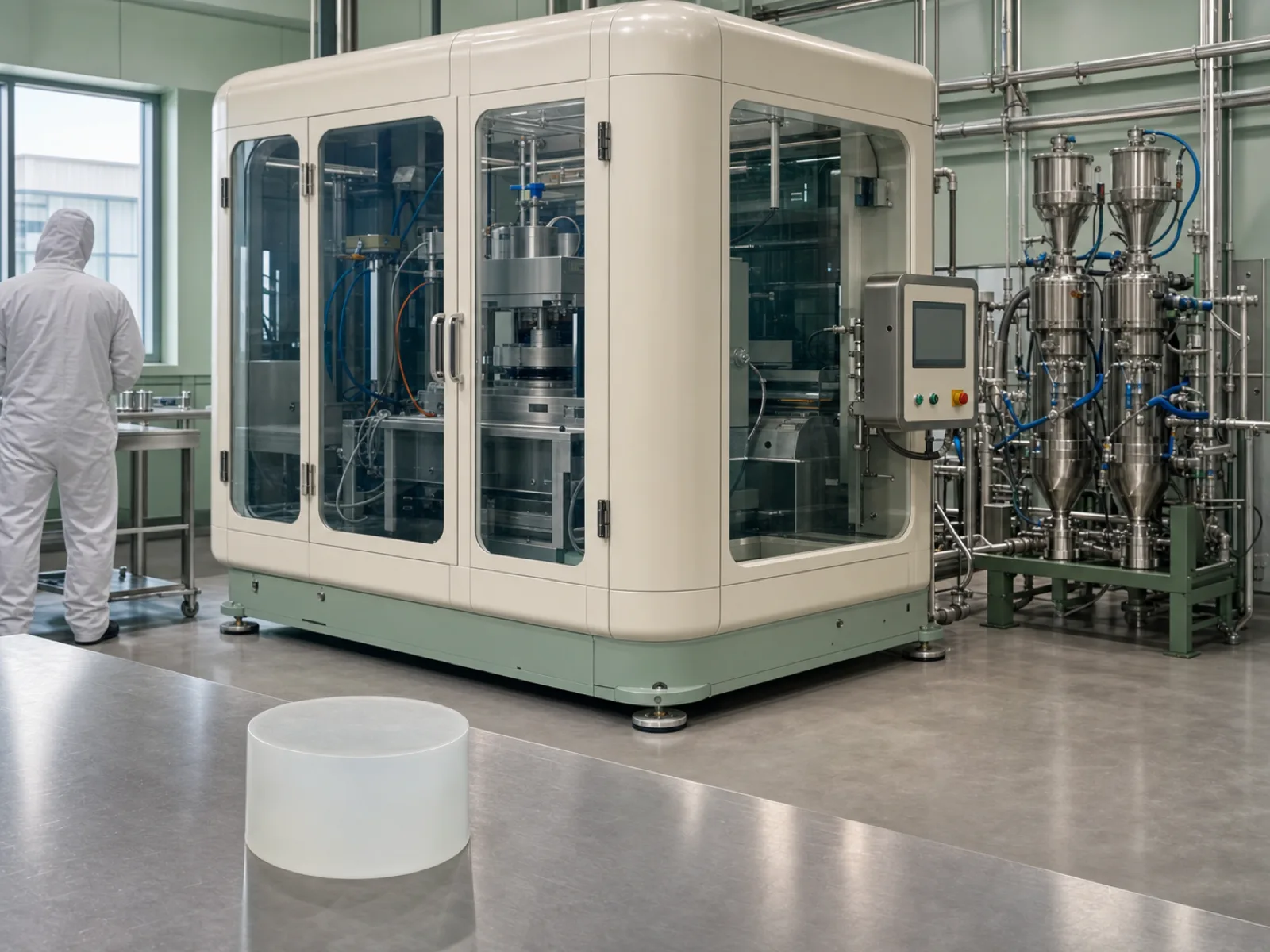
Medical-grade silicone production runs inside ISO Class 7 or Class 8 cleanroom cells per ISO 14644-1[^iso-14644-1] — gowning protocols, particulate monitoring, HEPA-filtered airflow, and batch segregation from any adjacent food-grade or industrial-grade production. It is the manufacturing-infrastructure gap most food-grade silicone factories can't cross, and it is the first thing any serious brand-buyer audit should verify by video walk-through.
The cleanroom classification determines the airborne particulate limits during production. ISO Class 8 permits up to 3,520,000 particles ≥ 0.5 µm per cubic meter; ISO Class 7 is 10× tighter at 352,000 per cubic meter. Medical-grade silicone injection cells typically operate at Class 7 or Class 8 depending on the finished device classification.
Four infrastructure elements a brand-buyer audit should verify:
- Gowning protocol — dedicated gowning room upstream of the cleanroom entry, with lab coats, hair covers, shoe covers, and gloves per ISO 14644-5 procedures. Operators do not walk between cleanroom and general shop floor without full re-gowning.
- Particulate monitoring — real-time or interval sampling of airborne particles at defined locations within the cleanroom, logged against ISO Class 7 or Class 8 limits per batch. A factory that cannot show you the last month’s particulate log is not operating a real cleanroom.
- Batch segregation — the raw resin, tooling, and finished-part flow for medical-grade batches is physically separated from food-grade and industrial batches. Cross-contamination between grades is a compliance failure, not a process nuance.
- HEPA filtration and pressure differential — cleanroom is at positive pressure relative to gowning and adjacent shop floor, with HEPA filtration on inlet air. Pressure differential is monitored and logged.
Wetop’s medical-grade production runs inside dedicated ISO Class 8 cells with the four elements above documented per batch. Brand buyers evaluating a prospective OEM should ask for the cleanroom particulate log, gowning protocol document, and a video-call factory walk-through covering all four elements before accepting a medical-grade quote. The sourcing checklist walks through the full audit sequence.
Colorants, pigments, and secondary additives — the hidden qualification trap
The most common medical-grade OEM failure is specifying medical-grade base LSR but running a food-grade pigment masterbatch — which voids the USP Class VI claim on the finished part because the pigment introduces uncharacterized extractables. Every colorant, secondary additive, and mold-release agent must carry its own USP Class VI dossier for the finished-part claim to hold. Budget for pigment re-qualification separately from base-resin substitution when stepping a program up to medical-grade.
The trap is straightforward. A brand buyer negotiates the base-resin upgrade from food-grade HCR at $12/kg to medical-grade LSR at $45/kg, budgets for the increased tooling and validation, and issues the RFQ. The supplier quotes correctly on the base resin but sources a food-grade pigment masterbatch — often for legitimate reasons of color-match consistency, sometimes for cost — and delivers a first-article that visually matches the target Pantone but voids the finished-part USP Class VI claim.
Three pigment and additive categories brand buyers should specify explicitly on the RFQ:
- Colorant masterbatch — must reference a USP Class VI dossier from the pigment supplier (Silchem, Grafe Silicone Coloration, Momentive pre-qualified colorants). “Food-grade compatible” is not equivalent language.
- Mold-release agent — most food-grade releases are silicone-oil based and are permitted under 21 CFR 177.2600. Medical-grade programs must use validated release agents with their own USP Class VI qualification, or use no release agent at all (a common LSR practice, since the cold-runner tool geometry minimizes release requirement).
- Secondary process aids — flow modifiers, catalysts, inhibitors used in some LSR formulations. Every additive must appear on the compound house’s finished-part CoA and carry its own dossier.
The finished-part CoA is what the auditor reviews. If any component in the compound stack lacks USP Class VI or ISO 10993 documentation, the finished-part claim is not defensible. Every pigment, every process aid, every mold-release agent is inside the audit scope.
What documentation should a medical-grade silicone RFQ demand?
Six-document audit-proof packet: raw-material CoA with USP Class VI reference and lot traceability, ISO 10993-5 and -10 test reports on finished-part material from an accredited lab, platinum-cure attestation on the master-batch lot certificate, colorant and additive Class VI dossiers, cleanroom process log with particulate monitoring records, and IQ/OQ/PQ tooling and process validation records per the ISO 13485[^iso-13485] framework where the finished product qualifies as a medical device.
The documentation packet a brand buyer should demand on every medical-grade production batch:
- Raw-material CoA with USP Class VI reference — from the compound house (Dow, Wacker, Momentive, Shin-Etsu), referencing a specific product code (e.g., Silastic Q7-4780) with USP <88> Class VI classification stated and lot number traceable to the finished batch.
- ISO 10993-5 cytotoxicity and -10 irritation/sensitization test reports — run on finished-part material extracts (not raw resin) from an accredited third-party lab (SGS, Intertek, TÜV, Bureau Veritas). For prolonged mucosal contact, add ISO 10993-11 systemic toxicity5.
- Platinum-cure attestation — the master-batch lot certificate must specify “platinum-cured LSR” with the compound-house product code and cure-catalyst chemistry. Vague “medical-grade silicone” language on the certificate is the tell for an under-qualified supplier.
- Colorant and additive USP Class VI dossiers — one dossier per pigment, one per process aid, one per mold-release agent, sourced from the pigment or additive supplier.
- Cleanroom process log — particulate monitoring data per batch against ISO 14644-1 Class 7 or 8 limits, gowning entry log, HEPA filter maintenance record, batch segregation confirmation.
- IQ/OQ/PQ validation record — installation qualification (tool installed to spec), operational qualification (tool runs to process window across all cavities), performance qualification (three consecutive production lots meet finished-part CoA) per the ISO 13485 spirit. FDA’s own guidance on ISO 10993-1 evaluation7 cross-references this validation framework.
Wetop’s default packet on medical-grade LSR programs includes all six documents bundled with every production batch, retained for 36 months minimum per ISO 9001 quality management requirements. The FDA vs LFGB decoder walks the parallel food-grade documentation stack; the two packets are not interchangeable.
What Wetop OEMs for food-grade vs medical-grade programs
Wetop runs food-grade HCR compression cells and medical-grade platinum-cured LSR injection cells on the same ISO 9001 certified floor — with dedicated ISO Class 8 cleanroom cells for medical-grade production, IQ/OQ/PQ tooling validation on medical-grade programs, and per-batch CoA/CoC documentation on both grades. MOQ 500 on either grade, with medical-grade programs typically running 5,000-100,000 units per year on high-cavitation LSR tooling amortized across a 3-5 year program horizon.
Program defaults by category:
- Food-grade HCR — silicone drying mats, sink grids, kitchen accessories at Tier 2 retail. FDA 21 CFR 177.2600 and LFGB §30/31 compliance, per-batch extractables reports, standard 4-6 hour post-cure at 200°C. Base resin at $10-15/kg, tooling amortized over commodity-tier program economics.
- Food-grade platinum-cure HCR or LSR — premium retail housewares programs with PFAS-free marketing claim and EU premium retail positioning. Same food-grade compliance stack, cleaner extractables from platinum-cure chemistry, higher unit cost.
- Medical-grade platinum-cure LSR — customer brands who OEM body-safe silicone products in the intimate wellness category, personal care applicators, wearable devices with mucosal or prolonged skin contact. USP Class VI raw-resin CoA, ISO 10993-5/-10 on finished-part material, dedicated ISO Class 8 cleanroom cell, IQ/OQ/PQ tooling validation, six-document audit-proof packet per batch.
MOQ 500 on either grade — details in the MOQ and lead time guide — with medical-grade LSR programs typically running 10,000-50,000-unit initial production runs and 3-5 year program horizons that amortize the tooling and validation cost.
Sourcing a body-safe silicone program where the grade decision matters? Email inquiry@wetopsilicone.com with your contact category (skin / mucosal / implantable), duration, and marketing claim scope — an engineer replies with a grade recommendation, applicable ISO 10993 sub-parts, and the six-document packet you should expect at production. Full engineering capabilities on the capabilities page.
Ready to source? Every quote is built against your specification — send a contact category, duration, and marketing claim scope, and an engineer replies within one business day with grade recommendation and documentation packet outline. Request a quote →
Footnotes
-
United States Pharmacopeia. USP <88> — Biological Reactivity Tests, In Vivo. https://www.usp.org/harmonization-standards/pdg/excipients/plastic-materials — defines the six-class biological reactivity system that medical-grade silicone qualifies against. ↩ ↩2
-
International Organization for Standardization. ISO 10993-1:2018 — Biological evaluation of medical devices — Part 1. https://www.iso.org/standard/68936.html — the umbrella biocompatibility standard whose clause 5 defines the contact-category and duration decision matrix. ↩ ↩2
-
International Organization for Standardization. ISO 10993-5:2009 — Biological evaluation of medical devices — Part 5: Tests for in vitro cytotoxicity. https://www.iso.org/standard/36406.html — the cytotoxicity test standard for finished-part silicone extracts. ↩
-
International Organization for Standardization. ISO 10993-10:2021 — Biological evaluation of medical devices — Part 10: Tests for skin sensitization. https://www.iso.org/standard/75279.html — the irritation and sensitization test standard applied to mucosal-contact programs. ↩
-
International Organization for Standardization. ISO 10993-11:2017 — Biological evaluation of medical devices — Part 11: Tests for systemic toxicity. https://www.iso.org/standard/68426.html — the systemic toxicity panel triggered by prolonged mucosal contact or body-safe marketing claims. ↩ ↩2
-
International Organization for Standardization. ISO 14644-1:2015 — Cleanrooms and associated controlled environments — Part 1. https://www.iso.org/standard/53394.html — defines the ISO Class 7 and Class 8 cleanroom particulate specifications Wetop’s medical-grade cells operate against. ↩
-
US Food and Drug Administration. Use of International Standard ISO 10993-1 — Guidance for Industry (2020). https://www.fda.gov/regulatory-information/search-fda-guidance-documents/use-international-standard-iso-10993-1-biological-evaluation-medical-devices-part-1-evaluation-and — FDA’s official position mapping ISO 10993 evaluations to US regulatory acceptance. ↩
FAQ
-
What's the actual difference between food-grade and medical-grade silicone?
The polymer backbone is often identical (polydimethylsiloxane) — the delta is regulatory intent and testing depth. Food-grade silicone clears FDA 21 CFR 177.2600, which regulates composition and repeated food-contact use. Medical-grade silicone clears USP Class VI (USP <88> in-vivo biological reactivity, per the pharmacopeia standard[^usp-class-vi]) plus applicable panels of ISO 10993 for biological evaluation of medical devices[^iso-10993-1]. Medical-grade formulations are typically platinum-cured LSR from qualified raw-material lots with < 0.5% total volatiles, versus 2-3% for food-grade HCR. Cost delta on the raw resin is 3-8× per kilogram.
-
Is food-grade silicone safe for body-contact or intimate wellness products?
For skin-contact accessories with intermittent use, food-grade platinum-cured silicone meeting 21 CFR 177.2600 is generally acceptable. For mucosal contact exceeding 24 hours or products marketed as body-safe under intimate wellness positioning, the regulatory audit floor rises to USP Class VI plus the ISO 10993-5 cytotoxicity, -10 irritation and sensitization, and often -11 systemic toxicity panels. Customer brands who OEM body-safe silicone products should default to medical-grade LSR to survive retailer compliance audit and marketplace listing review.
-
Do I need USP Class VI or the full ISO 10993 panel for a body-contact silicone product?
USP Class VI (via USP <88>[^usp-class-vi]) is a bundled screening battery covering systemic injection, intracutaneous, and implantation reactivity — a widely-accepted floor for medical-adjacent materials. The ISO 10993 series[^iso-10993-1] is the medical device standard and is more granular: ISO 10993-5 (cytotoxicity), -10 (irritation and sensitization), and -11 (systemic toxicity) are the mucosal-contact defaults. In practice, most non-implantable body-safe silicone programs spec both — USP Class VI on raw resin CoA plus ISO 10993-5/-10 on finished-part material extracts.
-
Why does medical-grade silicone cost 3-8× more than food-grade?
Three drivers. First, the raw resin: qualified medical-grade LSR (e.g., Dow Silastic BioMedical, Wacker SilBione, Momentive Silopren LSR 2000-series) runs $30-80 per kilogram vs $8-15 per kilogram for food-grade HCR, because compound houses hold tighter extractables specs (< 0.5% total volatiles) and provide lot-level CoA with full raw-material traceability. Second, cleanroom manufacturing infrastructure — ISO Class 7/8 gowning, particulate monitoring, and batch segregation add 15-25% to processing overhead. Third, validation: IQ/OQ/PQ tooling qualification adds one-time $8,000-25,000 per SKU, amortized over program volume.
-
Can I use food-grade silicone with a medical-grade colorant, or vice versa?
No — the entire compound stack must qualify to the higher standard. The most common OEM failure is specifying medical-grade base LSR but running a food-grade pigment or masterbatch, which voids the USP Class VI claim on the finished part because the pigment introduces uncharacterized extractables. Every colorant, secondary additive, and mold-release agent must carry its own Class VI dossier for the finished part to retain the claim. If you're stepping a program up to medical-grade, budget for pigment re-qualification separately from base-resin substitution.
-
What's LSR vs HCR — and which grade uses which?
Liquid silicone rubber (LSR) is a two-part platinum-cured silicone injection-molded from heated barrels into a cold-runner tool; it dominates high-cavitation medical-grade production because of dimensional precision (± 0.05 mm) and low residual volatiles out of the mold. High-consistency rubber (HCR) is a gum-form silicone compression-molded or transfer-molded; it dominates food-grade kitchenware production because tooling and cycle costs are lower at moderate volumes. Medical-grade programs almost universally run LSR. Food-grade programs mix both — LSR for tight-tolerance parts, HCR for larger geometries like drying mats and sink grids. See the [LSR explainer](/guide/what-is-liquid-silicone-rubber-lsr-explained/) for the full comparison.
-
What ISO 10993 tests do I actually need for a body-safe silicone finished product?
Depends on contact category and duration per ISO 10993-1:2018 clause 5[^iso-10993-1]. For surface-contact skin devices under 24 hours: ISO 10993-5 (cytotoxicity) plus -10 (irritation and skin sensitization) are typical. For mucosal contact 24 hours to 30 days: add -11 (acute systemic toxicity) and often -23 (irritation on mucosal tissue). For implantable or long-term contact: expand to -6 (local effects after implantation) and -11 subchronic. Wetop's compliance stack for medical-grade LSR programs by default runs -5, -10, and -11 on every production lot — the same three panels most retail intimate wellness auditors demand.
-
What documentation must a silicone OEM provide for a medical-grade program?
Six-document audit-proof packet: (1) raw-material Certificate of Analysis referencing USP Class VI compliance per USP <88>[^usp-class-vi] with lot traceability to the compound house; (2) ISO 10993-5 cytotoxicity and -10 irritation/sensitization test reports run on finished-part material extracts from an accredited lab (SGS / Intertek / TÜV / Bureau Veritas); (3) platinum-cure attestation on master-batch lot certificate — not the vague phrase 'medical-grade'; (4) colorant and additive Class VI dossier for every pigment or process aid in the compound; (5) cleanroom process log (ISO Class 7/8 gowning, particulate monitoring, batch segregation records); (6) IQ/OQ/PQ tooling and process validation records per ISO 13485 spirit if the finished product qualifies as a medical device.
-
How do I verify a Chinese silicone factory is actually running medical-grade production?
Three verification steps most brand buyers skip. First, ask for the compound-house purchase order for the raw resin — a genuine medical-grade LSR order to Dow, Wacker, or Momentive references a specific product code (Silastic Q7-4780, SilBione LSR 4370, Silopren LSR 2670). Vague 'medical-grade silicone from a reputable source' language is the tell. Second, ask for the last three USP <88> or ISO 10993 test reports on finished-part material, not just raw-resin certificates — factories that can't produce these have never actually run a validated medical-grade program. Third, do a video-call factory walk-through of the cleanroom, gowning area, and particulate monitor readout. Details on what to demand in the [sourcing checklist](/guide/sourcing-silicone-factory-checklist/).
References
Authoritative sources cited in this guide
- US Food and Drug Administration (Code of Federal Regulations). 21 CFR 177.2600 — Rubber articles intended for repeated use. https://www.ecfr.gov/current/title-21/chapter-I/subchapter-B/part-177/subpart-C/section-177.2600 — The primary US regulation defining food-grade silicone composition and repeated-use food-contact requirements. Governs the compositional side of the food-grade / medical-grade delta.
- United States Pharmacopeia. USP <88> — Biological Reactivity Tests, In Vivo. https://www.usp.org/harmonization-standards/pdg/excipients/plastic-materials — Defines the six-classification biological reactivity system (Class I through VI) that medical-grade silicone must qualify against. Class VI is the strictest and the standard baseline for body-contact silicone.
- International Organization for Standardization. ISO 10993-1:2018 — Biological evaluation of medical devices — Part 1: Evaluation and testing within a risk management process. https://www.iso.org/standard/68936.html — The umbrella biocompatibility standard for medical devices. Clause 5 defines the contact-category and duration decision matrix that determines which sub-parts (5, 10, 11, etc.) apply to a given product.
- International Organization for Standardization. ISO 10993-5:2009 — Biological evaluation of medical devices — Part 5: Tests for in vitro cytotoxicity. https://www.iso.org/standard/36406.html — The cytotoxicity test standard applied to finished-part silicone extracts. Standard first-line panel for body-contact intimate wellness OEM.
- International Organization for Standardization. ISO 10993-10:2021 — Biological evaluation of medical devices — Part 10: Tests for skin sensitization. https://www.iso.org/standard/75279.html — The irritation and skin/mucosal sensitization test standard. Required alongside -5 for mucosal-contact silicone programs.
- International Organization for Standardization. ISO 10993-11:2017 — Biological evaluation of medical devices — Part 11: Tests for systemic toxicity. https://www.iso.org/standard/68426.html — The systemic toxicity panel triggered when mucosal contact exceeds 24 hours or when body-safe marketing is applied to the finished silicone product.
- International Organization for Standardization. ISO 13485:2016 — Medical devices — Quality management systems. https://www.iso.org/standard/59752.html — The quality management standard governing IQ/OQ/PQ tooling and process validation on medical-device silicone manufacturing runs.
- International Organization for Standardization. ISO 14644-1:2015 — Cleanrooms and associated controlled environments — Part 1: Classification of air cleanliness by particle concentration. https://www.iso.org/standard/53394.html — Defines the ISO Class 7 and Class 8 cleanroom particulate specifications applicable to medical-grade silicone injection-molding cells.
- US Food and Drug Administration. Use of International Standard ISO 10993-1 — FDA Guidance for Industry (2020). https://www.fda.gov/regulatory-information/search-fda-guidance-documents/use-international-standard-iso-10993-1-biological-evaluation-medical-devices-part-1-evaluation-and — FDA's official position on how ISO 10993 evaluations map to US regulatory acceptance for medical device biocompatibility submissions.
Start a custom program
Send a brief. Get an engineer’s reply in one business day.
Every Wetop program is tooled from a customer’s specification. Send a CAD file (STEP · IGES · DWG) or a written brief and we’ll reply with a mold cost estimate, price brackets at MOQ 500 / 1,000 / 5,000, and any engineering questions.