Certification · informational intent
Is Silicone Safe for the Body? An OEM Engineering Guide
 Certification
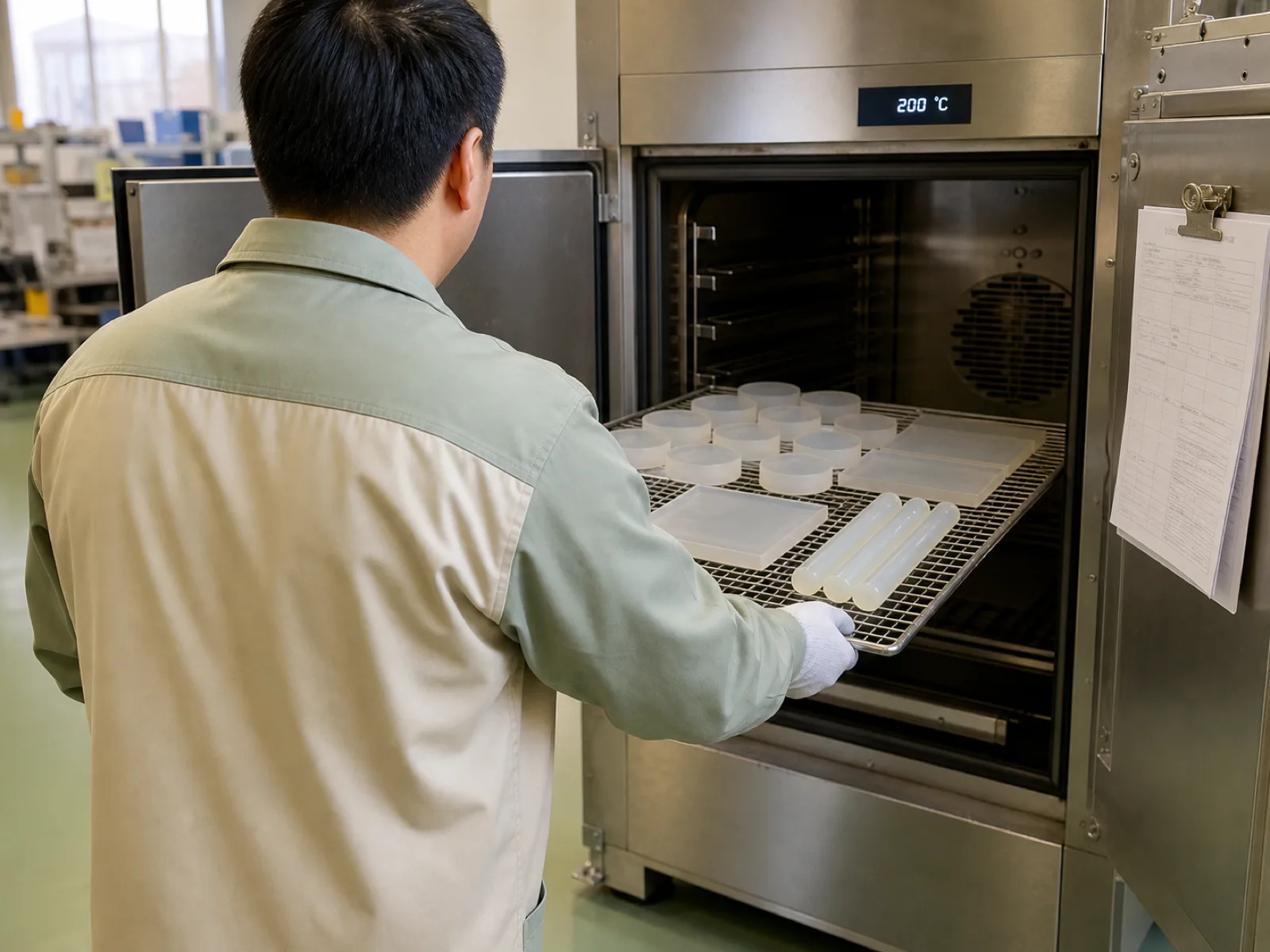
 Silicone is safe for body-contact products when the compound is platinum-cured, the finished part clears USP Class VI plus ISO 10993-5 and 10993-10 biocompatibility, and the OEM has run a 4-hour post-cure at 200 °C to drive residual cyclosiloxanes below 0.5 %. FDA 21 CFR 177.2600 alone — the food-contact regulation most brands quote — does not answer the body-safety question. The defensible engineering file names the raw-material grade, attaches the biocompatibility test package, and documents the post-cure schedule per production lot.
The question “is silicone safe for body” arrives at engineering desks from two types of brand owners — intimate wellness OEM programs looking for a compliant material path, and consumer-goods brands extending into skin-contact SKUs. Both need the same answer set: what “body-safe” means in regulatory terms, which cure chemistry qualifies, what tests establish the claim, and what the OEM must document per lot. This guide is written for the compliance file, not the marketing site — every claim traces to an ISO standard, an FDA regulation, or a material-supplier COA.
Key takeaways
- ‘Body-safe silicone’ is not a regulatory label — the defensible answer is platinum-cured LSR or HCR cleared to USP Class VI and ISO 10993-5/-10 on the finished part.
- Only platinum-cured (addition-cure) silicone belongs on body-contact surfaces — peroxide-cured compounds carry acidic byproducts that fail extractables testing.
- FDA 21 CFR 177.2600 clears silicone for repeated food contact, not for body-contact use — brands that cite it alone are mis-scoping the compliance file.
- A 4-hour post-cure at 200 °C drives residual cyclosiloxanes (D4, D5, D6) below the 0.5 % ceiling regulators track.
- The OEM-side spec that separates a defensible program from an Alibaba blend: durometer + tensile + tear + USP Class VI + ISO 10993-5 + ISO 10993-10 + batch-level COA.
- For intimate wellness brand OEM programs, the brand owner — not the molder — carries FDA device-registration or 510(k) responsibility.
- Six failure modes distinguish real body-safe silicone from filler-cut blends: bleach flame, permanent stretch, chemical smell, tackiness, dye migration, and third-party lab discrepancies.
What does “body-safe silicone” actually mean?
"Body-safe silicone" is an industry shorthand, not a regulatory classification. The defensible technical equivalent is platinum-cured medical-grade silicone (LSR or HCR) that has cleared USP Class VI plus ISO 10993-5 cytotoxicity and ISO 10993-10 skin sensitization on the finished, post-cured part. When a brand asks the engineering desk this question, the answer names those three tests — not marketing adjectives.
The regulatory landscape distinguishes four silicone tiers that get conflated in casual conversation:
Industrial-grade silicone is the base compound used for gaskets, seals, and non-contact parts. There is no biocompatibility requirement. Filler content (silica, calcium carbonate) is often above 30 %, and cure system may be peroxide.
Food-grade silicone is silicone that clears FDA 21 CFR 177.26001 for repeated food contact — an extractables limit test. LFGB clearance in Europe is the parallel path. Food-grade compounds are typically platinum-cured, but the food regulation itself does not test for skin, mucosal, or implanted body contact.
Medical-grade silicone is compound formulated to pass USP Class VI2 biological reactivity testing and ISO 10993-53 cytotoxicity plus ISO 10993-104 sensitization on the finished part. This is the tier that supports body-contact claims. Major suppliers publish medical-grade lines with COA evidence — Dow Silastic Q7-4XXX series, Wacker SILPURAN, Momentive Silopren LSR Select, Elkem SILBIONE Biomedical.
Implantable-grade silicone clears extended ISO 10993 testing — genotoxicity, chronic toxicity, implantation up to 26 weeks — for use in long-term implants. This tier is not required for external body-contact or intimate wellness OEM programs.
The failure pattern the engineering desk sees most: a brand owner sends an RFQ specifying “medical grade / food safe / body safe” as if the three are synonymous. They are not. A defensible body-safe silicone file names the raw material by supplier grade code, attaches the ISO 10993 test package on the finished part, and documents the post-cure schedule.
Which cure chemistry qualifies as body-safe — platinum or peroxide?
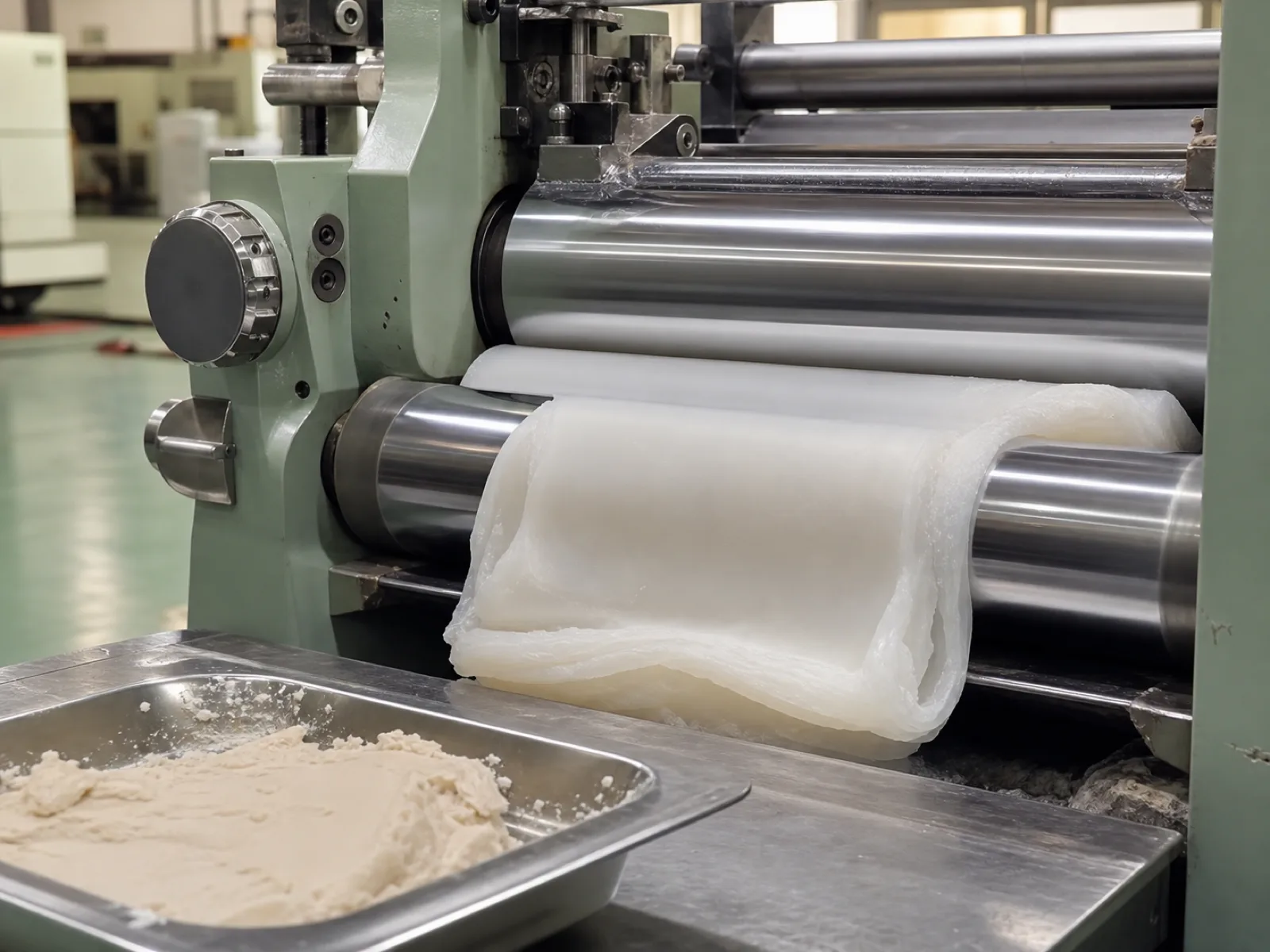
Only platinum-cured (addition-cure) silicone qualifies for body-contact use. The reaction is a clean addition of Si-H across a vinyl double bond, catalyzed by a platinum complex — no byproducts leave the polymer. Peroxide-cured silicone releases acidic residues (2,4-dichlorobenzoic acid from DCBP catalyst) that fail USP Class VI extractables. Any OEM proposing peroxide cure for a body-safe program should be disqualified at RFQ.
The chemistry difference matters because “extractables” — what can migrate out of the finished part into contact with tissue — is the regulatory concern USP Class VI and ISO 10993 test for.
Platinum cure (addition cure): vinyl-terminated silicone chains react with hydride-functional crosslinker in the presence of a platinum catalyst (Karstedt’s or Speier’s). The reaction produces no volatile byproducts. Residual platinum is at ppm level and non-migratory. This is the only cure chemistry used in medical-grade silicone lines from Dow, Wacker, Momentive, and Elkem.
Peroxide cure: dichlorobenzoyl peroxide (DCBP) or 2,4-dichlorobenzoyl peroxide decomposes at cure temperature to generate free radicals that crosslink the polymer. The decomposition products include 2,4-dichlorobenzoic acid — an acidic, extractable residue. Peroxide-cured silicone has a faint acidic smell fresh from the mold. A post-bake helps but does not eliminate the residue completely.
See the platinum-cured vs peroxide-cured silicone comparison guide for the full cure-chemistry decision matrix.
The commercial pattern the engineering desk sees: brand owners get quoted platinum-cure prices from one factory and peroxide-cure prices from another and cannot tell why the numbers differ. Peroxide cure runs 10-15 % cheaper on raw material and molds slightly faster on compression tooling. For food-storage and industrial applications the savings are legitimate. For body-contact silicone the savings are not available — peroxide cure is off the table before pricing even opens.
What tests establish body-safe silicone — USP Class VI, ISO 10993, or FDA 177.2600?
USP Class VI plus ISO 10993-5 and ISO 10993-10 establish body-safe silicone; FDA 21 CFR 177.2600 does not. Class VI tests systemic toxicity, intracutaneous reactivity, and implantation on the finished part. ISO 10993-5 tests in vitro cytotoxicity by MEM elution or agar overlay. ISO 10993-10 tests skin sensitization by guinea pig maximization or LLNA. FDA 177.2600 is a food-contact extractables regulation — a different question set.
The minimum defensible test package for surface-contact body-safe silicone parts:
| Test | Standard | What it measures | Pass criterion |
|---|---|---|---|
| Systemic toxicity | USP <88> Class VI | Acute systemic reactivity by extract injection | No mortality, no significant reaction vs. control |
| Intracutaneous reactivity | USP <88> Class VI | Dermal reaction to extract | Difference score ≤ 1.0 vs. control |
| Implantation | USP <88> Class VI | Local tissue response at 5 days / 14 days | Non-irritant grade on scoring scale |
| In vitro cytotoxicity | ISO 10993-5 | MEM elution or agar overlay cell response | Grade ≤ 2 (mild reactivity max) |
| Skin sensitization | ISO 10993-10 | Guinea pig maximization or LLNA | Non-sensitizer |
| Skin irritation | ISO 10993-10 | Primary skin irritation | Primary irritation index ≤ 0.4 |
Longer-contact or mucosal-contact devices add ISO 10993-11 systemic toxicity, ISO 10993-3 genotoxicity, and — for permanent implants — ISO 10993-6 local effects after implantation.
FDA 21 CFR 177.26001 is a food-additive regulation permitting silicone rubber for repeated food-contact articles under specific total-extractable and chloroform-soluble-extractable limits. It clears silicone for kitchenware, bakeware, and food processing — not for body-contact devices. A brand that cites 177.2600 alone on an intimate wellness or skin-contact OEM program is presenting an incomplete compliance file.
The scope question the engineering desk answers most: “we have FDA on our silicone — is that enough?” The answer is no for body-contact use. FDA food-contact clearance is a subset of the material story. The finished-part biocompatibility tests are the piece that establishes body safety.
Why do D4, D5, and D6 cyclosiloxanes matter for body-safe silicone?
D4, D5, and D6 cyclosiloxanes are low-molecular-weight cyclic residuals from silicone polymerization that regulators track for skin-contact use. D4 is a REACH SVHC substance under ECHA[^echa-d4], Canada CEPA-listed, and California Prop 65-listed. A 4-hour post-cure at 200 °C drives D4/D5/D6 below the 0.5 % ceiling regulators watch. Skip the post-cure and body-safe claims are unverifiable.
Silicone polymer chains are formed by ring-opening polymerization of cyclic siloxanes. The reaction never runs to completion — a small fraction (typically 1-3 % on molded parts before post-cure) remains as low-molecular-weight cyclics: D4 (octamethylcyclotetrasiloxane), D5 (decamethylcyclopentasiloxane), and D6 (dodecamethylcyclohexasiloxane).
These residuals can migrate. D4 is the most heavily regulated:
- REACH (Europe): D4 is on the SVHC candidate list under ECHA registration, restricted in wash-off cosmetics above 0.1 %.
- Canada CEPA: D4 listed under the Chemicals Management Plan for environmental persistence.
- California Prop 65: D4 listed for reproductive toxicity as of 2020.
For body-contact silicone parts the mitigation is a documented post-cure. Industry standard for medical-grade LSR and HCR is a 4-hour bake at 200 °C in a forced-convection oven. This drives residual D4/D5/D6 below 0.5 % — the ceiling regulators historically monitor for skin-contact and mucosal-contact use. Suppliers publish D4 residual specifications on their medical-grade COAs; Wacker SILPURAN and Dow Silastic Q7-4XXX both quote < 300 ppm on finished parts post-cure.
The OEM verification step: request the post-cure oven log (batch, start time, temperature profile, duration) for every production lot. A body-safe silicone program without documented post-cure is not defensible if a regulator asks.
What quality gates does the OEM run before body-safe silicone leaves the factory?
Five OEM-side quality gates separate a defensible body-safe silicone program from a filler-cut blend. Raw-material COA verification against the supplier lot number. Incoming platinum-cure lot inhibition test on a small purge shot. Cleanroom or ISO 8 molding tier for finished-part surface control. Post-cure oven log per batch. Batch-level release COA that carries durometer, tensile, tear, and biocompatibility statements traceable to the material lot.
The engineering desk runs the following release protocol on body-safe silicone programs:
Gate 1 — Raw material COA verification. The medical-grade drums arrive with a supplier COA. Wetop cross-checks the lot number against the supplier’s online portal, verifies durometer and viscosity fall within grade tolerance, and files the COA to the batch record.
Gate 2 — Cure inhibition purge test. Some pigments, mold releases, and even skin oils on operator gloves can inhibit platinum cure. A small purge shot is run before every production batch and pulled after the target cure cycle. If the shot is under-cured (tacky surface, low durometer), the batch is held.
Gate 3 — Molding tier control. Cleanroom molding is only required when the finished device classification demands it (ISO 14644-1 Class 8 for most Class I / II devices). For surface-contact body-safe silicone that ships to intimate wellness brand OEMs, Wetop typically molds in a controlled-access molding cell with dedicated tooling, filtered airflow, and no cross-contamination from peroxide-cure programs.
Gate 4 — Post-cure oven log. Every batch runs a 4-hour bake at 200 °C in a forced-convection oven. The oven controller logs batch ID, start time, ramp profile, hold, and cool-down. The log is filed to the batch record and available for regulator audit under FDA 21 CFR Part 8205 or ISO 134856 quality-system inspection.
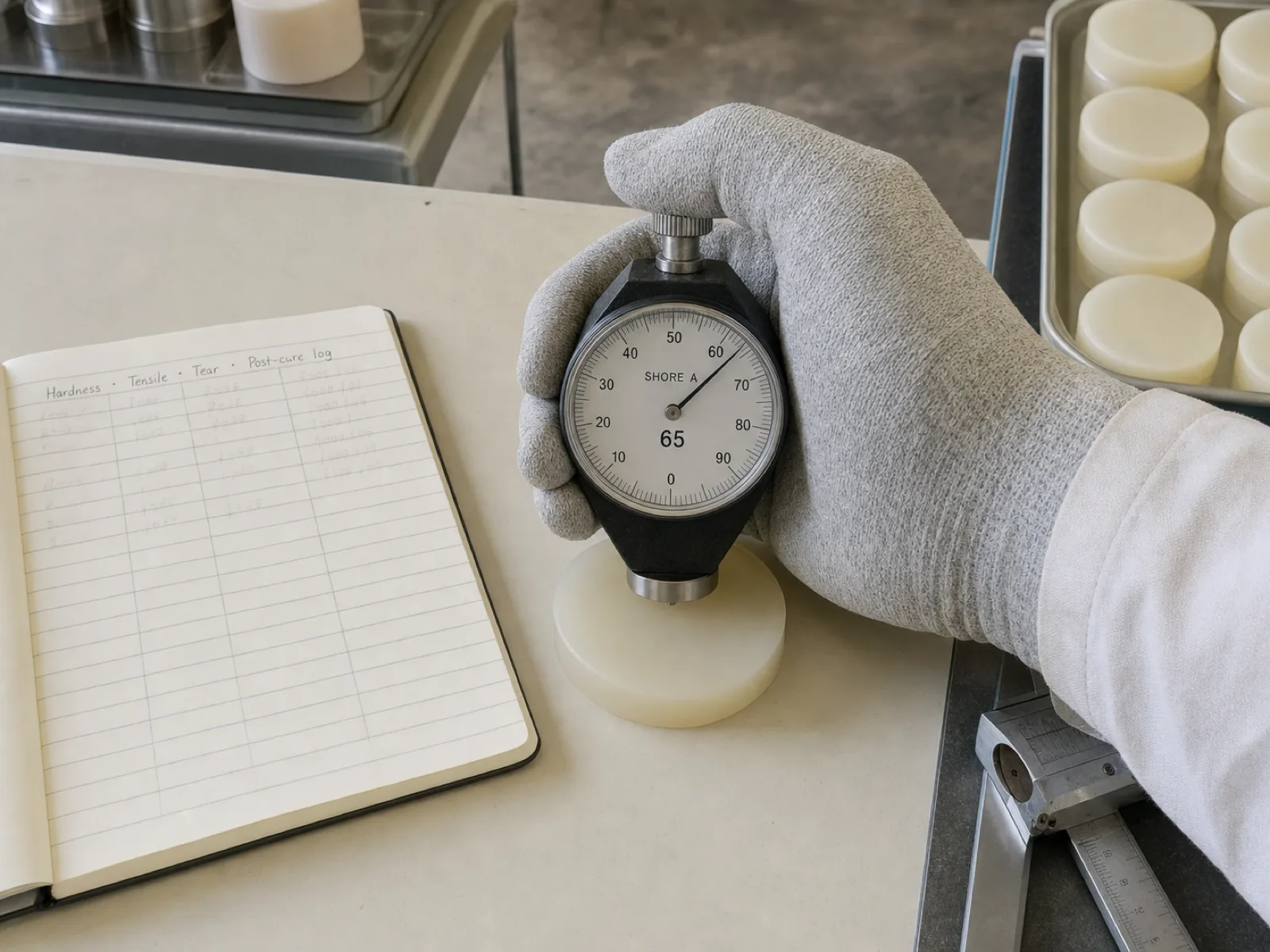
Gate 5 — Batch release COA. Every production lot ships with a batch release certificate that reports Shore A hardness per ASTM D22407, tensile strength (MPa) per ASTM D412, tear strength (kN/m) per ASTM D624, and biocompatibility test-package statement traceable to the raw-material COA lot number.
Who is responsible for FDA registration on finished body-safe silicone products?
The brand owner is the FDA-registered manufacturer of record for any Class I or Class II body-contact device, not the OEM molder. The OEM supplies material and process evidence — raw-material COA, ISO 10993 biocompatibility, post-cure schedule, batch traceability, quality system certification. The brand owner assembles the 510(k) submission or general-controls file, holds device registration, and carries labeling and post-market surveillance responsibility.
The compliance boundary the engineering desk clarifies on nearly every intimate wellness OEM kickoff call:
OEM (Wetop) responsibilities:
- Material selection to medical grade, platinum-cure
- ISO 10993-5/-10 and USP Class VI test package on finished part
- Post-cure documentation and batch traceability
- ISO 9001 quality system (ISO 13485 available on request for Class II devices)
- Batch release COA per lot
Brand owner responsibilities:
- FDA establishment registration and device listing (21 CFR Part 807)
- Device classification determination (Class I general controls, Class II 510(k), or Class III PMA)
- Design controls under 21 CFR Part 8205
- Labeling and instructions for use
- Post-market surveillance and MDR reporting
- CE marking (Europe) under MDR 2017/745 if applicable
The OEM does not hold device registration for the brand owner’s finished SKU. Wetop’s role is to make the material and process evidence available on a schedule that supports the brand owner’s 510(k) or general-controls file. Programs that try to invert this — where the brand owner asks the OEM to “own the compliance” — usually indicate a brand that has not yet engaged a regulatory affairs consultant. That is a red flag for the OEM engineering desk and typically ends in either a pre-launch scope reset or a program cancellation.
Brands new to body-safe silicone OEM should read the sourcing silicone factory checklist for the RFQ template that surfaces this responsibility boundary at the diligence stage.
How do buyers detect cheap “silicone” cut with fillers or the wrong cure system?
Six failure modes distinguish real body-safe silicone from filler-cut or peroxide-cured blends at the sample stage. Bleach-white flame test, permanent stretch after 500 % elongation, faint acidic chemical smell, surface tackiness, dye migration under IPA wipe, and third-party lab COA that fails to match the raw-material supplier COA lot. When body-contact stakes are involved, send the sample for XRF or FTIR verification — desktop tests are indicative, not conclusive.
The field-diagnostic checklist body-safe silicone buyers can run on incoming samples before signing off on production tooling:
| Test | Method | Real medical-grade silicone | Filler-cut or peroxide-cured |
|---|---|---|---|
| Flame test | Ignite a corner in a fume hood | Burns to white ash, minimal smoke | Black soot, oily residue |
| Stretch test | Stretch to 500 % elongation, release | Full snap-back, no permanent set | Retains 5-15 % deformation |
| Smell test | Post-cure sample, room temperature | Odorless | Faint acidic smell (peroxide byproducts) |
| Tackiness | Wipe with dry cotton | Cotton picks up nothing | Cotton picks up fine dust or gel |
| Dye migration | Wipe with IPA-soaked cotton | No color transfer | Pigment bleeds onto cotton |
| Third-party lab | Send sample for XRF filler analysis + FTIR polymer ID | Matches supplier COA (Dow / Wacker / Momentive / Elkem grade signature) | Filler content > 30 % or cure signature wrong |
None of these tests replace the ISO 10993 biocompatibility package on the finished part — they are pre-qualification filters that keep obvious mis-scoped samples from consuming test-lab budget. For programs where the finished device is body-contact and volume is above 5,000 units, the OEM should provide a signed material declaration listing raw-material supplier, grade code, lot number, cure chemistry, and post-cure schedule as part of the sample release.
Body-safe silicone spec template for OEM RFQs
The minimum defensible RFQ specification for body-safe silicone OEM programs names ten line items. Raw-material supplier and grade; cure chemistry; Shore A hardness with tolerance; tensile strength minimum; tear strength minimum; elongation-at-break minimum; USP Class VI clearance requirement; ISO 10993-5/-10 test package; post-cure schedule; and batch-level COA. Any RFQ missing these ten inputs will produce quotes that cannot be compared.
The template Wetop hands to brand owners drafting a body-safe silicone RFQ:
Material              : Platinum-cured medical-grade silicone (LSR or HCR)
Supplier grade        : Dow Silastic Q7-4XXX / Wacker SILPURAN /
                        Momentive Silopren LSR Select / Elkem SILBIONE Biomedical
                        (name the target; substitutions require engineering approval)
Cure chemistry        : Platinum addition cure (peroxide cure disqualifies the quote)
Shore A hardness      : 50 ± 5 (name your target; typical range 40-70 for body-contact)
Tensile strength      : ≥ 8 MPa (ASTM D412)
Tear strength         : ≥ 20 kN/m (ASTM D624, Die B)
Elongation at break   : ≥ 400 % (ASTM D412)
Biocompatibility      : USP Class VI + ISO 10993-5 cytotoxicity + ISO 10993-10 sensitization
                        on finished, post-cured part (attach test report to release)
Post-cure             : 4 hours at 200 °C, oven log per batch attached to release
Batch COA             : Hardness + tensile + tear + biocompat statement traceable to
                        raw-material lot; supplied with every production shipment
Two calibration notes. First, name the supplier grade — quotes on generic “medical-grade silicone” without a supplier reference invite substitution at production. Second, require the post-cure oven log per batch. This is the single documentation gate that separates a defensible body-safe silicone file from a compound that clears biocompat testing on the sample lot and quietly changes at scale.
For the broader safety framing beyond body-contact use — food, kitchen, general skin contact — see the companion guide is silicone safe: what buyers need to know, and for tubing programs specifically, the silicone medical tubing OEM guide.
Frequently asked questions
Is silicone safe for body-contact products?
Silicone is safe for body-contact products only when the compound is platinum-cured (addition-cure), the finished part clears USP Class VI plus ISO 10993-5 cytotoxicity and ISO 10993-10 sensitization, and the OEM has run a post-cure that drives cyclosiloxane residuals below 0.5 %. Bare FDA 21 CFR 177.2600 clearance is not enough — that regulation covers repeated food contact, not implanted or intimate body contact. A defensible body-safe silicone file names the raw-material grade (Dow, Wacker, Momentive, Elkem), attaches the biocompatibility test package, and includes the post-cure oven schedule.
What does “body-safe silicone” actually mean?
“Body-safe silicone” is an informal industry term — not a regulatory classification. The defensible technical equivalent is platinum-cured medical-grade silicone (LSR or HCR) that has cleared USP Class VI biological reactivity testing plus ISO 10993-5 (cytotoxicity) and ISO 10993-10 (skin sensitization and irritation) on the finished, post-cured part. When a brand asks “is silicone safe for body,” the correct answer names those tests, not marketing adjectives.
Is platinum-cured silicone required for body-contact parts?
Yes. Platinum-cured (addition-cure) silicone is the only defensible chemistry for body-contact use because it releases no cure byproducts — the reaction is a clean addition of Si-H across a vinyl double bond. Peroxide-cured silicone leaves acidic residues (2,4-dichlorobenzoic acid from DCBP catalyst systems) that fail USP Class VI extractables. Any OEM proposing peroxide cure for a body-safe silicone program should be disqualified at the RFQ stage.
Does FDA 21 CFR 177.2600 make silicone body-safe?
No. FDA 21 CFR 177.2600 is a food-additive regulation that permits silicone rubber for repeated food-contact articles under specific extractable limits. It does not clear silicone for skin contact, mucosal contact, or intimate body-contact use — those pathways require ISO 10993 biocompatibility evidence and, for regulated devices, USP Class VI or FDA device registration. Brands that cite 177.2600 alone on body-safe silicone products are mis-scoping the compliance file.
What are D4, D5, D6 cyclosiloxanes and why do they matter for body-safe silicone?
D4 (octamethylcyclotetrasiloxane), D5 (decamethylcyclopentasiloxane), and D6 (dodecamethylcyclohexasiloxane) are low-molecular-weight cyclic silicone residuals left over from polymerization. Regulators — ECHA under REACH, Canada CEPA, and California Prop 65 for D4 — track these because they can migrate from finished silicone parts. A 4-hour post-cure at 200 °C is the industry-standard step that drives D4/D5/D6 below the 0.5 % ceiling regulators watch for skin-contact and body-contact use.
How is body-safe silicone tested for biocompatibility?
Body-safe silicone is tested against ISO 10993 — the international biocompatibility framework. The minimum package for surface-contact devices is ISO 10993-5 (in vitro cytotoxicity by MEM elution or agar overlay) plus ISO 10993-10 (skin sensitization by guinea pig maximization or LLNA, plus irritation). USP Class VI adds systemic toxicity, intracutaneous reactivity, and implantation testing on the finished part. Every OEM production lot should attach the raw-material COA plus a batch-level biocompatibility statement referencing these tests.
Can body-safe silicone be autoclaved and sterilized?
Yes. Platinum-cured medical-grade silicone tolerates repeated autoclave cycles at 121 °C to 134 °C, ETO (ethylene oxide) sterilization, gamma irradiation up to about 50 kGy, and E-beam sterilization. The durability envelope depends on durometer, wall thickness, and any added colorants — high-hardness compounds (Shore A 70+) show slightly earlier compression-set degradation after 50+ autoclave cycles than softer grades. Sterilization compatibility should be validated as part of the OEM sample release, not assumed.
How do I detect cheap “silicone” cut with fillers or the wrong cure system?
Six failure modes flag a filler-cut or peroxide-cured compound in the sample stage. One — bleach-white flame test: real silicone burns to white ash, filler blends leave black soot. Two — permanent stretch: real silicone snaps back, filled compounds retain deformation. Three — chemical smell after post-cure: platinum-cured silicone is odorless, peroxide-cured smells faintly acidic. Four — surface tackiness. Five — dye migration under a wipe test with IPA. Six — third-party lab COA that fails to match the raw-material COA lot number. Send the sample for XRF or FTIR verification when the stakes are body-contact.
Who is responsible for FDA registration on body-safe silicone products — the OEM or the brand owner?
The brand owner is the FDA-registered manufacturer of record on any Class I or Class II medical or intimate wellness device, not the OEM molder. The OEM supplies material evidence (raw-material COA, ISO 10993 biocompatibility on the finished part, post-cure schedule, batch traceability) and manufacturing evidence (ISO 13485 quality system if the device requires it, cleanroom molding tier, cure profile records). The brand owner assembles those inputs into a 510(k) submission or a general controls file depending on the device classification.
What should an OEM sourcing checklist look like for body-safe silicone products?
The minimum RFQ package: name the raw-material brand and grade (Dow Silastic Q7-4XXX series, Wacker SILPURAN, Momentive Silopren LSR, Elkem SILBIONE) with attached COA; confirm platinum cure chemistry; specify durometer (Shore A ±5) plus tensile strength (MPa) plus tear strength (kN/m); attach USP Class VI plus ISO 10993-5/-10 test package on the finished part; document post-cure oven schedule (temperature, hours, batch traceability); confirm cleanroom molding tier if required; and require batch-level release certificates for every production lot.
Talk to the engineering desk
Brands running body-safe silicone OEM programs — intimate wellness, skin-contact accessories, medical device components — bring RFQs to Wetop with the ten-line spec template above. The engineering desk returns a quote that names the supplier grade, cure chemistry, biocompatibility package, and post-cure documentation on record. Contact the engineering desk with the finished-part drawing, target durometer, target volume, and body-contact classification, and expect a technical response within two working days.
Footnotes
-
21 CFR 177.2600 — Rubber articles intended for repeated use. US Food and Drug Administration. https://www.ecfr.gov/current/title-21/chapter-I/subchapter-B/part-177/section-177.2600 ↩ ↩2
-
USP <88> Biological Reactivity Tests, In Vivo — Plastic Class VI Classification. United States Pharmacopeia. https://www.usp.org/harmonization-standards/pdg/excipients/plastic-materials ↩
-
ISO 10993-5:2009 — Biological evaluation of medical devices — Part 5: Tests for in vitro cytotoxicity. International Organization for Standardization. https://www.iso.org/standard/36406.html ↩
-
ISO 10993-10:2010 — Biological evaluation of medical devices — Part 10: Tests for skin sensitization. International Organization for Standardization. https://www.iso.org/standard/40884.html ↩
-
21 CFR Part 820 — Quality System Regulation. US Food and Drug Administration. https://www.ecfr.gov/current/title-21/chapter-I/subchapter-H/part-820 ↩ ↩2
-
ISO 13485:2016 — Medical devices — Quality management systems. International Organization for Standardization. https://www.iso.org/standard/59752.html ↩
-
ASTM D2240 — Standard Test Method for Rubber Property — Durometer Hardness. ASTM International. https://www.astm.org/d2240-15r21.html ↩
FAQ
-
Is silicone safe for body-contact products?
Silicone is safe for body-contact products only when the compound is platinum-cured (addition-cure), the finished part clears USP Class VI plus ISO 10993-5 cytotoxicity and ISO 10993-10 sensitization, and the OEM has run a post-cure that drives cyclosiloxane residuals below 0.5 %. Bare FDA 21 CFR 177.2600 clearance is not enough — that regulation covers repeated food contact, not implanted or intimate body contact. A defensible body-safe silicone file names the raw-material grade (Dow, Wacker, Momentive, Elkem), attaches the biocompatibility test package, and includes the post-cure oven schedule.
-
What does 'body-safe silicone' actually mean?
'Body-safe silicone' is an informal industry term — not a regulatory classification. The defensible technical equivalent is platinum-cured medical-grade silicone (LSR or HCR) that has cleared USP Class VI biological reactivity testing plus ISO 10993-5 (cytotoxicity) and ISO 10993-10 (skin sensitization and irritation) on the finished, post-cured part. When a brand asks 'is silicone safe for body,' the correct answer names those tests, not marketing adjectives.
-
Is platinum-cured silicone required for body-contact parts?
Yes. Platinum-cured (addition-cure) silicone is the only defensible chemistry for body-contact use because it releases no cure byproducts — the reaction is a clean addition of Si-H across a vinyl double bond. Peroxide-cured silicone leaves acidic residues (2,4-dichlorobenzoic acid from DCBP catalyst systems) that fail USP Class VI extractables. Any OEM proposing peroxide cure for a body-safe silicone program should be disqualified at the RFQ stage.
-
Does FDA 21 CFR 177.2600 make silicone body-safe?
No. FDA 21 CFR 177.2600 is a food-additive regulation that permits silicone rubber for repeated food-contact articles under specific extractable limits. It does not clear silicone for skin contact, mucosal contact, or intimate body-contact use — those pathways require ISO 10993 biocompatibility evidence and, for regulated devices, USP Class VI or FDA device registration. Brands that cite 177.2600 alone on body-safe silicone products are mis-scoping the compliance file.
-
What are D4, D5, D6 cyclosiloxanes and why do they matter for body-safe silicone?
D4 (octamethylcyclotetrasiloxane), D5 (decamethylcyclopentasiloxane), and D6 (dodecamethylcyclohexasiloxane) are low-molecular-weight cyclic silicone residuals left over from polymerization. Regulators — ECHA under REACH, Canada CEPA, and California Prop 65 for D4 — track these because they can migrate from finished silicone parts. A 4-hour post-cure at 200 °C is the industry-standard step that drives D4/D5/D6 below the 0.5 % ceiling regulators watch for skin-contact and body-contact use.
-
How is body-safe silicone tested for biocompatibility?
Body-safe silicone is tested against ISO 10993 — the international biocompatibility framework. The minimum package for surface-contact devices is ISO 10993-5 (in vitro cytotoxicity by MEM elution or agar overlay) plus ISO 10993-10 (skin sensitization by guinea pig maximization or LLNA, plus irritation). USP Class VI adds systemic toxicity, intracutaneous reactivity, and implantation testing on the finished part. Every OEM production lot should attach the raw-material COA plus a batch-level biocompatibility statement referencing these tests.
-
Can body-safe silicone be autoclaved and sterilized?
Yes. Platinum-cured medical-grade silicone tolerates repeated autoclave cycles at 121 °C to 134 °C, ETO (ethylene oxide) sterilization, gamma irradiation up to about 50 kGy, and E-beam sterilization. The durability envelope depends on durometer, wall thickness, and any added colorants — high-hardness compounds (Shore A 70+) show slightly earlier compression-set degradation after 50+ autoclave cycles than softer grades. Sterilization compatibility should be validated as part of the OEM sample release, not assumed.
-
How do I detect cheap 'silicone' cut with fillers or the wrong cure system?
Six failure modes flag a filler-cut or peroxide-cured compound in the sample stage. One — bleach-white flame test: real silicone burns to white ash, filler blends leave black soot. Two — permanent stretch: real silicone snaps back, filled compounds retain deformation. Three — chemical smell after post-cure: platinum-cured silicone is odorless, peroxide-cured smells faintly acidic. Four — surface tackiness. Five — dye migration under a wipe test with IPA. Six — third-party lab COA that fails to match the raw-material COA lot number. Send the sample for XRF or FTIR verification when the stakes are body-contact.
-
Who is responsible for FDA registration on body-safe silicone products — the OEM or the brand owner?
The brand owner is the FDA-registered manufacturer of record on any Class I or Class II medical or intimate wellness device, not the OEM molder. The OEM supplies material evidence (raw-material COA, ISO 10993 biocompatibility on the finished part, post-cure schedule, batch traceability) and manufacturing evidence (ISO 13485 quality system if the device requires it, cleanroom molding tier, cure profile records). The brand owner assembles those inputs into a 510(k) submission or a general controls file depending on the device classification.
-
What should an OEM sourcing checklist look like for body-safe silicone products?
The minimum RFQ package: name the raw-material brand and grade (Dow Silastic Q7-4XXX series, Wacker SILPURAN, Momentive Silopren LSR, Elkem SILBIONE) with attached COA; confirm platinum cure chemistry; specify durometer (Shore A ±5) plus tensile strength (MPa) plus tear strength (kN/m); attach USP Class VI plus ISO 10993-5/-10 test package on the finished part; document post-cure oven schedule (temperature, hours, batch traceability); confirm cleanroom molding tier if required; and require batch-level release certificates for every production lot.
References
Authoritative sources cited in this guide
- United States Pharmacopeia. USP <88> Biological Reactivity Tests, In Vivo — Plastic Class VI Classification. https://www.usp.org/harmonization-standards/pdg/excipients/plastic-materials — Defines the systemic injection, intracutaneous, and implantation tests that establish Class VI plastics — the material-classification tier body-contact silicone parts must clear.
- International Organization for Standardization. ISO 10993-5:2009 — Biological evaluation of medical devices — Part 5: Tests for in vitro cytotoxicity. https://www.iso.org/standard/36406.html — The MEM elution and agar overlay methods that establish silicone non-toxicity at the cellular level — required for any body-contact claim.
- International Organization for Standardization. ISO 10993-10:2010 — Biological evaluation of medical devices — Part 10: Tests for skin sensitization. https://www.iso.org/standard/40884.html — The guinea pig maximization and LLNA methods that establish silicone as non-sensitizing on repeated skin or mucosal contact.
- US Food and Drug Administration. 21 CFR 177.2600 — Rubber articles intended for repeated use. https://www.ecfr.gov/current/title-21/chapter-I/subchapter-B/part-177/section-177.2600 — The food-contact regulation that permits silicone rubber under extractable limits — commonly cited but insufficient alone for body-contact use.
- European Chemicals Agency (ECHA). Substance Infocard — Octamethylcyclotetrasiloxane (D4). https://eur-lex.europa.eu/legal-content/EN/TXT/?uri=CELEX%3A32006R1907 — The REACH SVHC listing for D4 — the regulatory backbone for tracking cyclosiloxane residuals in finished silicone parts.
- US Food and Drug Administration. 21 CFR Part 820 — Quality System Regulation. https://www.ecfr.gov/current/title-21/chapter-I/subchapter-H/part-820 — The quality system that a brand owner's finished-device manufacturer of record operates under — defines OEM-vs-brand responsibility boundaries.
- International Organization for Standardization. ISO 13485:2016 — Medical devices — Quality management systems. https://www.iso.org/standard/59752.html — The medical-device QMS standard OEMs adopt when the finished part is a regulated device — parallel path to ISO 9001 for body-contact silicone programs.
- ASTM International. ASTM D2240 — Standard Test Method for Rubber Property — Durometer Hardness. https://www.astm.org/d2240-15r21.html — The Shore A hardness test method — the durometer specification body-safe silicone RFQs must attach to a numeric target with tolerance.
Start a custom program
Send a brief. Get an engineer’s reply in one business day.
Every Wetop program is tooled from a customer’s specification. Send a CAD file (STEP · IGES · DWG) or a written brief and we’ll reply with a mold cost estimate, price brackets at MOQ 500 / 1,000 / 5,000, and any engineering questions.