Buyer Guide · commercial intent
Real Factory MOQ — The Math Behind 500-Piece Minimums
What changed: Rewritten to v2 advanced-GEO standard — added direct-answer blocks per H2, expanded to 7 FAQs, 8 Tier-1 References (ISO / FDA / BfR / ASTM / IATF / ECHA / EIA / IPC), added mold workshop and post-cure oven photographs, added consolidator-vs-real-factory decision framework.
 Buyer Guide
 The single most-asked question on a custom silicone RFQ isn’t price — it’s “why is your MOQ so high?” Coming from a procurement manager who has spent any time on B2B sourcing platforms, this is a reasonable question. There are listings out there with MOQ 100, MOQ 50, sometimes MOQ 30. So why does a serious factory hold MOQ at 500? The honest answer is: because that’s the volume at which the cost-of-business actually works. Below that, something has to give — and what gives is always quality, traceability, or honesty about what you’re paying for.
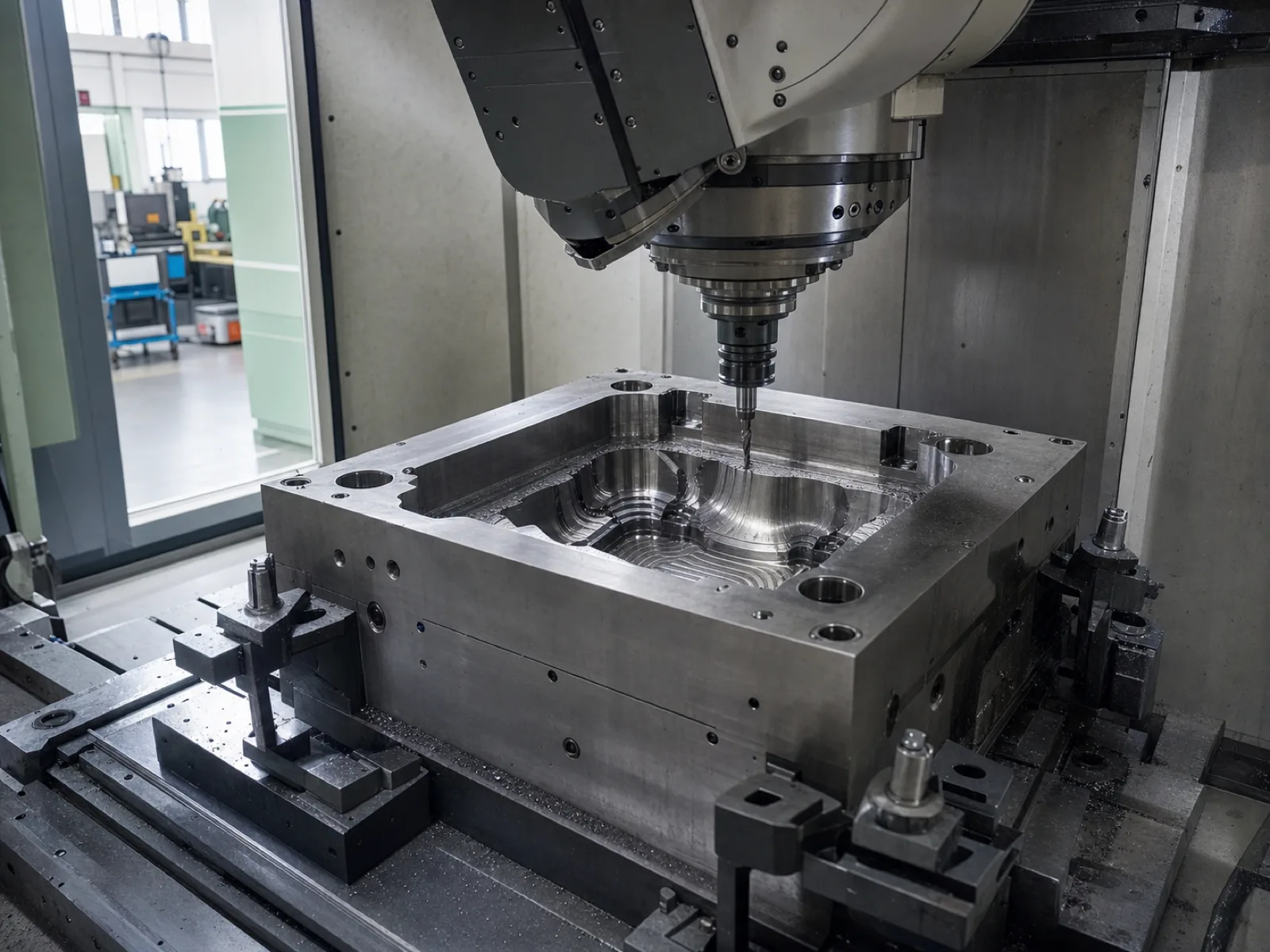
A real factory holds MOQ at 500 because P20 hardened steel tooling ($1,200-$3,500), dedicated press time ($200-$400/hour fully loaded), 4-6 hour post-cure oven cycles mandatory per LFGB §30/31, and per-batch FDA + LFGB third-party testing ($300-$1,500) all need a 500-piece minimum to clear the cost-of-business line. Listings advertising MOQ 100 for custom silicone are typically order-consolidation across multiple buyers, tooling cost buried in 2-3× per-unit markup, or a soft prototype mold that dies after 200 cycles — not real low-MOQ factory capacity.
What actually goes into a real MOQ 500 program?
Seven fixed cost lines drive the MOQ 500 floor. P20 hardened steel mold ($1,200-$3,500), dedicated press time (3-8 minute cycle, $200-$400/hour fully loaded), 4-6 hour post-cure oven mandatory per BfR Recommendation XV[^bfr-lfgb-xv], per-batch FDA + LFGB testing ($300-$1,500), first-article dimensional verification, master-batch color matching, and retail-ready packaging. At MOQ 500, unit price clears $3-5 USD FOB Yantian. At MOQ 100, none of these fixed costs scale down — the press still needs setup time, the mold still costs the same, testing is per-batch. Real factories facing MOQ 100 requests have three options, none good.
Here’s the actual cost stack for a 500-piece custom silicone production run with FDA + LFGB compliance:
| Line item | Cost | What it buys you |
|---|---|---|
| P20 hardened steel mold (single cavity) | $1,200-$3,500 | 500,000+ shot life, dimensional stability across the SKU’s lifetime, the geometry you actually approved |
| Dedicated press time (3-8 min cycle × 500 pcs) | ~$1,500-$3,500 | A press that runs your geometry only, on your schedule, with no consolidation |
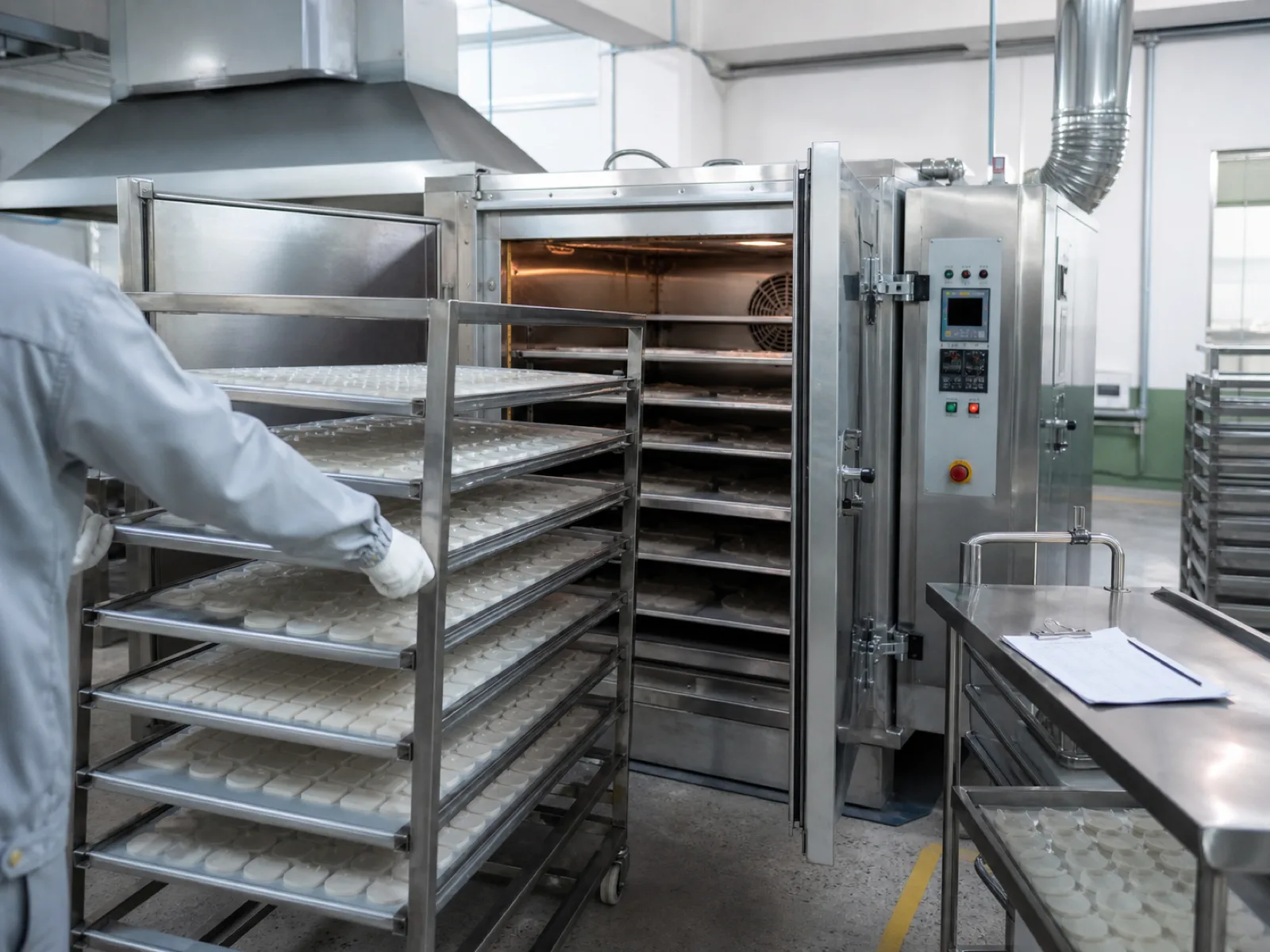
| Post-cure oven (4-6 h per batch) | $400-$800 | The step that lets us issue per-batch LFGB §30/31 reports — without it, the silicone fails organic-volatile testing1 |
| Per-batch FDA + LFGB third-party test | $300-$1,500 | Lab report (SGS / Intertek / TÜV) referencing your master-batch lot, retained 36+ months per ISO 90012 |
| QC + dimensional verification | $300-$800 | First-piece CMM check, every-200-piece running dimensional, AQL 1.5 random sampling pre-pack |
| Master-batch color matching (Pantone ±0.5 ΔE) | $200-$500 | Mixed in master-batch, not surface coating; consistent batch-to-batch |
| Packaging | $0.30-$2.00/unit | OPP / color box / kraft sleeve / FBA-ready / chain RTI carton per program spec |
For a serious factory operating at scale, the per-unit price clears around $3-5 USD at MOQ 500 (depending on geometry and decoration). At MOQ 100, none of the above changes — the press still needs the same setup time, the mold still costs the same, testing is still per-batch. The economics just don’t work. So a factory facing a 100-piece RFQ has three options — none of them good for a real OEM program.
What does MOQ 100 in the wider market actually mean?
Three cost-shifting patterns explain MOQ 100 listings. Pattern 1: order consolidation — your 100 pieces batched with other buyers' orders. Pattern 2: hidden tooling markup — 2-3x per-unit price mathematically equivalent to MOQ 500 + tooling but disguised as "low MOQ." Pattern 3: soft prototype mold — $300-500 aluminum or epoxy tooling that dies after 200-1,000 cycles. All three cost-shift, not cost-save. Each becomes a distinct quality failure mode in production.
Option 1 — Order consolidation. Your 100 pieces are batched with another buyer’s 100 pieces and a third buyer’s 300 pieces to hit a real factory minimum somewhere downstream. The press runs all three jobs in the same cycle, with mold changeovers in between. Your geometry, your color, and your brand mark share a workshop with two other customers’ production for that day. Your IP, your color match, and your traceability are shared. Uncovered when you ask for a specific master-batch lot certificate referencing only your program.
Option 2 — Hidden tooling markup. The supplier “absorbs” the tooling by inflating per-unit price to 2-3× MOQ 500 pricing. Mathematically you’re paying for the same tooling and the same per-batch testing — you just don’t see it on the invoice. This is the most honest of the three patterns (you get a real mold, real testing, real dedicated press time), but it’s worth understanding why the per-unit price is higher and asking for the breakdown. See silicone OEM pricing structure for what a transparent quote looks like.
Option 3 — Soft prototype mold. Cast aluminum or epoxy resin tooling, cut in 3-4 days at $300-$500 instead of $1,200-$3,500. Mold life: 200-1,000 cycles. The first 100 pieces look fine. Pieces 200-500 start showing dimensional drift. The mold cracks somewhere around piece 800. By that point the supplier has already moved on to the next buyer, and you discover the problem at retail-launch QC.
A real factory looking at a 100-piece request will either say no, or quote it as a 50-100 piece validation run on an existing pre-tooled mold at a 2-3× per-unit premium (which is honest — you’re paying the cost of running a press cycle without volume to amortize against). What a real factory won’t do is quote MOQ 100 on a brand-new custom mold at 500-piece per-unit pricing. That math doesn’t exist.
How can you tell whether a “MOQ 500” claim is real?
Five questions filter real MOQ 500 factories from consolidators. Own the assets? Master-batch retention policy (36 months minimum per ISO 9001[^iso-9001])? Per-batch FDA + LFGB third-party reports and from which accredited lab? P20 mold material or aluminum/epoxy? Virtual factory walkthrough within 24 hours? Real MOQ 500 factories answer yes to all five within one business day with named engineering signoff. Consolidators hesitate on at least two. See the [12-question sourcing checklist](/guide/sourcing-silicone-factory-checklist/) for the full framework.
Most serious B2B silicone factories say MOQ 500 on their website. Not all of them mean it. Here are the five questions that filter out the consolidators:
-
Do you own the molds, presses, and QC stations, or do you subcontract?
- Real factory: owns all three. Will offer a virtual or in-person factory tour to prove it.
- Trading company / consolidator: vague answer, redirects to “we work with the best factories” or “our partner factory.”
-
What is your master-batch lot retention policy?
- Real factory: 36 months minimum per ISO 9001 documented process control2. Can produce a lot record from 12 months ago on request.
- Consolidator: “we keep records” without specifics.
-
Per-batch FDA + LFGB third-party test reports — yes or no, and from which lab?
-
Mold material — P20 hardened steel, aluminum, or epoxy?
- Real factory: P20 for production, sometimes aluminum or epoxy for soft-tool prototypes if explicitly requested.
- Consolidator: vague, or claims “P20” while quoting tooling at $300-500.
-
Can I do a virtual factory walkthrough within 24 hours of asking, with the engineering lead as the host?
- Real factory: yes. Live Zoom / Teams / WeChat Video, walks the press floor and the mold workshop, shows the QC log.
- Consolidator: schedules a pre-recorded video tour or a sales-led call.
Wetop Silicone says yes to all five. We’d rather lose an RFP on these questions than win one and disappoint at first article. The full 12-question filter is documented in our silicone factory sourcing checklist.
When does MOQ 500 actually make sense for your program?
MOQ 500 is where the program becomes economically real. Not a hurdle but a marker that the buyer's target retail tier can support serious tooling investment, per-batch documentation, and dedicated press capacity. For sink-brand accessory programs, 500 grids is one shipping pallet and 90 days of typical retail velocity. For housewares-brand private-label DTC programs, 500 mats is one Kickstarter or pre-launch buy. For Tier 2 retail chain accessory programs, 500 racks is barely a launch sample. The threshold sizes the program to the buyer's actual scale.
The 500-piece minimum isn’t a hurdle — it’s a marker that the program has crossed a threshold of seriousness:
- Sink-brand procurement manager evaluating an accessory line: 500 grids ≈ one shipping pallet and 90 days of velocity at most retail SKUs.
- Housewares-brand product manager testing a private-label DTC program: 500 mats ≈ one Kickstarter or pre-launch retail buy.
- Tier 2 retail chain accessory buyer: 500 racks ≈ barely a launch sample; they’ll typically start at 2,000-5,000.
- Premium retail specialty channel: 500 pieces of a specialty accessory ≈ 30-60 days of curated shelf velocity.
At those volumes, the discipline of a real factory — dedicated tooling, per-batch testing, dimensional traceability under IATF 16949 PPAP discipline4 — is what protects your retail launch from a 1,000-piece return wave six months in. The factories that say MOQ 100 and mean it are not optimizing for that outcome.
What Wetop OEMs
Wetop runs MOQ 500 per SKU on new tooling, MOQ 250 on reorders against existing tooling. Pilots below MOQ 500 available on existing molds only (50-100 pieces at 2-3× MOQ 500 pricing for retail buyer presentations, gift-with-purchase samples, Kickstarter campaigns). New custom mold + MOQ below 500 = no. The tooling amortization math genuinely doesn't work, and we'd rather tell you that up front than quote the program and discover the gap mid-cycle.
Wetop runs pilots below 500 — but only in specific scenarios:
- Existing-mold validation runs (50-100 pieces): For retail buyer presentations, Kickstarter campaigns, or gift-with-purchase samples. Per-unit cost is 2-3× MOQ 500 pricing. No new tooling.
- Existing-mold custom color batches (100-500 pieces): For multi-SKU programs where one SKU is at lower volume than the others. Tooling is already amortized; you only pay for the press cycle and per-batch testing.
What we don’t do at sub-500: brand-new custom molds. The economics genuinely don’t work, and we’d rather tell you that up front than quote the program and discover the gap mid-cycle.
The bottom line. MOQ 500 is the volume at which a real factory can run your program with dedicated tooling, dedicated press time, and per-batch certification — without absorbing losses or shifting costs into hidden line items. Lower MOQs in the wider market are achievable, but they almost always mean order consolidation, hidden tooling markup, or a soft prototype mold that won’t survive your retail program.
When you see MOQ 500 from a serious factory, it’s not a barrier — it’s the marker that the factory has done the math honestly and is willing to tell you what running your program actually costs. For the timeline model that runs on top of the cost model, see MOQ & lead time on custom silicone kitchenware; for the per-line-item pricing framework, silicone OEM pricing structure walks the same math from a different angle.
Sourcing? Email inquiry@wetopsilicone.com or open a brief — we reply within one business day with mold cost, price brackets at 500 / 1k / 5k, sample timeline, and the engineering questions we’d need answered before committing.
Footnotes
-
German Federal Institute for Risk Assessment. Recommendation XV — Silicones. https://www.bfr.bund.de/en/bfr_recommendations_on_food_contact_materials-7498.html ↩ ↩2
-
International Organization for Standardization. ISO 9001:2015 — Quality Management Systems. https://www.iso.org/standard/62085.html ↩ ↩2
-
US Food and Drug Administration. 21 CFR 177.2600. https://www.ecfr.gov/current/title-21/chapter-I/subchapter-B/part-177/subpart-C/section-177.2600 ↩
-
International Automotive Task Force. IATF 16949:2016. https://www.iatfglobaloversight.org/iatf-169492016/ ↩
FAQ
-
Why is the industry-standard MOQ for custom silicone 500 instead of 100?
The 500-piece floor is the point at which a P20 hardened steel mold ($1,200-$3,500 tooling per ASTM D5296 dimensional standards[^astm-d5296]), a dedicated press cycle (3-8 minutes per part, in a press that runs $200-$400/hour fully loaded), 4-6 hours of post-cure oven time (mandatory per BfR Recommendation XV[^bfr-lfgb-xv]), and a per-batch FDA + LFGB third-party test report ($300-$1,500) all clear the cost-of-business line. Below 500, the unit economics force one of three cost-shifting patterns — none of which are real cost savings. Industry standard for serious B2B silicone OEM is 500-2,000 for this reason.
-
What's actually happening at suppliers that advertise MOQ 100?
Three patterns dominate. Pattern 1: order consolidation — your 100 pieces are batched with two other buyers' 100-piece orders to hit a real factory minimum somewhere downstream. Your geometry, color, and brand mark share a press run with another customer's. Pattern 2: tooling cost is buried in inflated per-unit price (you pay $8-12 per unit instead of $3-5 + tooling — mathematically equivalent to MOQ 500 + tooling, but the listing reads as 'low MOQ'). Pattern 3: soft aluminum or epoxy prototype mold ($300-500 to cut, dies after 200-1,000 cycles, won't survive a real production program). None of these are real cost savings — they're cost-shifting and risk-shifting to the buyer.
-
What does a P20 hardened steel mold actually cost?
Single-cavity P20 mold for custom silicone runs $1,200-$3,500 depending on geometry complexity, cavity surface area, and number of slides or ejector pins. Multi-cavity production molds (4-8 cavities) for high-volume programs run $5,000-$15,000. Reputable factories quote tooling transparently as a one-time NRE (non-recurring engineering) line item, often refunded against the first 5,000 pieces of production. P20 mold cycle life is 500,000+ shots per ISO 9001 documented tooling standards[^iso-9001], which is effectively the life of the SKU. See the [MOQ & lead time guide](/guide/moq-and-lead-time-silicone-oem/) for how tooling timeline plays into the schedule.
-
Can I order a pilot run below MOQ 500?
Yes — we run 50-100 piece validation runs against existing molds for retail buyer presentation, gift-with-purchase samples, or Kickstarter campaigns. Per-unit cost is 2-3× MOQ 500 pricing because we're not amortizing tooling against production volume, but it lets you de-risk the program before committing to 500. New custom molds require MOQ 500 to amortize the tooling investment — that's not negotiable for a real P20 mold. Existing-mold pilots are the path if you're validating market fit before committing to full tooling.
-
How do I know if a supplier's MOQ 500 is real and not a number they cite to look credible?
Five questions filter out the consolidators: (1) Do you own the molds, presses, and QC stations, or do you subcontract? (2) Can I see the master-batch lot retention policy — and is it 36 months minimum per ISO 9001[^iso-9001]? (3) Per-batch FDA + LFGB third-party reports — yes or no, and from which lab? Per FDA 21 CFR 177.2600[^fda-177-2600] compliance. (4) Mold material — P20 hardened steel, aluminum, or epoxy? (5) Can I do a virtual factory walkthrough within 24 hours of asking? A real MOQ 500 factory says yes to all five. A consolidator hesitates on at least two. Full 12-question checklist in [the sourcing guide](/guide/sourcing-silicone-factory-checklist/).
-
What's the underlying press economics that drive MOQ 500 as a floor?
Compression press capacity utilization mathematics. A hydraulic silicone press has fixed overhead: $200-$400/hour fully loaded (equipment amortization, labor, HVAC, electricity per industrial reference data[^eia-industrial-electricity]). At MOQ 500 with a 4-minute cycle time on a single-cavity mold, press time is ~33 hours = ~$6,600-$13,200 in press capacity. That capacity amortized across 500 pieces = $13-$26 per piece just for press time. Real factories offset this by using multi-cavity molds (4-8 cavities per cycle drops effective per-unit press time proportionally) and by scheduling programs efficiently against press availability. But the underlying press cost is fixed — it's why the MOQ floor sits where it does.
-
How does IATF 16949 PPAP discipline relate to silicone OEM MOQ?
The IATF 16949 Production Part Approval Process (PPAP)[^iatf-16949] framework — originating in automotive but applied by disciplined retail OEMs — treats first-article approval as a controlled cost line item, not an unbounded schedule risk. The framework requires PPAP submission before mass production: master-batch lot cert, dimensional verification against CAD, first-article inspection report, and process capability (Cpk) documentation. For silicone programs, PPAP discipline means the first-article samples aren't a re-work loop — they're a documented approval-decision milestone. Serious retail OEMs adopt PPAP discipline because it converts the MOQ commitment from a leap-of-faith into a documented engineering acceptance. Wetop runs PPAP-adjacent discipline on every new program.
References
Authoritative sources cited in this guide
- International Organization for Standardization. ISO 9001:2015 — Quality Management Systems — Requirements. https://www.iso.org/standard/62085.html — The QMS standard behind master-batch lot retention, tooling documentation, and per-batch traceability that make MOQ 500 economics verifiable.
- US Food and Drug Administration. 21 CFR 177.2600 — Rubber articles intended for repeated use. https://www.ecfr.gov/current/title-21/chapter-I/subchapter-B/part-177/subpart-C/section-177.2600 — The US regulation whose per-batch third-party testing is a fixed cost driving the MOQ floor.
- German Federal Institute for Risk Assessment. BfR Recommendation XV — Silicones. https://www.bfr.bund.de/en/bfr_recommendations_on_food_contact_materials-7498.html — The technical standard behind LFGB §30/31 requiring mandatory 4-6 hour post-cure at 180-200°C — the oven-time fixed cost driving the MOQ floor.
- ASTM International. ASTM D5296-19 — Standard Test Method. https://www.astm.org/d5296-19.html — The analytical characterization method behind dimensional verification of finished silicone parts against the P20 mold cavity.
- International Automotive Task Force. IATF 16949:2016 — Quality management systems (automotive). https://www.iatfglobaloversight.org/iatf-169492016/ — The PPAP framework whose first-article approval discipline maps onto serious silicone OEM sample-to-mass-production transitions.
- European Chemicals Agency (ECHA). PFAS Universal Restriction Proposal. https://eur-lex.europa.eu/legal-content/EN/TXT/?uri=CELEX%3A32006R1907 — The regulatory action requiring PFAS non-detect testing per batch — adding to the per-batch fixed cost that drives the MOQ floor.
- US Energy Information Administration (EIA). Industrial Electricity Consumption and Cost — China. https://www.eia.gov/international/data/country/CHN — Reference data for the industrial electricity cost that drives compression press and post-cure oven per-hour operational cost — a fixed input to MOQ economics.
- IPC — Association Connecting Electronics Industries. IPC Standards for Manufacturing. https://www.ipc.org/ipc-standards — Adjacent manufacturing-standards reference framework (electronics assembly) whose sampling and process capability practices influence silicone OEM QC discipline.
Start a custom program
Send a brief. Get an engineer’s reply in one business day.
Every Wetop program is tooled from a customer’s specification. Send a CAD file (STEP · IGES · DWG) or a written brief and we’ll reply with a mold cost estimate, price brackets at MOQ 500 / 1,000 / 5,000, and any engineering questions.