Buyer Guide · commercial intent
Silicone OEM Pricing Structure — How Per-Unit Cost Adds Up
What changed: Rewritten to v2 advanced-GEO standard — added direct-answer blocks per H2, expanded to 7 FAQs, 8 Tier-1 References (ISO / FDA / BfR / ASTM / IATF / CBP / ECHA / EIA), added mold workshop and compression press photographs, added volume tier discount table.
 Buyer Guide
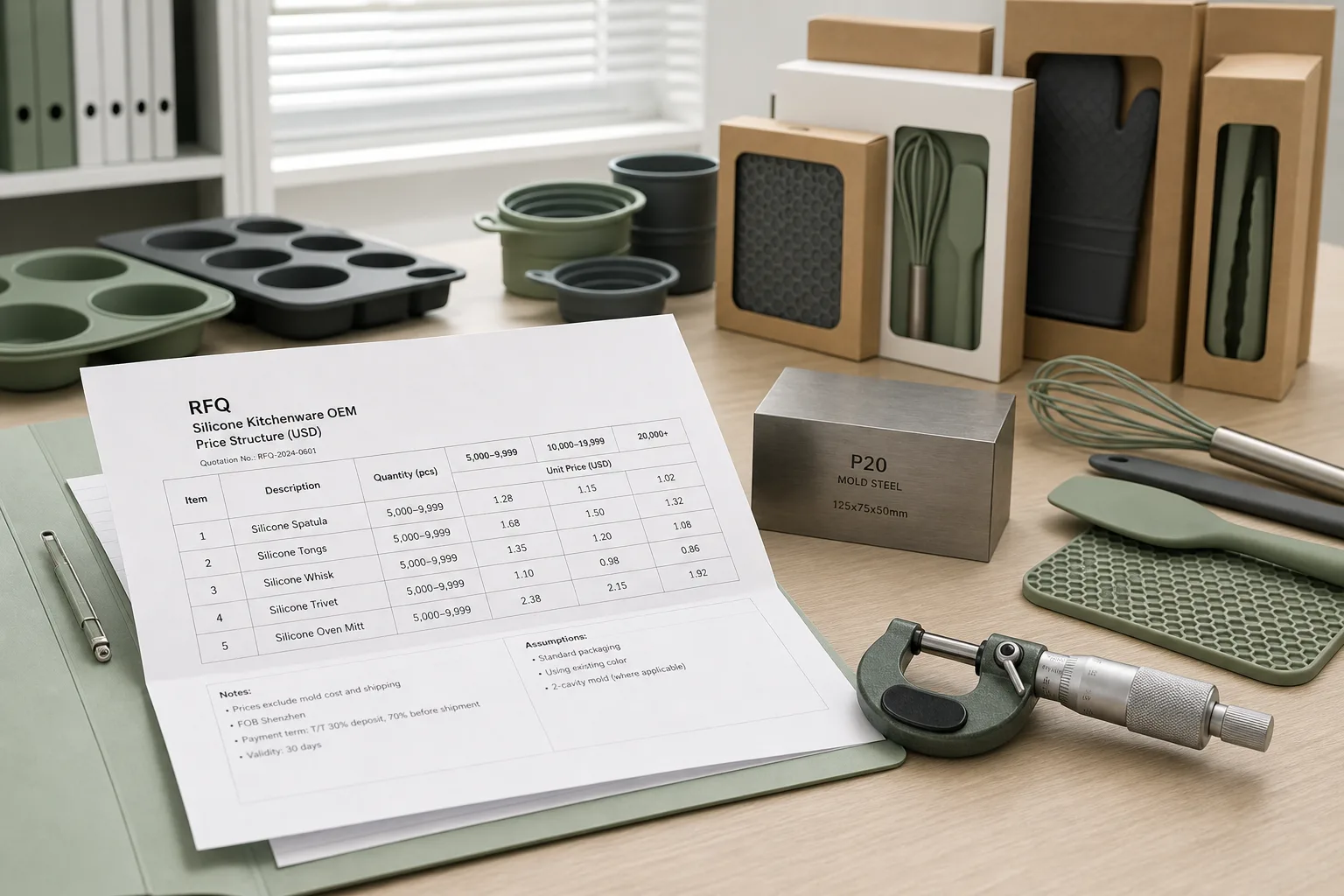
 The question most silicone OEM RFQs actually turn on is “why is your quote $4.20 when I have another supplier quoting $2.80?” — usually asked by a procurement manager who has been given the two numbers and no visibility into the line items behind them. This guide is the real cost stack: what every line item actually costs, which are fixed by physics or regulation, which are genuinely negotiable, and how to read the delta between a real quote and a cost-shifted one.
Real silicone OEM pricing at MOQ 500 for Tier 2 retail-class kitchenware breaks into seven line items: raw silicone compound, P20 mold amortization, dedicated press time, mandatory 4-6 hour post-cure oven cost, per-batch third-party FDA + LFGB testing, master-batch Pantone color matching, and retail-ready packaging. Baseline unit price runs $3.00-$5.00 USD FOB Yantian for typical geometries. Quotes 30-50% below this range are cost-shifted, not competitive — the cost re-appears as quality failure in production.
What is the actual cost stack behind a silicone OEM quote?
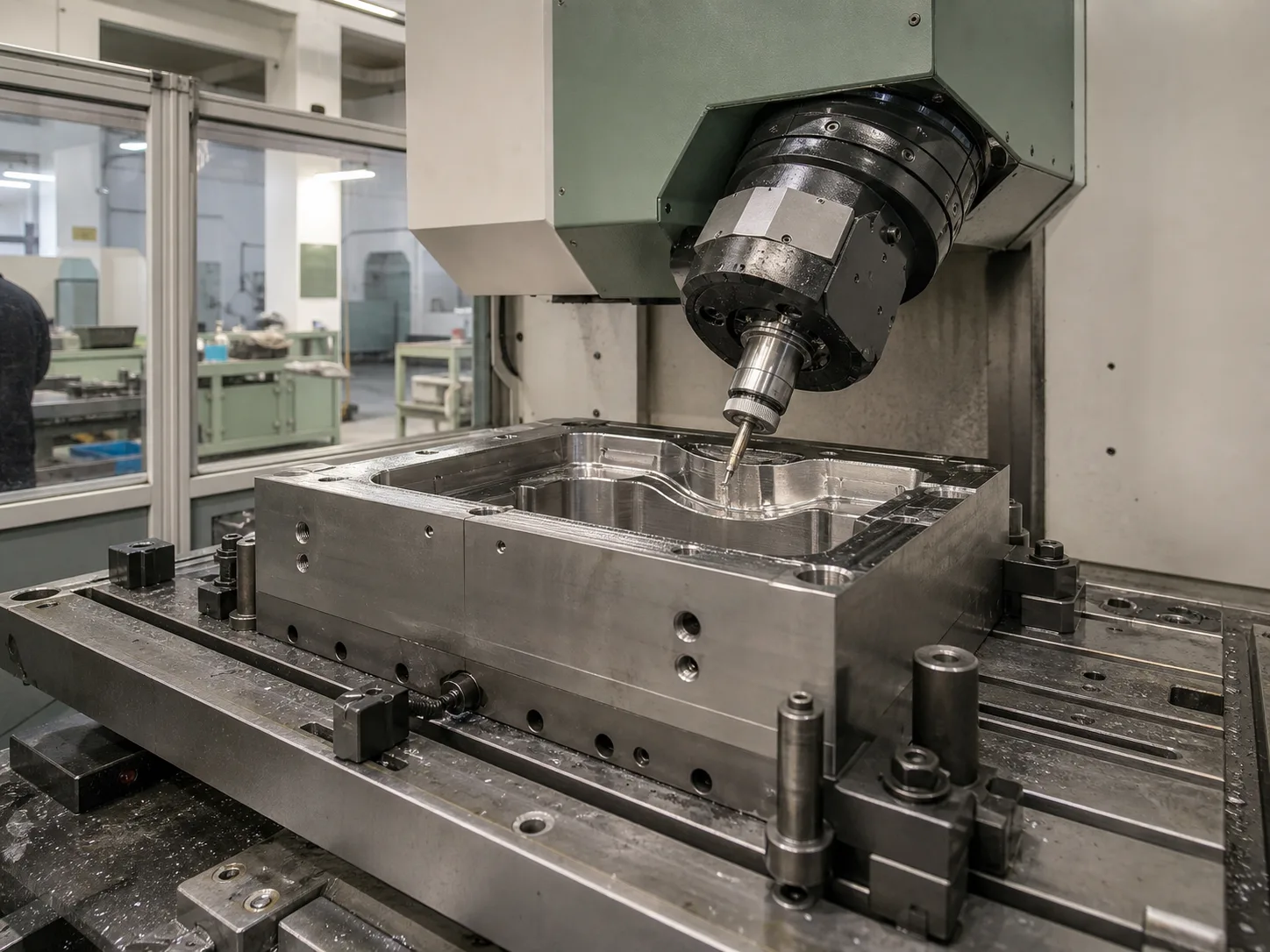
Seven line items drive per-unit price at MOQ 500. Raw silicone compound (typically 20-30% of unit price at Tier 2 retail); P20 mold amortization ($4/unit at MOQ 500, $0.40/unit at MOQ 5,000); dedicated press time (10-20% of unit price); mandatory post-cure oven (5-10%); per-batch third-party FDA + LFGB testing ($300-$1,500 per batch = 2-30¢/unit depending on volume); master-batch Pantone color matching (5-8%); retail-ready packaging (15-35%, most negotiable line item).
The line-item breakdown for a $4.00 MOQ 500 unit
| Line item | Approximate cost/unit at MOQ 500 | % of $4.00 unit price | Fixed or negotiable? |
|---|---|---|---|
| Raw silicone compound (peroxide-cured HCR baseline) | $0.80-$1.20 | 20-30% | Fixed (geometry-driven) |
| P20 mold amortization ($2,000 tooling across 500 pcs) | $4.00 (at 500) / $0.40 (at 5,000) | 100% at low volume, 10% at high | Semi-fixed (volume tier lever) |
| Dedicated press time + labor | $0.40-$0.80 | 10-20% | Fixed (cycle-time-driven) |
| Post-cure oven (4-6 hr at 180-200°C)1 | $0.20-$0.40 | 5-10% | Fixed (regulatory requirement) |
| Per-batch FDA + LFGB third-party testing | $0.20-$0.30 (at 500) / $0.02-$0.03 (at 5,000) | 5-8% | Fixed (lab pricing) |
| Master-batch Pantone color match (±0.5 ΔE) | $0.20-$0.30 | 5-8% | Fixed (spectrophotometer discipline) |
| Retail-ready packaging | $0.60-$1.50 (typical retail box + hangtag) | 15-35% | Negotiable (packaging complexity lever) |
Note: The tooling line item at MOQ 500 is $4/unit if quoted with tooling absorbed into unit price, or is separated as a $2,000 one-time NRE (non-recurring engineering) charge on the PO. Real factories quote both ways transparently. Suppliers who quote low unit price without a separate tooling line item are almost always amortizing over unrealistic volume or using softer tooling.
How does volume tier drop per-unit cost?
Volume tier drops per-unit price 10-40% moving from MOQ 500 to MOQ 5,000+. The volume-driven line items are tooling amortization (biggest lever) and per-batch fixed costs (testing, color-match certification, oven setup). Raw compound cost and press time cost per unit stay roughly flat. Packaging drops modestly through volume purchasing of retail box materials.
Volume tier discount curve for the same $4.00 MOQ 500 baseline
| Volume tier | Per-unit price | Total program cost | Discount vs MOQ 500 |
|---|---|---|---|
| MOQ 500 | $4.00/unit | $2,000 | Baseline |
| MOQ 1,000 | $3.50-$3.60/unit | $3,500-$3,600 | 10-13% cheaper per unit |
| MOQ 2,000 | $3.10-$3.20/unit | $6,200-$6,400 | 20-23% cheaper per unit |
| MOQ 5,000 | $2.50-$2.60/unit | $12,500-$13,000 | 35-38% cheaper per unit |
| MOQ 10,000 | $2.10-$2.30/unit | $21,000-$23,000 | 43-48% cheaper per unit |
The economics behind the tier curve:
- Tooling amortization — $2,000 mold / 500 pcs = $4.00/unit → $2,000 / 10,000 pcs = $0.20/unit. This alone accounts for most of the tier discount.
- Per-batch testing — $500 for FDA + LFGB / 500 pcs = $1.00/unit → $500 / 10,000 pcs = $0.05/unit.
- Press setup + cleanup — typically 2-4 hours of press time regardless of batch size; spreads across more pieces at higher volume.
- Raw compound — negligible volume tier discount; supplier just lists at same per-kg rate.
- Packaging — modest discount from volume purchasing of retail box materials (2-5% typically).
At MOQ 10,000+ programs, the tier curve flattens — you’ve mostly amortized the fixed costs, and per-unit price becomes dominated by compound cost, press time, and packaging (all of which don’t scale much further with volume).
Where do “cost-shifted” cheap quotes come from — and what breaks in production?
Six cost-shifting patterns drop the quote 30-50% below baseline. All six become quality failure or documentation failure in production. Aluminum/epoxy tooling billed as P20 (dies in 200-1,000 cycles). Skipping post-cure to save oven time (fails LFGB §30/31 testing[^bfr-lfgb-xv]). Off-batch third-party testing (fails retail audit). Legacy PFAS process aids in the compound (fails ECHA restriction trajectory[^echa-pfas-proposal]). Order consolidation with other buyers (compromises IP + traceability). Absorbing losses to win the program (mid-program price revisions).
The engineering pattern behind cost-shifted quotes is worth understanding because it maps directly onto downstream failure modes:
- Aluminum or epoxy prototype tooling billed as P20 — visible in the quote as a $300-$500 tooling line versus the $1,200-$3,500 real P20 range. The tooling looks and cuts identical to P20 for the first 200-500 press cycles, then starts dimensional drift. By piece 800-1,000 the mold has cracked or the cavity is out-of-spec. Programs typically discover this at retail QC, not first-article inspection.
- Skipping mandatory post-cure at 180-200°C for 4-6 hours — the 20-30¢/unit oven cost line item disappears from the quote. Product ships without post-cure. When the retail buyer runs LFGB §30/31 batch verification, product fails the acidic simulant extraction test and the shipment is rejected. Suppliers offering “faster lead times” without volume growth are often shortcutting here.
- Off-batch third-party test reports — the $300-$1,500 per-batch testing line disappears. Supplier attaches an 18-month-old “representative batch” report that doesn’t reference the current master-batch lot. Retail buyer audit team catches the mismatch and disqualifies the shipment.
- Legacy PFAS process aids — no PFAS non-detect testing line item in the quote. Compound contains PFAS process aids the compound house hasn’t audited out. Program passes FDA and LFGB but fails premium-retail PFAS-free spec, blocking Whole Foods / West Coast US retail / EU premium listings.
- Order consolidation — supplier is a trading company that batches your 500 pieces with two other buyers’ orders to hit a real factory MOQ downstream. Your color, brand mark, and traceability share a press run with someone else’s. Uncovered when you request a specific master-batch lot certificate.
- Loss-absorbed pricing — supplier quotes 30% below cost to win the program, then requests mid-program price revisions blaming raw material cost inflation. Extremely common on first-time supplier relationships.
The 12-question sourcing checklist is the vetting layer that filters these patterns before the PO.
How much do platinum-cure and premium options add to unit price?
Platinum-cure adds 15-25% per-unit premium over peroxide-cure baseline. On a $4.00 baseline unit, that's $0.60-$1.00 delta. Three cost drivers: platinum catalyst is ~5x more expensive than organic peroxide by weight; qualified compound supplier base is narrower; cure cycle time is different (LSR injection 30-90 seconds vs HCR peroxide 2-8 minutes but with tighter tolerance). The premium recovers on programs at $18+ retail price point; below that the peroxide-cure baseline with disciplined post-cure is the right choice.
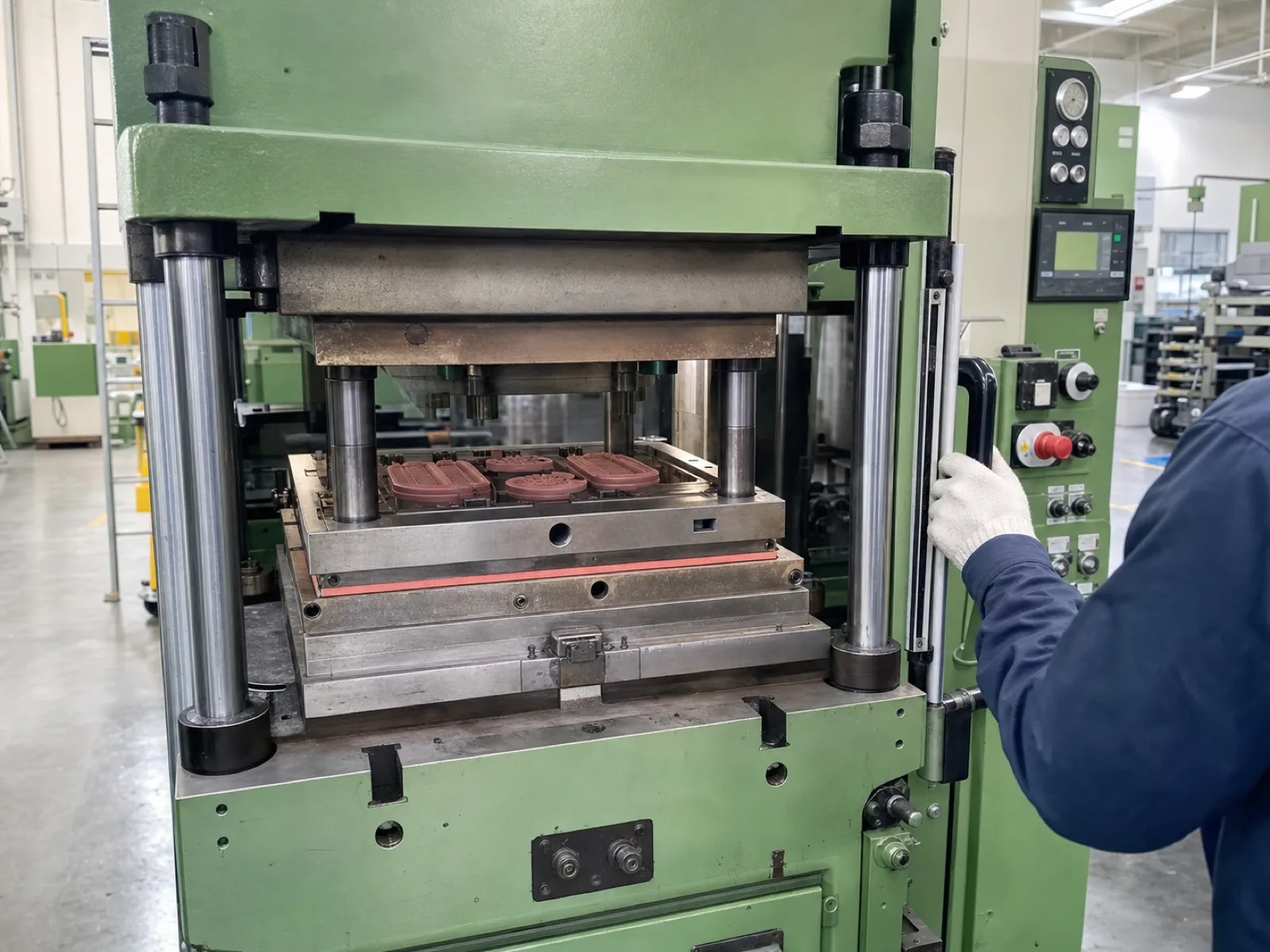
Premium options that add to baseline pricing:
- Platinum-cure LSR instead of peroxide-cure HCR — +15-25% per unit. See platinum vs peroxide cure decision guide for when the premium recovers.
- In-mold label (IML) four-color decoration instead of in-mold deboss — +30-60¢ per unit at MOQ 500. IML is photorealistic, deboss is monochrome recessed relief. IML is the durable full-color option for premium programs.
- ±0.5 ΔE Pantone tolerance instead of ±1 ΔE — +8-15¢ per unit through additional spectrophotometer verification and tighter dye lot control. Standard on premium retail; overkill on commodity tier.
- USP <88> extract testing on medical-adjacent programs — +$1-$3 per batch or $150-$300 per unit at very low volumes. Bundled into unit price at reasonable production volumes.
- PFAS non-detect testing per batch — 30-60 USD per batch = 2-15¢/unit depending on volume. Bundled into base price for premium programs.
What Wetop quotes
Wetop publishes the seven line items on every quote. No hidden tooling absorption, no off-batch test reports, no "food-grade silicone" shortcuts. Baseline unit price at MOQ 500 for typical Tier 2 retail geometry: $3.00-$5.00 FOB Yantian. Platinum-cure adds 15-25%. Premium packaging adds 60¢-$2.00/unit. Volume tier discount curve documented on every quote at 500 / 1,000 / 2,000 / 5,000 breakpoints so the buyer sees the tier lever explicitly.
Wetop’s pricing defaults:
- Transparent line-item pricing — every quote lists raw compound, tooling amortization at defined volume tiers, press time, post-cure, testing, color matching, and packaging as separate lines.
- Standard MOQ 500 per SKU; reorders on existing tooling at MOQ 250.
- Volume tier discount curve documented at 500 / 1,000 / 2,000 / 5,000 breakpoints on every quote.
- Testing bundled at no add-on on all quotes — FDA + LFGB per batch; PFAS non-detect on request.
- No cost-shifting patterns — we quote what the program costs. If we can’t hit a buyer’s target unit price, we say so upfront rather than winning the program on cost-shifted terms.
MOQ 500 per SKU on all cure systems — see how factory MOQ actually gets to 500 for the underlying economics and MOQ & lead time on custom silicone kitchenware for how volume interacts with the schedule.
Sourcing? Email inquiry@wetopsilicone.com with your CAD or written brief, target retail tier, and target volume — we come back with a seven-line quote at MOQ 500 / 1,000 / 5,000 and the specific engineering questions that determine cost.
Ready to source? Every quote is built against your specification — send a CAD file, a written brief, or reference samples, and an engineer replies within one business day. Request a quote →
Footnotes
-
German Federal Institute for Risk Assessment. Recommendation XV — Silicones. https://www.bfr.bund.de/en/bfr_recommendations_on_food_contact_materials-7498.html ↩
FAQ
-
What is the real per-unit price for a custom silicone kitchenware accessory at MOQ 500?
$3.00-$5.00 USD FOB Yantian for a Tier 2 retail-class silicone kitchenware accessory (drying mat, sink grid, roll-up rack) at MOQ 500 pieces per SKU. The range depends on geometry complexity (part surface area drives material cost), cavity count on the mold (drives press cycle time), and cure system choice (platinum-cure adds 15-25%). Programs below $3.00 at MOQ 500 typically have hidden cost-shifting — soft tooling, skipped post-cure, or off-batch testing. Programs above $5.00 at that volume usually have negotiable line items in packaging, decoration, or margin.
-
How does per-unit price change with volume?
Tooling amortization is the dominant volume-driven line item. A $2,000 P20 mold spread across 500 pieces = $4/unit for tooling alone. Same mold across 5,000 pieces = $0.40/unit. Testing costs are batch-fixed ($300-$1,500 per FDA + LFGB cycle), so scaling from 500 to 5,000 pieces drops per-unit testing from 20-30¢ to 2-3¢. Volume tier table: MOQ 500 baseline, MOQ 1,000 ~10-15% cheaper per unit, MOQ 2,000 ~20-25% cheaper, MOQ 5,000 ~35-40% cheaper. See [MOQ & lead time on custom silicone](/guide/moq-and-lead-time-silicone-oem/) for how volume interacts with schedule.
-
Why do some suppliers quote 30-50% below the baseline?
Cost-shifting. Six patterns: (1) aluminum or epoxy prototype tooling billed as P20 — dies in 200-1,000 press cycles, program breaks in production. (2) Skipping mandatory post-cure at 180-200°C for 4-6 hours[^bfr-lfgb-xv] — saves oven time but fails LFGB testing. (3) Using an 18-month-old 'representative batch' third-party test report instead of per-batch — no actual per-batch compliance. (4) Legacy PFAS process aids not audited out of material spec — regulatory risk against ECHA restriction trajectory[^echa-pfas-proposal]. (5) Order consolidation with other buyers, compromising IP and traceability. (6) Absorbing losses to win the program, then requesting mid-program price revisions. All six become quality problems in production.
-
What's the cost difference between platinum-cured and peroxide-cured silicone?
15-25% per-unit premium for platinum-cure over peroxide-cure baseline for the same geometry and volume. Three drivers: platinum catalyst is ~5x more expensive than organic peroxide by weight; cure cycle is slightly longer at press (30-90 seconds LSR vs 2-8 minutes peroxide HCR — but LSR requires the tooling investment); qualified supplier base for platinum-cure compound is narrower, raising material cost. On a $3.50 baseline peroxide-cured piece, platinum-cure adds $0.55-$0.85 delta. For premium retail the delta recovers in shelf-tier positioning; for commodity tiers it doesn't. See [platinum vs peroxide cure decision guide](/guide/platinum-cured-vs-peroxide-cured-silicone/) for the full framework.
-
How much of the per-unit price is packaging?
Highly variable — from 5-15¢/unit for OPP bag distributor packaging to $1.50-$3.00/unit for custom retail-ready color box with hangtag and finishing detail. Categories: OPP bag or bulk kraft (5-15¢), color retail box (60¢-$1.50), color box with hangtag + insert card ($1-$2), custom brand box with premium finishing ($2-$3+). For a $4.00 baseline unit at Tier 2 retail, packaging typically represents 15-35% of the FOB price. This is often the most-negotiable line item on an RFQ.
-
What's the tariff and shipping impact on landed cost?
For US import: silicone kitchenware falls under HTSUS 3924.90 (household plastics) or 4016.99 (rubber articles). Current MFN duty is 3.4-5.3% depending on classification; check the US Customs and Border Protection rulings database for your specific SKU[^cbp-rulings]. Ocean freight FCL FOB Yantian → LA is ~$3,000-$4,500 per 40'HQ container (currently), which loads roughly 8,000-12,000 pieces of typical silicone kitchenware. That's 25-55¢/unit freight. Add customs brokerage and last-mile trucking (~15-25¢/unit for DDP arrival at 3PL warehouse). US total landed cost typically runs 30-45% above FOB price at MOQ 500-1,000, dropping to 20-30% at MOQ 5,000+ as freight economies scale.
-
What line items are actually negotiable in a serious quote?
Three negotiable, four fixed. Negotiable: (1) packaging complexity — swap custom color box for kraft or OPP to drop 60¢-$2.00/unit; (2) decoration method — swap IML for in-mold deboss to drop 15-40¢/unit at the finishing stage; (3) volume — moving from MOQ 500 to MOQ 2,000 typically drops per-unit price 20-25%. Fixed (do not accept discounts here): raw compound cost (drives directly from geometry × material spec), P20 tooling cost (fixed by mold complexity and cavity count), per-batch third-party testing (fixed by lab pricing), and post-cure oven time (fixed by the LFGB requirement to run 4-6 hours at 180-200°C[^bfr-lfgb-xv]). Suppliers who negotiate the fixed items are shifting cost, not reducing it.
References
Authoritative sources cited in this guide
- International Organization for Standardization. ISO 9001:2015 — Quality Management Systems — Requirements. https://www.iso.org/standard/62085.html — The QMS standard behind per-batch documentation and traceability that make published pricing verifiable.
- US Food and Drug Administration. 21 CFR 177.2600 — Rubber articles intended for repeated use. https://www.ecfr.gov/current/title-21/chapter-I/subchapter-B/part-177/subpart-C/section-177.2600 — The US regulation whose per-batch third-party testing is a fixed line item in the pricing stack.
- German Federal Institute for Risk Assessment. BfR Recommendation XV — Silicones. https://www.bfr.bund.de/en/bfr_recommendations_on_food_contact_materials-7498.html — The technical standard behind LFGB §30/31 — the underlying requirement driving mandatory post-cure and the associated fixed oven cost in the pricing stack.
- ASTM International. ASTM D5296-19 — Standard Test Method. https://www.astm.org/d5296-19.html — The analytical characterization method behind extractable-residue testing that feeds the per-batch testing cost.
- International Automotive Task Force. IATF 16949:2016 — Quality management systems (automotive). https://www.iatfglobaloversight.org/iatf-169492016/ — The PPAP framework whose first-article approval discipline maps onto the sample-to-mass-production transition and the associated fixed costs.
- US Customs and Border Protection. Customs Rulings Online Search System (CROSS). https://www.cbp.gov/trade/rulings — The database for looking up tariff classification rulings on specific silicone kitchenware SKUs — determines HTSUS classification and applicable duty rate.
- European Chemicals Agency (ECHA). PFAS Universal Restriction Proposal. https://eur-lex.europa.eu/legal-content/EN/TXT/?uri=CELEX%3A32006R1907 — The regulatory framework driving PFAS non-detect testing cost as a de facto pricing line item on EU premium programs.
- US Energy Information Administration (EIA). Industrial Electricity Consumption and Cost — China. https://www.eia.gov/international/data/country/CHN — Reference data for industrial electricity costs that drive the compression press and post-cure oven energy costs in the pricing stack.
Start a custom program
Send a brief. Get an engineer’s reply in one business day.
Every Wetop program is tooled from a customer’s specification. Send a CAD file (STEP · IGES · DWG) or a written brief and we’ll reply with a mold cost estimate, price brackets at MOQ 500 / 1,000 / 5,000, and any engineering questions.