Buyer Guide · commercial intent
Silicone Gel Sheet Manufacturer — OEM/ODM Buyer's Guide 2026
 Buyer Guide
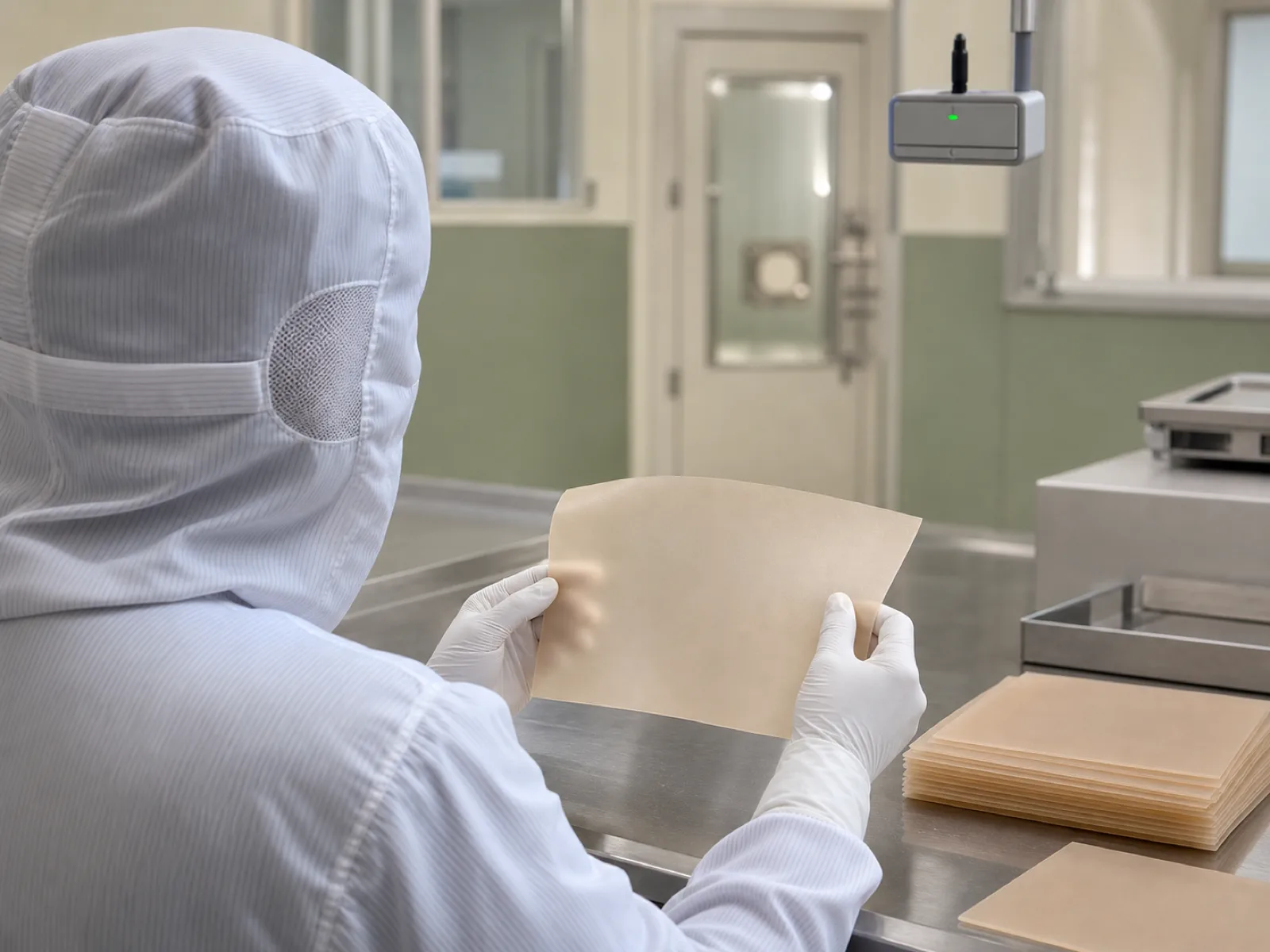
 A silicone gel sheet manufacturer with medical intent runs platinum-cured polydimethylvinylsiloxane sheets 0.15–0.5 mm thick inside an ISO Class 8 cleanroom against an ISO 13485 quality system. The device sits in FDA product code FRO — Class I 510(k)-exempt for scar-appearance claims — and requires ISO 10993-5, -10, and -23 biocompatibility clearance on the specific stock, not a generic silicone certificate. Every serious buyer program starts with an audit of those four documents before a single sample sheet ships.
Silicone scar sheets look like a commodity from the outside — a soft, tacky rectangle that flattens a hypertrophic scar over eight to twelve weeks of wear. Underneath sits a medical-device supply chain most brand buyers underestimate. This guide is written for the private-label brand manager, distributor, or clinic group evaluating a Chinese factory: what to demand in the document pack, what tolerances to write into the PO, and where the audit red flags sit. All numbers below are what our engineering desk quotes on a live RFQ, not marketing rounding.
What makes silicone gel sheets clinically effective on scars?
Silicone gel sheets flatten hypertrophic and keloid scars through occlusion and hydration. The impermeable silicone film holds the stratum corneum at roughly 90 % hydration, downregulates fibroblast TGF-β1 signaling, and normalizes collagen deposition. The International Advisory Panel has held silicone gel sheeting at Level 1 evidence for scar prevention since 2002[^mustoe-2002-iap] and reaffirmed it in the 2014 update[^gold-2014-update].
The mechanism is not “silicone diffusing into the scar.” It is a mechanical and biochemical loop driven by trapped water. When the sheet occludes the scar for 12–24 hours a day, hydration signals the keratinocyte layer to stop overproducing fibroblast-recruiting cytokines. Downstream, collagen bundles remodel from the disorganized whorls of a hypertrophic scar toward the parallel bundles of mature dermis. The clinical protocol converged decades ago on 8–12 weeks of continuous wear starting two weeks post-suture-removal, and every major dermatology and plastic surgery society lists silicone gel sheeting as a first-line prophylactic intervention. This is the reason the category tolerates commodity pricing while retaining a medical-device regulatory profile — the clinical story is closed.
For the OEM buyer, the practical consequence is that the product does not need to differentiate on chemistry. It differentiates on fit, tack durability, packaging, and regulatory paper. That is where a factory earns its margin.
Which regulatory clearances does a silicone scar sheet actually require?
For US distribution, silicone scar sheets sit in FDA product code FRO and are typically Class I 510(k)-exempt for scar-appearance claims, provided the manufacturer holds an active FDA establishment registration and lists the device[^fda-21-cfr-878]. For EU distribution, CE Mark under Regulation (EU) 2017/745 (MDR) is mandatory since 26 May 2021, with UDI-DI carrier, EUDAMED registration, and a named PRRC[^eu-mdr-2017-745].
The compliance stack a serious brand program must produce for a US launch:
| Layer | Requirement | Who owns it |
|---|---|---|
| FDA establishment registration | Active FURLS listing under FDA product code FRO | Legal manufacturer (importer or Chinese factory) |
| Device listing | Listed against the establishment | Same as above |
| 510(k) status | Class I 510(k)-exempt if claim = scar appearance only | Regulatory affairs |
| Quality system | ISO 13485:2016 valid certificate on the factory[^iso-13485] | Factory |
| Biocompatibility | ISO 10993-1 risk assessment + -5 cytotoxicity + -10 sensitization + -23 irritation panel on the exact silicone stock[^iso-10993-1] [^iso-10993-10] | Factory + third-party lab |
| Labeling | 21 CFR 801-compliant IFU, lot code, expiration | Brand + factory |
For an EU launch, add: CE Mark technical file under MDR Annex II, UDI-DI assignment and human-readable + AIDC carrier on primary packaging, EUDAMED actor and device registration, a named PRRC on the legal manufacturer’s payroll, and an EU Authorized Representative if the legal manufacturer is outside the EU. The MDR transition eliminated the old “self-declared Class I” workaround that flooded the market before 2021 — every scar sheet in Europe now sits in a notified-body-audited file. Buyers who cut corners here get held at customs.
If your product claim expands beyond appearance (pain reduction, wound healing acceleration, itching relief), the device leaves the 510(k)-exempt corner and lands in Class II with a full 510(k) submission. That reshapes both timeline (add 6–9 months) and manufacturer requirements (design controls per 21 CFR 820.30, not just ISO 13485).
What silicone chemistry belongs in a scar sheet — and what does not?
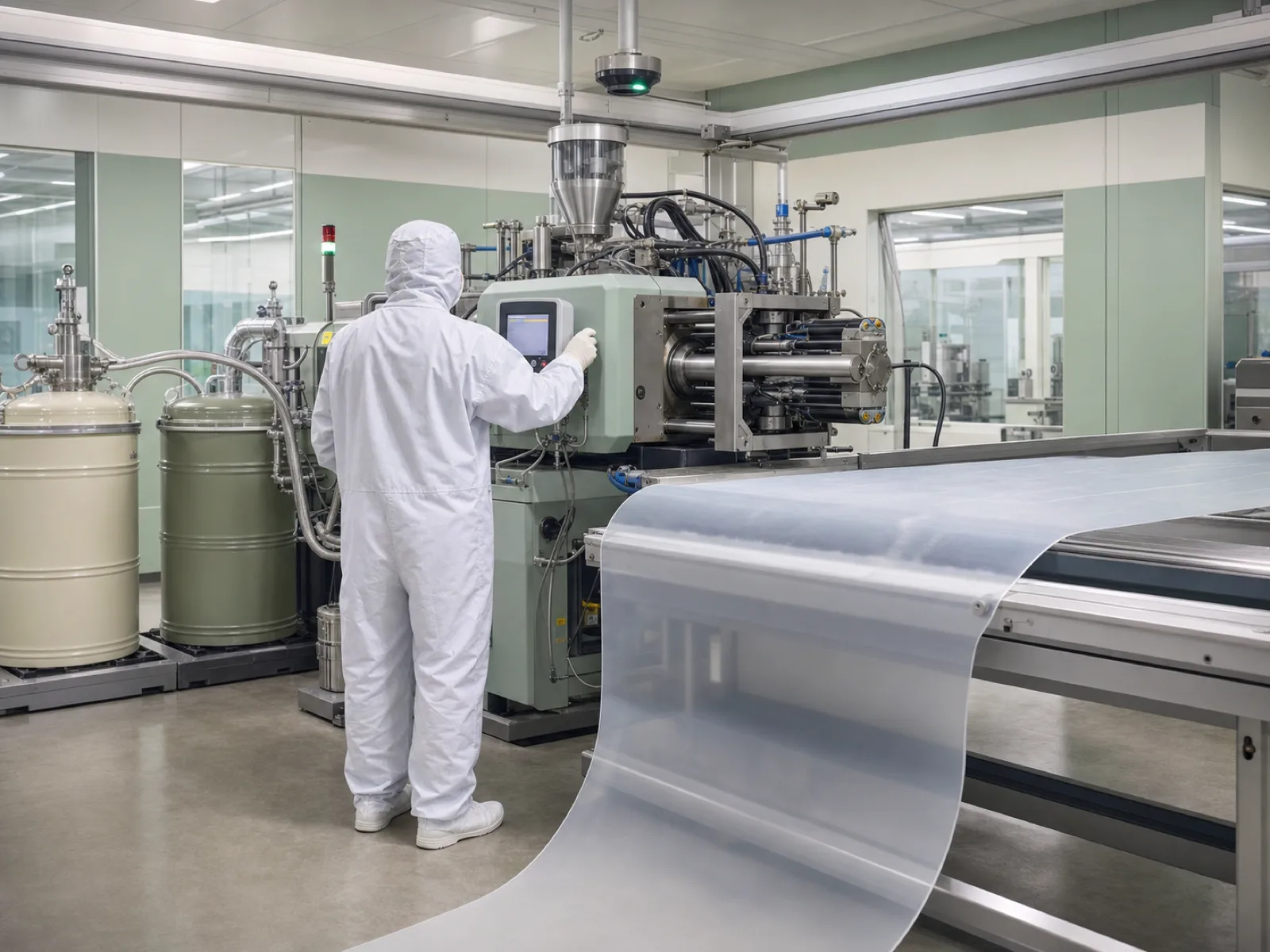
Only platinum addition-cure polydimethylvinylsiloxane belongs in a silicone scar sheet. Peroxide-cured silicone leaves 2,4-dichlorobenzoic acid residue that fails ISO 10993-10 skin sensitization at the contact time and thickness scar sheets require[^iso-10993-10]. Every Wetop scar-sheet line runs platinum-cured stock with a 4-hour post-cure at 200 °C to drive out volatile crosslink byproducts.
Peroxide-cured silicone still has legitimate uses in industrial gaskets, seals, and cookware where a short contact time and thick geometry mask the residue issue. In a scar sheet, none of those margins apply — the film is 0.15–0.5 mm, contact time is 12–24 hours per day for 8–12 weeks, and the target user includes post-surgical skin with compromised barrier function. Peroxide-cured stock also yellows faster under UV and re-tacks poorly after wash cycles, both of which show up in returns data within the first 60 days on market.
For a deeper walk-through of the two cure systems and why platinum wins on medical-grade work, see our companion guide on platinum-cured vs peroxide-cured silicone. If you are also evaluating adjacent medical categories, our silicone medical tubing OEM guide walks through the same regulatory stack applied to Class II tubing.
The material spec envelope for scar sheets:
| Property | Range | Notes |
|---|---|---|
| Cure system | Platinum addition-cure only | Non-negotiable for ISO 10993-10 clearance |
| Base chemistry | Polydimethylvinylsiloxane (PDMS-V) with silanol crosslinker | Standard medical-grade LSR stock |
| Sheet thickness | 0.15–0.50 mm | 0.15–0.30 mm for post-surgical, 0.30–0.50 mm for keloid protocol |
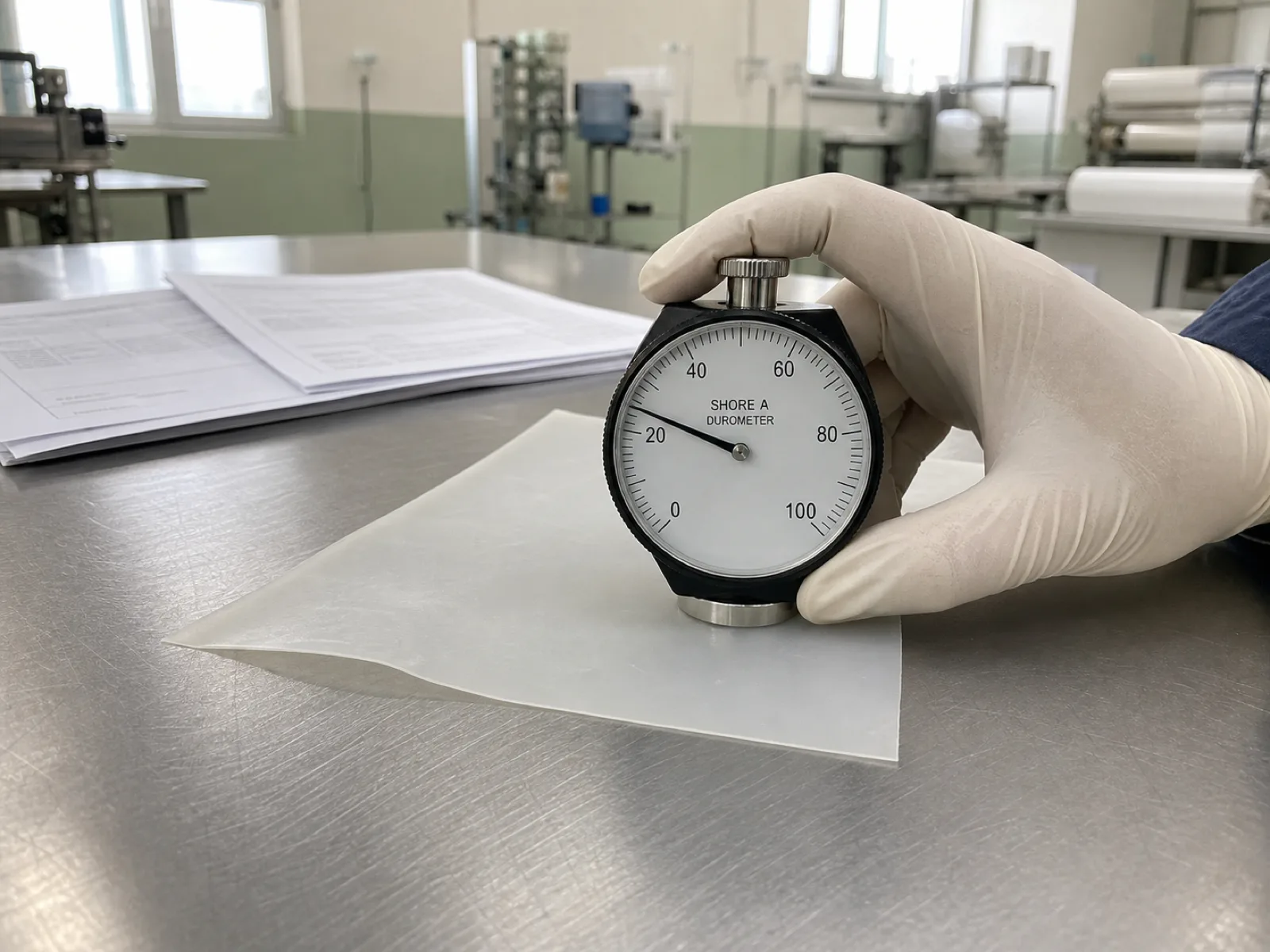
| Shore A hardness | 15–35 | 15–25 for skin conformity, 25–35 for firmer occlusive barrier |
| Post-cure | 4 h at 200 °C | Drives out volatile crosslink byproducts |
| Adhesive tack | 3.0–5.5 N/25 mm peel | Balances skin retention against 20–30 wear-cycle re-tack |
| Optical | Translucent, colorless or lightly opaque skin-tone | No plasticizer, no phthalate |
What OEM customization scope is actually on the table?
A silicone gel sheet manufacturer's real customization surface is die shape, thickness, adhesive tack, retail packaging, and IFU translation. Silicone stock and cure system are locked by biocompatibility filings — every buyer runs the same platinum-cured base. Differentiation happens in cut geometry (C-section, breast, tummy tuck, knee, keloid strips), pack count, carton design, and multi-language regulatory copy.
Standard cut-shape library Wetop tools daily:
| Cut shape | Typical dimensions | Application |
|---|---|---|
| Standard sheet | 4 × 5 in (10 × 12 cm) | General purpose, cut-to-fit |
| C-section strip | 1.5 × 6 in (4 × 15 cm) | Post-cesarean incision |
| Tummy tuck strip | 1.5 × 14 in (4 × 35 cm) | Abdominoplasty scar |
| Breast circle + strip pair | Ø 3 in circle + 2 × 6 in strip | Areolar + inframammary |
| Knee patch | 4 × 6 in (10 × 15 cm) with tab | Post-arthroscopy |
| Keloid strip | 0.5 × 3 in (1.3 × 7.5 cm) | Ear, small keloid |
| Custom die | Any geometry | 20,000 pcs MOQ + tooling |
Private-label packaging scope: retail carton with 4-color offset print (any Pantone), pack counts 4/6/12/24 sheets, resealable pouch or blister depending on retail channel, multi-language IFU covering EN/ES/FR/DE/JA/ZH minimum, lot code and expiration date jet-printed inline, UDI-DI carrier per the EU MDR requirement.
What are realistic MOQ, lead time, and FOB pricing for a scar-sheet program?
Realistic ranges: MOQ 5,000 sheets per SKU on existing tooling, 20,000 sheets per SKU for custom die + custom retail carton. Lead time is 7–15 days first article and 35–45 days production for repeat runs. FOB Yantian pricing for a standard 4×5 in sheet with retail box and IFU: USD 0.48–0.55 at 5,000 pcs, USD 0.35–0.42 at 20,000 pcs, USD 0.28–0.32 at 100,000 pcs.
The math behind the tiers:
| Tier | Qty per SKU | FOB Yantian (USD/pc) | Tooling | Notes |
|---|---|---|---|---|
| Pilot | 5,000 | 0.48–0.55 | Existing die, no NRE | First-article 7–15 days, production 35–45 days |
| Standard | 20,000 | 0.35–0.42 | Custom die USD 800–1,800 amortized | 40–50 days production |
| Volume | 100,000 | 0.28–0.32 | Tooling written off | Multi-shift, 55–70 days production |
| Enterprise | 500,000+ | Contact desk | Dedicated line, on-site QC | Requires ongoing volume commitment |
New 510(k) letter-to-file variants — different thickness, new die, new adhesive — add 3–4 weeks for fresh ISO 10993-5, -10, and -23 testing at a notified-body-recognized lab. That queue, not the factory floor, is the bottleneck. Book the biocompatibility slot the same week you sign the NDA.
For a broader treatment of how B2B silicone OEM pricing structures build up from raw material to FOB, see silicone OEM pricing structure and MOQ and lead time silicone OEM.
How do I audit a silicone gel sheet manufacturer before signing?
Demand a six-document pack before any 2D/3D file exchange: ISO 13485:2016 certificate (current cycle), FDA establishment registration number (verify on FDA FURLS live), full ISO 10993-5/-10/-23 reports on the specific silicone stock, Declaration of Conformity, material MSDS, and a signed mutual NDA. Then run a virtual or on-site factory audit against the ISO 13485 QMS checklist. If any document is generic (belongs to a "sister factory") or the ISO 10993 report references a different silicone stock than what will ship — walk.
Audit red flags in ascending severity:
- ISO 10993 report on generic silicone. The test must reference the exact stock number, cure system, and post-cure protocol you will run. A generic “medical-grade silicone” certificate is not a biocompatibility clearance.
- FDA registration in a different entity name. Cross-check the FURLS record against the invoicing entity. Trading-company registrations that sublet to unnamed factories fail every EU MDR audit.
- No cleanroom particle-count log. ISO Class 8 requires monitored particle counts. Ask for the last 90 days of readings. If they cannot produce them, the cleanroom is decorative.
- Peroxide-cured stock in the mix. Ask what curing agent the LSR line uses. If any answer includes “dicumyl peroxide” or “DBPH,” the factory is not scar-sheet-grade.
- No named PRRC or EU AR. If the factory cannot introduce their EU Authorized Representative and the PRRC on the legal manufacturer file, they have not shipped a legitimate MDR SKU into Europe.
- Pricing far below the band. FOB below USD 0.25 at 100,000 pcs implies a shortcut — usually thinner-than-spec stock, skipped post-cure, or peroxide chemistry. The savings evaporate on the first return-rate report.
For a structured supplier due-diligence template used across all Wetop OEM programs, cross-reference our sourcing silicone factory checklist.
Where do silicone gel sheets win vs alternative scar therapies?
Silicone gel sheets win on evidence base, cost per treatment cycle, and non-invasiveness. Against topical silicone gel (liquid), sheets deliver more consistent occlusion and are easier to prescribe adherence around. Against pressure garments, sheets are self-adhesive and require no fitting. Against corticosteroid injections and laser therapy, sheets are non-invasive, non-prescription in most markets, and 5–20× cheaper per treatment cycle. Onion-extract topicals (Mederma-style) sit below silicone in every serious meta-analysis of scar-management evidence.
The competitive landscape a brand buyer should map before pricing:
| Therapy | Level of evidence | Typical cost per 8-week cycle | Notes |
|---|---|---|---|
| Silicone gel sheet | Level 1 (IAP 2002 + 2014) | USD 25–80 (retail) | Non-invasive, OTC in US |
| Silicone gel (liquid) | Level 1 | USD 30–90 | Same active mechanism, adherence weaker |
| Onion extract topical | Level 2 (mixed) | USD 15–40 | Cited in trade press, weaker in meta-analyses |
| Pressure garment | Level 2 | USD 200–600 | Requires fitting |
| Corticosteroid injection | Level 1 (mature scars) | USD 300–800 per session | Prescription, in-clinic |
| Fractional laser | Level 1 (mature scars) | USD 800–2,500 per session | Prescription, in-clinic |
The corridor a scar-sheet brand competes in is against silicone gel liquid and onion-extract topical — both drugstore-shelf commodities with 4-color-box marketing. Winning on that shelf is a packaging and clinical-claim game, not a silicone-chemistry game. Every serious brand launches with a 4-color box, a QR code to a video protocol, and a 30-day adherence email sequence. The factory’s job is to keep the sheet consistent enough that returns stay under 2 %.
References
Every claim in this guide traces to one of the following Tier-1 sources. If your regulatory team wants the underlying evidence, cite these — they are the same sources our engineering desk pulls from every quarter.
Ready to spec a silicone gel sheet program?
Wetop’s engineering desk quotes scar-sheet programs weekly against the tolerances in this guide. Send us the target die shape, thickness band, pack count, and destination market — you will get back a spec sheet, an FOB band, a lead-time schedule, and the document-pack checklist for your regulatory team. Start at /contact/ or download the mutual NDA from /nda/ if 2D/3D files need to move first.
FAQ
-
Is a silicone gel scar sheet FDA-cleared or FDA-registered?
Silicone scar sheets sit in FDA product code FRO (dressing, wound, occlusive) and most sheet-format products are Class I 510(k)-exempt when marketed for scar management, provided the manufacturer holds establishment registration and lists the device. Any claim beyond scar appearance (wound healing, pain reduction) can push the device into Class II with a full 510(k) submission.
-
What is the MOQ for private-label silicone scar sheets?
Wetop's MOQ is 5,000 sheets per SKU on existing tooling (standard C-section, breast, tummy tuck, knee, and keloid-strip dies). Custom die shapes plus custom retail carton require 20,000 sheets per SKU, with tooling amortized across the first two production runs.
-
What thickness and Shore A hardness should a silicone scar sheet target?
Post-surgical scar sheets typically run 0.15–0.30 mm at Shore A 15–25 for skin conformity and 20+ wear cycles. Keloid and hypertrophic scar management sheets run 0.30–0.50 mm at Shore A 25–35 for a firmer occlusive barrier. Thinner than 0.15 mm risks tear at removal; thicker than 0.50 mm loses skin tack.
-
Which ISO 10993 tests do I need for a scar gel sheet biocompatibility file?
Minimum panel for a surface-contacting intact-skin device with prolonged contact (>24 h, <30 days): ISO 10993-5 (cytotoxicity), ISO 10993-10 (sensitization + irritation), and ISO 10993-23 (in vitro skin irritation). Extended-contact scar management protocols (>30 days) add ISO 10993-11 sub-chronic systemic toxicity.
-
How long is silicone scar sheet lead time for a private-label program?
First-article sample 7–15 days on existing tooling. Production 35–45 days for a repeat SKU. New 510(k) letter-to-file variant with fresh ISO 10993-5/-10/-23 testing at a notified body pushes lead time to 55–70 days, driven by the biocompatibility lab queue, not the factory floor.
-
What does silicone scar sheet OEM cost, FOB Yantian?
Typical bands in USD, FOB Yantian, for a standard 4×5 in (roughly 10×12 cm) sheet with retail box + IFU: 5,000 pcs at USD 0.48–0.55, 20,000 pcs at USD 0.35–0.42, 100,000 pcs at USD 0.28–0.32. Custom die and multi-language print add USD 0.03–0.06.
-
Are silicone scar sheets reusable, and how many wears do they hold?
Yes — self-adhesive platinum-cured silicone sheets re-tack for 20–30 wear cycles when the wearer washes the adhesive side with unscented soap and air-dries it between wears. Sheets are typically prescribed at 12–24 hours per day for 8–12 weeks; one sheet covers roughly 2–3 weeks of protocol before it loses tack.
-
Does a silicone scar sheet OEM need to comply with EU MDR 2021 rules?
Yes. Since 26 May 2021, scar sheets sold into the EU require CE Mark under Regulation (EU) 2017/745 (MDR), UDI-DI carrier assignment, EUDAMED registration, and a Person Responsible for Regulatory Compliance (PRRC) named by the legal manufacturer. A Chinese factory ships to an EU importer / authorized representative that owns the CE file.
-
Platinum-cured vs peroxide-cured silicone for scar sheets — which do I specify?
Platinum-cured, non-negotiable. Peroxide-cured silicone leaves 2,4-dichlorobenzoic acid residue that fails ISO 10993-10 sensitization at the thickness and contact time scar sheets require. Every Wetop scar-sheet line runs platinum addition-cure polydimethylvinylsiloxane with a post-cure at 200 °C for 4 hours.
-
What documents should I demand before signing with a silicone gel sheet manufacturer?
ISO 13485:2016 certificate valid for the current cycle, FDA establishment registration number (verify on FDA FURLS), full ISO 10993 test reports on the specific silicone stock (not generic), Declaration of Conformity, material MSDS, extractables/leachables data, UDI-DI plan for the EU, and a signed mutual NDA before any 2D/3D file exchange.
References
Authoritative sources cited in this guide
- Plastic and Reconstructive Surgery / PubMed. International Clinical Recommendations on Scar Management (Mustoe et al., 2002). https://pubmed.ncbi.nlm.nih.gov/12142678/ — Founding International Advisory Panel consensus establishing silicone gel sheeting as first-line prophylaxis for hypertrophic and keloid scars.
- Dermatologic Surgery / PubMed. Updated International Clinical Recommendations on Scar Management, Part 1 & 2 (Gold et al., 2014). https://pubmed.ncbi.nlm.nih.gov/25158707/ — 2014 IAP update reaffirming silicone gel sheeting as Level 1 evidence for scar prevention.
- International Organization for Standardization. ISO 13485:2016 — Medical devices — Quality management systems — Requirements for regulatory purposes. https://www.iso.org/standard/59752.html — Baseline QMS standard every scar-sheet OEM factory must certify against.
- International Organization for Standardization. ISO 10993-1:2018 — Biological evaluation of medical devices — Part 1: Evaluation and testing within a risk management process. https://www.iso.org/standard/68936.html — Governs the biocompatibility panel a surface-contacting silicone scar sheet must clear.
- International Organization for Standardization. ISO 10993-10:2021 — Tests for skin sensitization. https://www.iso.org/standard/75279.html — Sensitization test that peroxide-cured silicone stock characteristically fails at scar-sheet contact times.
- US Food and Drug Administration. 21 CFR 878.4022 — Hydrophilic wound dressing / Silicone gel sheet product code FRO. https://www.ecfr.gov/current/title-21/chapter-I/subchapter-H/part-878 — US regulatory pathway (Class I 510(k)-exempt for pure scar-appearance claim).
- European Commission — EUR-Lex. Regulation (EU) 2017/745 on medical devices (MDR). https://eur-lex.europa.eu/legal-content/EN/TXT/?uri=CELEX%3A02017R0745-20230320 — EU MDR — the CE Mark, UDI, EUDAMED, and PRRC framework a scar-sheet importer must satisfy after 26 May 2021.
- United States Pharmacopeia. USP <88> Biological Reactivity Tests, In Vivo — Class VI. https://www.usp.org/harmonization-standards/pdg/excipients/plastic-materials — Optional but industry-standard elastomer qualification specified by many US brand due-diligence teams.
Start a custom program
Send a brief. Get an engineer’s reply in one business day.
Every Wetop program is tooled from a customer’s specification. Send a CAD file (STEP · IGES · DWG) or a written brief and we’ll reply with a mold cost estimate, price brackets at MOQ 500 / 1,000 / 5,000, and any engineering questions.