Buyer Guide · commercial intent
Silicone Popsicle Mold OEM Guide — Cure, Compliance
What changed: First publication under v2 advanced-GEO standard — benchmarked against consumer roundup incumbents and rewritten from inside the factory floor with platinum-cure mandate, FDA/LFGB clause citations, cavitation ROI math, and Tier-2 retail launch checklist that consumer coverage does not touch.
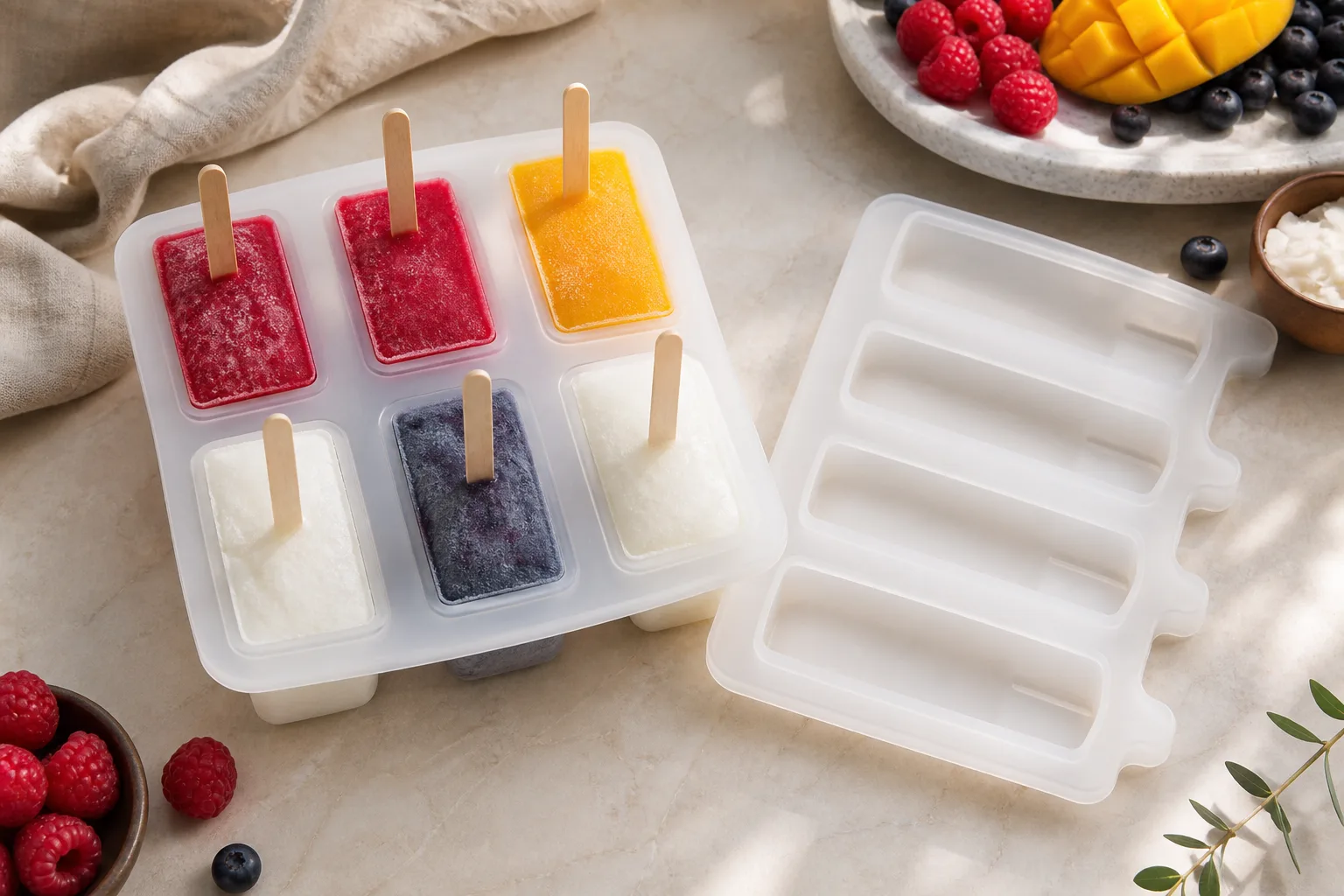 Buyer Guide
 The silicone popsicle mold is a deceptively simple product hiding one of the strictest food-contact regulatory profiles in the housewares category. It sits in direct food contact, cycles from -40 °C freezer to warm-water demold hundreds of times over its service life, and is disproportionately used by children — putting it under CPSIA and EU baby-tier scrutiny even when marketed as a general kitchen SKU. Every retail buyer above the $8 shelf-price tier now audits the same platinum-cure certificate, per-batch FDA + LFGB report, and PFAS non-detect analysis. This guide is the engineering reality of manufacturing that product — cure chemistry, cavitation economics, tooling ROI, wall-thickness math for freeze release, and the RFQ-to-PPAP workflow — written from inside a working OEM factory floor, not from a consumer roundup.
A silicone popsicle mold is a platinum-cured food-contact silicone article, Shore A 40-65, wall thickness 2.5-4 mm, engineered with 3-5° draft angles to release ice as it thermally contracts 0.5% linearly on freeze. Mandatory 4-6 hour post-cure at 200 °C clears LFGB §30/§31 organic volatile testing per BfR Recommendation XV. For B2B OEM programs, MOQ 500 pieces per SKU delivers per-batch FDA 21 CFR 177.2600 + LFGB + PFAS non-detect reports. FOB Yantian for a standard 6-cavity platinum-cure mold with integrated lid and PP sticks runs $2.85-$3.60 at 500 pieces, dropping to $1.65-$2.05 at 10,000 pieces.
What is a silicone popsicle mold, engineered for OEM production?
A silicone popsicle mold is a platinum-cured polydimethylsiloxane article — molded under compression or LSR injection at 160-200 °C, Shore A 40-65 per ASTM D2240[^astm-d2240], wall thickness 2.5-4 mm, with a 3-5° internal draft angle and 0.3-0.5 mm dimensional oversize to compensate for 0.5% linear ice contraction. Service envelope -40 °C to 230 °C. The engineering constraint set is dominated by freeze-release geometry, not by thermal envelope.
Every meaningful design decision on a silicone popsicle mold traces back to one physical fact: water expands 9% by volume when it freezes, then contracts 0.5% linearly as it cools from 0 °C to -20 °C. That expansion-then-contraction cycle is what makes silicone the right material — it flexes to accommodate expansion, then releases the shrunken ice on demold. It’s also what breaks cheap molds. Under-drafted cavities trap the ice at -20 °C; too-thin walls tear at the demold pull; too-hard silicone (above Shore A 65) doesn’t flex enough to invert.
The consumer-facing description is “a flexible ice mold”. The engineering description is a three-part system: the cavity (food-contact geometry with freeze-release engineering), the lid or top plate (positional constraint for sticks, splash guard, dust cover), and the stick or handle system (PP, wood, or silicone-integrated). Each part has a separate regulatory profile — the cavity is FDA + LFGB food-contact, the lid may be non-food-contact, the PP stick is food-contact but under a different plastic-migration regulation.
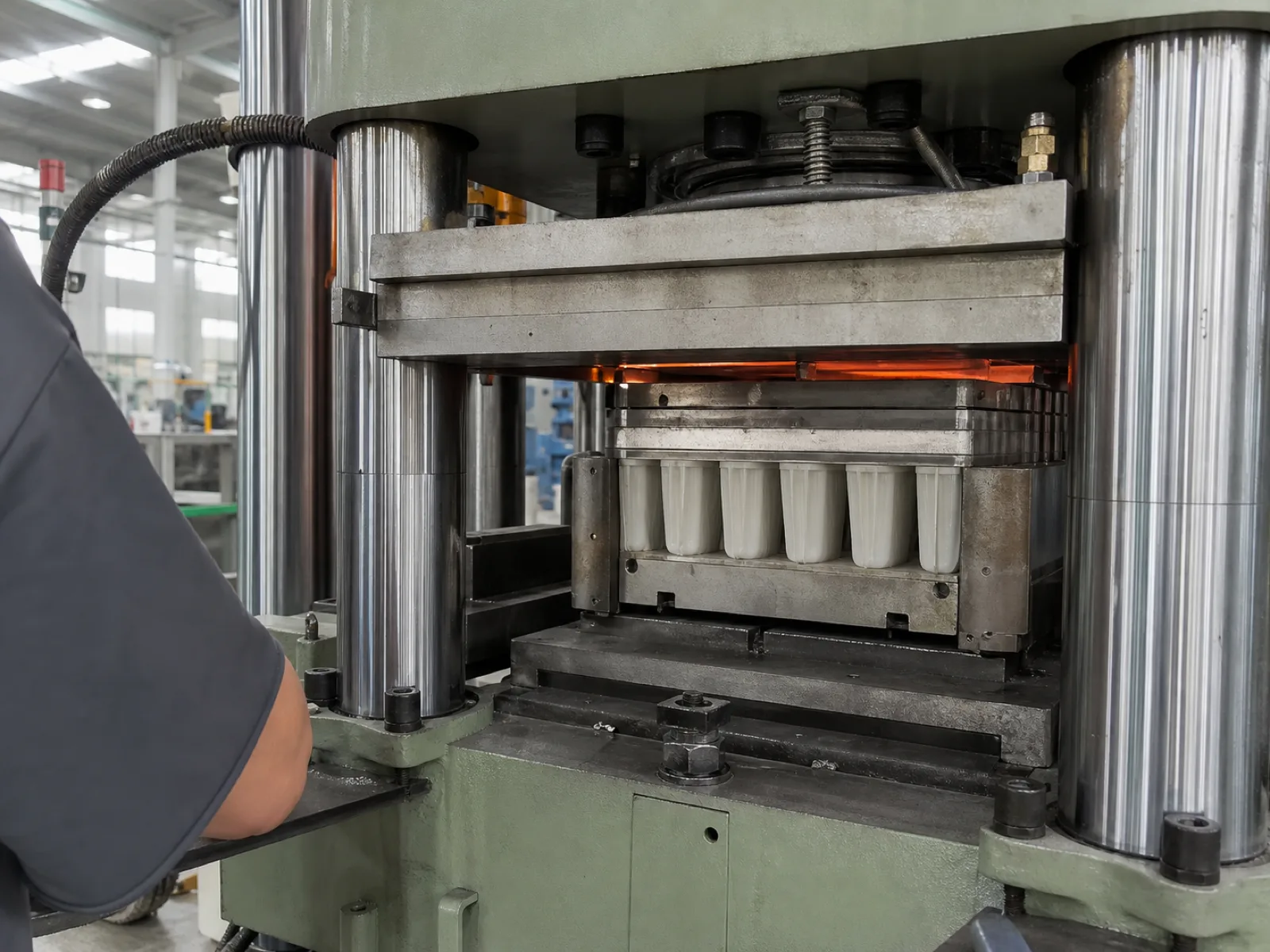
Baseline engineering spec sheet
| Parameter | Standard range | Test method |
|---|---|---|
| Cavity volume | 25-110 ml (25-35 mini, 60-80 classic, 90-110 premium) | Displacement gauge |
| Wall thickness | 2.5-4 mm (retail default 3 mm) | Digital caliper, 5-point sampling |
| Internal draft angle | 3-5° | Optical projector, CMM sampling |
| Shore A hardness | 40-45 (easy-demold retail); 55-65 (structural) | ASTM D22401 |
| Tensile strength | ≥ 7 MPa | ASTM D412 |
| Elongation at break | ≥ 300% | ASTM D412 |
| Tear resistance | ≥ 20 kN/m | ASTM D624 |
| Continuous service temperature | -40 °C to 230 °C | LFGB thermal cycling |
| Freeze-cycle durability spec | 5,000 cycles at -20 °C ↔ +25 °C | ASTM D5296-adjacent shock protocol |
| Cure system | Platinum (LSR or HCR) — mandatory | Master-batch lot certificate |
| Cure temperature at press | 160-200 °C | Press log |
| Post-cure cycle | 4-6 h @ 200 °C | Batch oven log |
Why platinum-cure is mandatory for food-contact popsicle molds
Platinum-cure is non-negotiable for freezer food-contact silicone. Peroxide-cure produces organic decomposition byproducts (acetophenone, dicumyl fragments) that don't burn off during freezer use — instead they concentrate at the ice-silicone interface and transfer onto the pop at demold. Platinum-cure uses a platinum-catalyzed addition reaction with no volatile byproducts and clears LFGB §30/§31[^bfr-lfgb-xv] extractables reliably. Any factory quoting peroxide-cure for a food-contact popsicle mold is disqualifying itself.
This is the single most important spec decision on a popsicle mold program, and it separates serious factories from commodity ones. In a baking mat application, well-post-cured peroxide-cure functionally reaches parity with platinum-cure — the 200 °C oven cycles complete the volatile burn-off that post-cure started. In a popsicle mold, there is no burn-off phase. The product lives at -20 °C for 4-8 hours per use cycle, and any residual peroxide byproducts stay in the polymer matrix, migrating slowly to the surface over the mold’s service life.
How to spot peroxide-cure molds in incoming QC
Three fast tells during incoming QC:
- Master-batch lot certificate. Platinum-cure certificates specify a platinum-catalyzed addition system, typically with vinyl-terminated PDMS and hydride crosslinker. Peroxide certificates specify an organic peroxide catalyst (2,4-dichlorobenzoyl peroxide, dicumyl peroxide, or bis-tert-butyl peroxide variants). If the certificate is missing or vague, treat as peroxide by default.
- First-use organoleptic test. Freeze plain distilled water in the mold. Demold and taste. Platinum-cure product is odorless and tasteless; under-post-cured peroxide-cure product carries a faint acidic or plasticky note. Wetop runs this test on every new tooling first-article inspection.
- LFGB §30/§31 report values. Overall migration under Regulation (EC) 1935/20042 must be < 10 mg/dm². Peroxide-cure with skipped post-cure typically lands 12-25 mg/dm² and fails. Platinum-cure typically lands 2-4 mg/dm² and clears with margin.
Detailed cure-chemistry decision framework on the platinum-vs-peroxide-cured silicone guide.
The full regulatory compliance stack for silicone popsicle molds
The mandatory stack is FDA 21 CFR 177.2600[^fda-177-2600] (US food contact), LFGB §30/§31 per BfR Recommendation XV[^bfr-lfgb-xv] (EU food contact), California Prop 65 non-detect on lead / cadmium / phthalates, ISO 9001:2015[^iso-9001] quality system, and per-batch PFAS non-detect testing. Baby / infant-tier adds ISO 10993-5 cytotoxicity + 10993-10 sensitization[^iso-10993] plus CPSIA[^cpsia-silicone]. Pet-tier adds ISO 10993-5/10 as table stakes. EU retail adds REACH SVHC declaration under the EU 1935/2004[^ec-1935-2004] framework.
The regulatory profile of a popsicle mold is deeper than the housewares category average because the product straddles three overlapping frameworks: food-contact (FDA + LFGB), consumer product safety (CPSIA if children’s-marketed), and biocompatibility (ISO 10993 if pet or infant). Retail buyers at the Tier-2 chain level default to demanding the full stack even for narrower launches — the incremental testing cost of $800-$1,500 is trivial against the risk of a re-audit or recall.
Tier-specific certification stack
| Tier | FDA 21 CFR 177.2600 | LFGB §30/§31 | Prop 65 | ISO 9001 | PFAS non-detect | REACH | ISO 10993-5/10 | CPSIA |
|---|---|---|---|---|---|---|---|---|
| US mass retail ($8-15 shelf) | Required | Recommended | Required if CA | Required | Recommended | — | — | — |
| US premium retail ($15-30) | Required | Required | Required | Required | Required | — | — | — |
| EU retail (all tiers) | Required | Required | — | Required | Required | Required | — | — |
| Baby / infant tier | Required | Required | Required | Required | Required | Required | Required | Required |
| Pet tier | Required | Required | Required | Required | Required | Required | Required | — |
| Tier-2 chain private-label | Required | Required | Required | Required | Required | Required | Recommended | Recommended |
Full breakdown of the FDA-vs-LFGB decision on our FDA vs LFGB silicone decoder. PFAS-free process-aid verification detail on the PFAS-free silicone sustainability guide.
Cavitation and tooling economics — the ROI break-even math
Cavitation economics decide between aluminum single-cavity, P20 steel 4-6 cavity, and P20 steel 8+ cavity tooling based on program lifetime volume. Aluminum single-cavity ($2,200-$3,000) breaks even under 1,000 units. P20 4-cavity ($6,500-$8,500) breaks even at 3,000-4,000 units and is the retail default. P20 6-cavity ($8,500-$11,000) is optimal at 10,000-50,000. 8+ cavity ($12,000-$18,000) only justifies above 25,000 units. Aluminum life ~50,000 cycles; P20 steel 500,000+.
The tooling decision compounds three variables: cavity count (throughput per press cycle), tool material (durability across cycles), and cycle-time savings against tooling capital. Single-cavity aluminum tooling is cheap and fast to cut — appropriate for prototype validation and micro-batch runs. But aluminum wears fast: dimensional drift at cycle 30,000-50,000 shows up as flash at parting lines and progressive draft-angle loss that causes freeze-release problems by cycle 40,000.
P20 hardened steel tooling costs 2.5-4x more upfront but delivers 10x the cycle life plus tighter dimensional stability across the run. For any multi-year retail program, P20 is the only defensible choice.
Tooling ROI break-even math
| Tooling type | Tooling cost | Cavity count | Cycle life | Per-piece amortization at 500 pcs | Per-piece amortization at 5,000 pcs | Break-even volume |
|---|---|---|---|---|---|---|
| Aluminum single-cavity | $2,200-$3,000 | 1 | ~50,000 cycles | $4.40-$6.00 | $0.44-$0.60 | 800-1,200 units |
| P20 steel single-cavity | $3,800-$5,000 | 1 | 500,000+ cycles | $7.60-$10.00 | $0.76-$1.00 | 2,500-3,500 units |
| P20 steel 4-cavity | $6,500-$8,500 | 4 | 500,000+ cycles | $13.00-$17.00 | $1.30-$1.70 | 3,000-4,000 units |
| P20 steel 6-cavity | $8,500-$11,000 | 6 | 500,000+ cycles | $17.00-$22.00 | $1.70-$2.20 | 4,500-6,500 units |
| P20 steel 8-cavity | $12,000-$18,000 | 8 | 500,000+ cycles | $24.00-$36.00 | $2.40-$3.60 | 8,500-12,000 units |
Break-even is calculated against the incremental per-cycle throughput savings and Wetop’s practice of amortizing tooling into first-order per-unit pricing rather than billing as a separate line. For programs targeting 5,000-25,000 annual units, the 4-6 cavity P20 tooling is almost always the right answer.
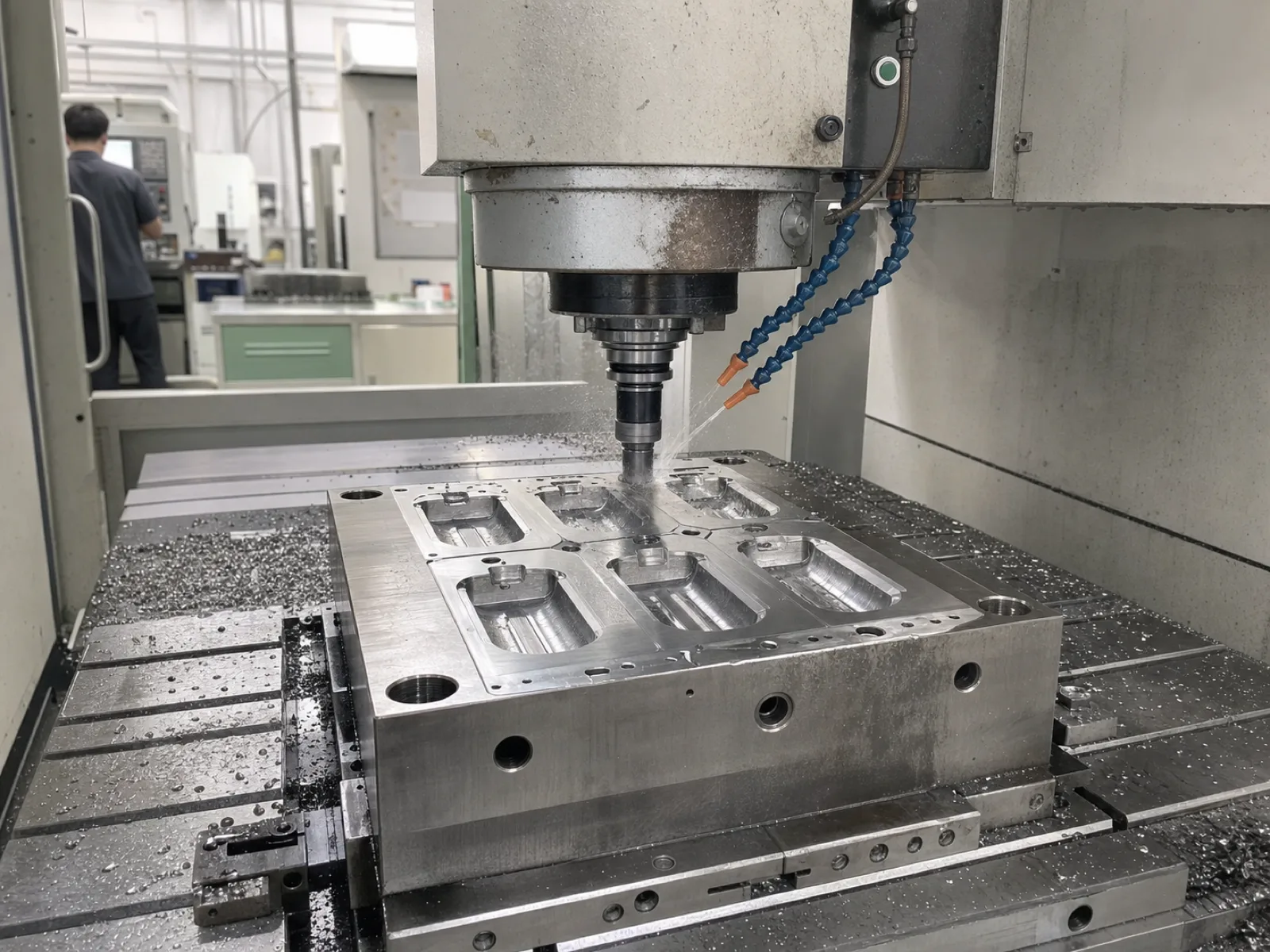
Full tooling cost structure on the silicone OEM pricing structure guide and MOQ economics logic on the real factory MOQ math guide.
MOQ tiers and FOB Yantian pricing benchmarks
Wetop's MOQ is 500 pieces per SKU — the minimum that supports per-batch third-party FDA + LFGB + PFAS testing economics on a food-contact freezer product. FOB Yantian Q3 2026 for a standard 6-cavity platinum-cure mold with silicone-integrated lid and PP stick set: 500 pcs $2.85-$3.60, 1,000 pcs $2.40-$3.00, 5,000 pcs $1.90-$2.35, 10,000 pcs $1.65-$2.05. Retail-ready color header carton adds $0.28-$0.55 fully assembled.
Full MOQ-tier FOB Yantian pricing (6-cavity classic 80 ml bar, platinum-cure, Q3 2026)
| Volume tier | Base mold FOB | 4C printed lid add | Pantone master-batch add | PP stick set (20 pcs) add | Retail carton fully assembled |
|---|---|---|---|---|---|
| 500 pcs | $2.85-$3.60 | +$0.12-$0.18 | +$0.14-$0.20 | +$0.35-$0.55 | +$0.42-$0.55 |
| 1,000 pcs | $2.40-$3.00 | +$0.10-$0.14 | +$0.12-$0.18 | +$0.30-$0.45 | +$0.38-$0.50 |
| 2,500 pcs | $2.10-$2.65 | +$0.08-$0.12 | +$0.10-$0.15 | +$0.28-$0.40 | +$0.34-$0.45 |
| 5,000 pcs | $1.90-$2.35 | +$0.07-$0.10 | +$0.09-$0.13 | +$0.24-$0.36 | +$0.32-$0.42 |
| 10,000 pcs | $1.65-$2.05 | +$0.05-$0.08 | +$0.07-$0.11 | +$0.20-$0.30 | +$0.28-$0.38 |
| 20,000+ pcs | $1.45-$1.80 | Quote | Quote | Quote | Quote |
Prices exclude certification fees scoped to a specific retailer program, destination-country duties, and freight beyond Yantian FOB.
Cavity-count price scaling at 5,000 pcs volume
| Cavity configuration | FOB per unit at 5,000 pcs | Best for |
|---|---|---|
| 4-cavity thick-bar (110 ml) | $2.10-$2.60 | Premium retail, adult / gourmet positioning |
| 6-cavity classic (80 ml) | $1.90-$2.35 | Mainstream retail default |
| 6-cavity mini (35 ml) | $1.80-$2.20 | Kids-tier, portion-controlled |
| 8-cavity mini-pop (25 ml) | $1.95-$2.40 | Pet tier, baby tier, sampler SKUs |
| Segmented push-pop cylinder | $2.20-$2.75 | Novelty and licensed-character programs |
Wall thickness, draft angle, and freeze-release engineering
Wall thickness 2.5-4 mm engineered against ice thermal contraction (~0.5% linear from 0 °C to -20 °C) with 3-5° internal draft angles. Cavity dimensions oversized 0.3-0.5 mm to compensate for ice contraction plus mold thermal contraction. Under-drafted cavities are the single biggest cause of first-year mold failures — the mold tears at demold pull or the ice bar cracks in place. Wall thickness under 2.5 mm risks fatigue at the mold-body-to-cavity fillet within 500 freeze cycles.
The freeze-release problem is fundamentally a geometry problem. Water expands 9% by volume during the phase change to ice, which flexes the silicone cavity outward without permanent deformation (this is why silicone works and rigid plastics don’t). Then as the ice cools further from 0 °C to -20 °C, both the ice and the silicone contract — but at different rates. Silicone has a thermal expansion coefficient around 300 × 10⁻⁶/K; ice is about 51 × 10⁻⁶/K. The differential means the silicone cavity walls contract more than the ice does at freezer temperature, gripping the ice and requiring active demold flexing.
The 3-5° internal draft plus 0.3-0.5 mm cavity oversize is the engineering answer that lets consumer demold work reliably. Below 3° draft, freeze release becomes a coin flip. Above 5° draft, the pop shape distorts noticeably from the marketed geometry.
Wall-thickness decision matrix by cavity volume
| Cavity volume | Wall thickness | Shore A | Rationale |
|---|---|---|---|
| 25-35 ml (mini, pet, baby) | 2.5-3 mm | 40-45 | Soft polymer + thin wall for easy demold by small hands / paws |
| 60-80 ml (classic retail) | 3-3.5 mm | 40-50 | Retail default — balanced flex, durability, perceived quality |
| 90-110 ml (premium thick-bar) | 3.5-4 mm | 45-55 | Heavier feel for premium positioning; thicker wall resists fatigue |
| Structural (integrated handle / lid) | 3-4 mm (body); 4-5 mm (structural) | 55-65 | Higher Shore A holds shape; body remains flex-demoldable |
Odor and taste transfer control — eliminating the ‘rubbery smell’ complaint
The 'rubbery smell' complaint is a platinum-cure + post-cure discipline problem, not a chemistry problem. Two-stage protocol eliminates it: 4-6 hour post-cure at 200 °C to drive residual volatiles below the BfR Recommendation XV extractables limit[^bfr-lfgb-xv], then 24-hour ambient conditioning under negative-pressure ventilation before packaging. Organoleptic panel testing per LFGB protocol confirms zero perceptible odor before batch release.
The consumer complaint pattern is predictable. A cheap peroxide-cure popsicle mold ships from the factory with elevated residual volatiles. The buyer opens the package, notices a faint chemical odor, and either returns immediately or freezes water in the mold. First-use demold delivers a pop with a rubbery aftertaste. Retail return.
The mechanism is that peroxide catalysts decompose during cure into acetophenone (from dicumyl peroxide) and analogous fragments. Well-executed post-cure at 180-200 °C for 4-6 hours drives these out of the polymer to below detection threshold. Commodity factories skip or shorten post-cure to save oven energy (20-30% of process energy budget) and cycle time. The shipped product then out-gasses at the freezer-ambient thermal cycling of consumer use — but instead of burning off into open air (as it would in a baking mat oven cycle), it concentrates in the confined cavity and transfers to the pop.
Wetop’s protocol structurally eliminates this failure mode:
- Platinum-cure default. Addition reaction, no volatile byproducts. The baseline extractables profile is 3-5x cleaner than peroxide-cure at parity post-cure.
- Mandatory 4-6 hour post-cure at 200 °C. Every batch, logged per master-batch lot per ISO 90013.
- 24-hour ambient conditioning under negative-pressure ventilation. Any surface-adsorbed volatiles clear before packaging seals them in.
- Organoleptic panel testing per LFGB §30/§31 protocol on production samples before batch release.
Freeze-cycle durability spec and thermal-shock testing
The retail-tier durability spec is 5,000 freeze cycles at -20 °C to +25 °C ambient with no visible cracking, tearing, discoloration, or dimensional drift beyond ±3%. Pre-shipment destructive testing on 3 samples per batch runs 20-cycle accelerated shock (-40 °C freezer to +40 °C water demold, immediate re-freeze) with visual + dimensional inspection after each cycle. 5,000-cycle life corresponds to ~5 years of moderate consumer household use.
The durability failure modes on a silicone popsicle mold cluster around four categories: crack initiation at cavity-body fillets from repeated flex, tear propagation from surface defects during demold pull, discoloration from thermal-oxidation of surface pigments, and dimensional drift as internal stress relaxes over cycles.
The 5,000-cycle spec target is calibrated to consumer use patterns: a mold used weekly during warm-weather months averages ~30 cycles per year in moderate use; 5,000 cycles brackets 5-8 years of household life. For pet and baby tiers where use frequency runs higher (daily during summer), specification pushes to 10,000-cycle target with proportionally thicker walls and higher-tear-resistance formulations.
Accelerated thermal-shock protocol
| Step | Condition | Duration |
|---|---|---|
| 1. Freeze | -40 °C freezer with distilled water fill | 4 hours |
| 2. Demold shock | +40 °C water bath immersion | 5 seconds |
| 3. Ambient recovery | +25 °C ambient | 15 minutes |
| 4. Visual + dimensional inspection | Crack / tear / draft-angle check | Per cycle |
| 5. Repeat cycle 1-4 | 20 cycles per shipment sample |
Pre-shipment audit checklist — the six-document stack for silicone popsicle molds
Six documents plus one unedited factory video cover 90% of the audit surface. ISO 9001 certificate with current validity and silicone-molding scope, platinum-cure master-batch certificate, FDA 21 CFR 177.2600 test report, LFGB §30/§31 organic volatile report, PFAS non-detect at ppb detection limits, post-cure oven log at 4-6 hours × 200 °C — all referencing the same production batch lot. Video shows compression presses and post-cure ovens in use with current-date verification.
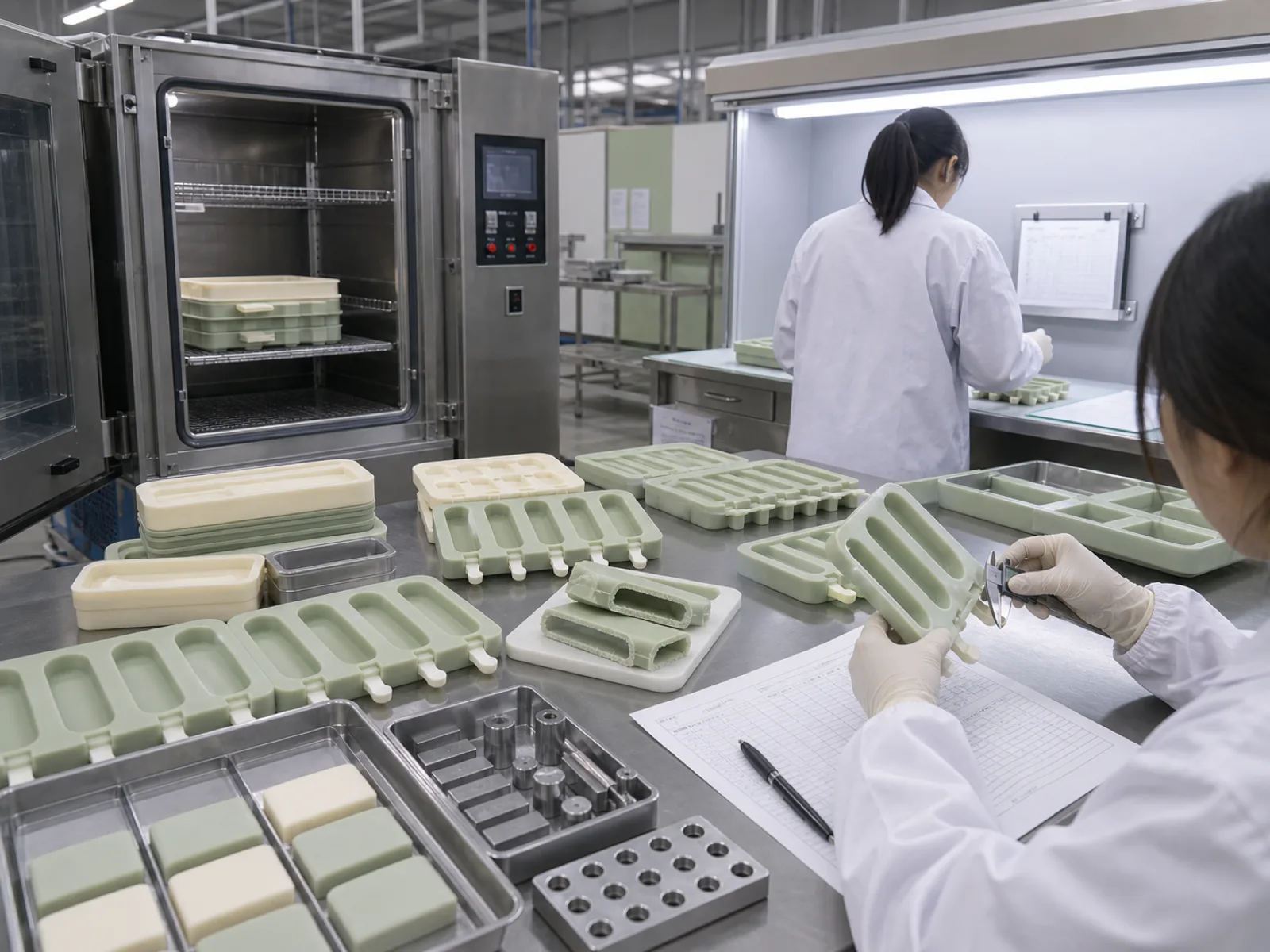
The six-document audit stack
- ISO 9001:2015 certificate — current validity, silicone molding in scope, issued by SGS / TÜV / Bureau Veritas / DNV / DEKRA. Verify against the certification body’s public register.
- Platinum-cure master-batch certificate — specifying vinyl-terminated PDMS + hydride crosslinker + platinum catalyst. Referencing the specific production batch lot number.
- FDA 21 CFR 177.2600 + LFGB §30/§31 test reports — on finished-part material, referencing the same batch lot. Reports from SGS, Intertek, TÜV, Bureau Veritas. Quantitative extractables values with margin against the < 10 mg/dm² LFGB overall migration limit.
- PFAS non-detect test report — per-batch analysis at ppb detection limits from an accredited lab. Increasingly required given the ECHA universal restriction proposal4.
- Post-cure oven log — batch temperature-time record showing 200 °C ± 5 °C for 4-6 hours, per master-batch lot, retained 36+ months per ISO 9001.
- Factory production video — 2-3 minute unedited walk-through with current-date verification (dated newspaper or shift log in-frame). Compression presses and post-cure ovens visibly in use.
Full sourcing-verification framework on the sourcing silicone factory checklist.
Tier-2 retail chain launch readiness — carton, barcode, retail-ready packaging
Tier-2 retail chain launch readiness reduces to five packaging deliverables plus a carton-spec matrix. UPC-A / EAN-13 barcode registration and scan-verification per master carton, retail-ready display carton with tear-strip or perforated shelf-open, header card with Prop 65 warning (if applicable) and country-of-origin, master carton with size / weight / GW-NW per retailer template, and pre-shipment retailer-specific test reports (Home Depot QIP, Wayfair CastleGate, Bed Bath vendor manual, Tesco / Carrefour vendor spec).
The Tier-2 retail chain launch is where a good product often gets rejected at the receiving dock over packaging, not product. The retail team ordering the product isn’t the receiving team inspecting it, and mismatches between the two are the largest source of first-shipment chargebacks. Wetop’s retail-ready packaging protocol builds against retailer vendor manuals directly:
- Barcode. UPC-A for US retail, EAN-13 for EU. GS1-registered by the buyer, printed at 100% magnification, scan-verified at 3 angles pre-shipment.
- Retail-ready display carton (RRP). Tear-strip open, printed shelf-facing panel, tray-and-hood or perforated-open construction. 4C offset print with soft-touch or matte laminate for premium tier.
- Header card. Product photography, spec bullets (dishwasher-safe, cavity count, volume, temperature range), regulatory badges, Prop 65 warning if applicable, country-of-origin, brand mark. Typically 350 gsm C1S with UV spot.
- Master carton. Corrugated BC-flute for standard retail, AB-flute for heavy premium. Printed with SKU, PO number, GW/NW, dimensions, retailer-specific shipping labels.
- Retailer-specific test reports. Home Depot QIP, Wayfair CastleGate, Bed Bath vendor manual test protocols, or European equivalent. Testing runs at accredited labs against retailer-published protocols.
Full private-label workflow on the private-label silicone kitchen products guide and logo customization detail on the customize silicone logo guide.
Lead time from RFQ to warehouse — what’s realistic
Total realistic lead is 60-95 days from RFQ to US warehouse receipt. 7-15 days sample on adapted existing tooling; 25-40 day new P20 steel tooling cut for custom cavity geometry; 35-45 days production for 5,000-20,000 pieces after PO and 30% deposit; 14-38 days Yantian sailing depending on destination port. Suppliers quoting 30-day cold-start-to-warehouse totals are compressing steps — usually post-cure, incoming QC, or pre-shipment AQL.
The RFQ-to-PPAP workflow at Wetop
| Stage | Duration | Deliverables | Buyer gate |
|---|---|---|---|
| 1. RFQ + engineering review | 1-2 days | Cavity recommendation, cure recommendation, tooling scope, MOQ-tier price bracket | — |
| 2a. Sample from adapted tooling | 7-15 days | Physical sample + master-batch cert + Shore A + dimensional report | Sample approval + PO |
| 2b. New P20 tooling cut | 25-40 days (parallel where possible) | Tooling drawing, first-article inspection, sample from new tool | Tooling approval + PO |
| 3. PO + 30% deposit + material procurement | 5-10 days | Platinum-cure master-batch, PP stick procurement, receiving QC | — |
| 4. Production (5,000-20,000 pcs) | 35-45 days | Compression / LSR molding + post-cure + secondary + retail packaging | — |
| 5. In-process QC + pre-shipment AQL | +3-5 days | FDA + LFGB + PFAS test reports, thermal-shock destructive test, AQL 1.5 report | Buyer inspection sign-off |
| 6. 70% balance + shipping documentation | 2-3 days | Commercial invoice, packing list, B/L, COO, MSDS | — |
| 7. Yantian to destination sailing | 14-38 days | On-board notification, tracking | — |
| Total realistic | 60-95 days |
Wetop is 90 minutes from Yantian Port and 2 hours from Hong Kong airport — the logistics baseline that shaves 1-3 days off comparable inland factories. Full lead-time driver breakdown on the MOQ and lead time guide.
What Wetop OEMs on silicone popsicle molds
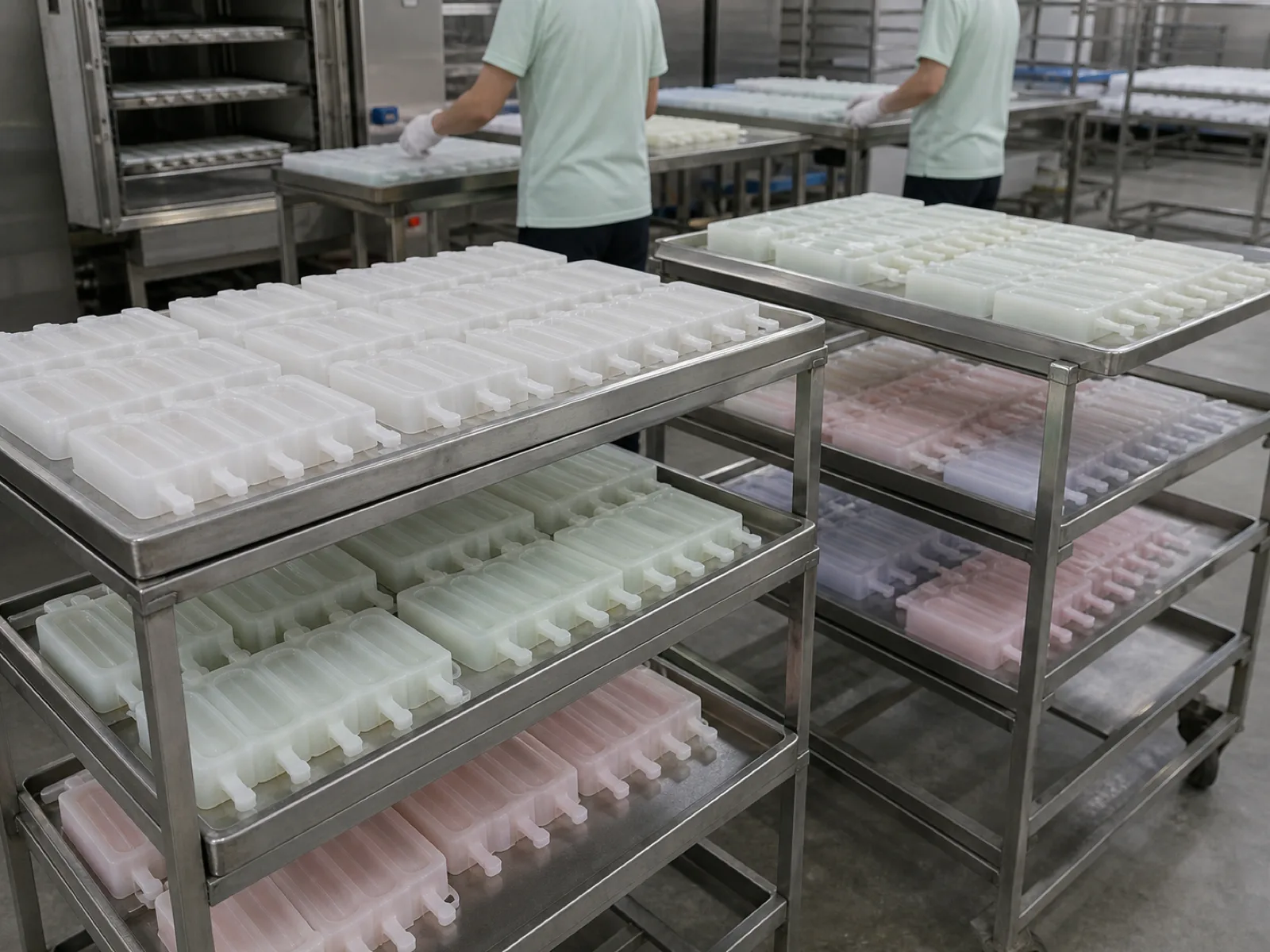
Wetop runs silicone popsicle mold programs at 500-piece MOQ per SKU on platinum-cure exclusively for food-contact SKUs from a 7,500 m² founder-led Dongguan floor. Tooling library covers 6-cavity classic (60 / 80 ml), 6-cavity mini (35 ml), 4-cavity thick-bar (110 ml), 8-cavity mini-pop (25 ml) for pet and baby, and segmented push-pop cylinder. Custom P20 steel tooling at $6,500-$11,000 amortized against first-order volume. Per-batch FDA 21 CFR 177.2600 + LFGB §30/§31 + PFAS non-detect reports included in every quote.
Program defaults:
- Platinum-cure LSR / premium HCR — the only cure system Wetop quotes for food-contact popsicle molds. Cleaner extractables, safe across pet / baby / infant tiers, defensible under the ECHA PFAS restriction4 and ISO 109935 biocompatibility requirements.
- P20 hardened steel tooling — the default for retail programs. 500,000+ cycle life, tight dimensional stability, capable of holding 3-5° draft angles across full production run.
- Mandatory 4-6 hour post-cure at 200 °C plus 24-hour ambient conditioning — every batch, logged per master-batch lot per ISO 90013.
- Tier-2 retail-ready packaging — RRP display cartons, UPC / EAN barcode scan verification, retailer-specific vendor-manual compliance (Home Depot, Wayfair, Bed Bath, Tesco, Carrefour tiers).
Sourcing a silicone popsicle mold program? Email inquiry@wetopsilicone.com with your target retail tier, target regulatory scope (US-only, EU-inclusive, pet, baby / infant), cavity count and volume preference (or ask for recommendation), and target annual volume — we return within 2 business days with a cure + tooling + cavitation recommendation, per-batch documentation packet outline, and price brackets at MOQ 500 / 1,000 / 5,000 / 10,000. Mutual NDA available at our NDA page. Full manufacturing detail on the capabilities page; anonymized program archetypes at case studies; direct engineering contact via the contact page.
Footnotes
-
ASTM International. ASTM D2240-15 — Standard Test Method for Rubber Property—Durometer Hardness. https://www.astm.org/d2240-15r21.html — the Shore A hardness measurement standard, typical popsicle mold range 40-65. ↩
-
European Parliament and Council. Regulation (EC) No 1935/2004 — Materials intended to come into contact with food. https://eur-lex.europa.eu/legal-content/EN/TXT/?uri=CELEX%3A02004R1935-20090807 — the EU framework regulation for food-contact materials. ↩
-
International Organization for Standardization. ISO 9001:2015 — Quality Management Systems — Requirements. https://www.iso.org/standard/62085.html — the quality management standard Wetop is certified against. ↩ ↩2
-
European Chemicals Agency. PFAS Universal Restriction Proposal. https://eur-lex.europa.eu/legal-content/EN/TXT/?uri=CELEX%3A32006R1907 — the regulatory action driving PFAS-free specification adoption across EU and US retail. ↩ ↩2
-
International Organization for Standardization. ISO 10993-1:2018 — Biological evaluation of medical devices. https://www.iso.org/standard/68936.html — the biocompatibility framework required for baby / infant-tier and pet-tier popsicle mold SKUs. ↩
FAQ
-
What certifications does a silicone popsicle mold need for US and EU retail?
US baseline: FDA 21 CFR 177.2600 per master-batch lot, California Prop 65 warning label if selling into California (typically 'no warning required' after non-detect testing on lead, cadmium, phthalates). EU: LFGB §30/§31 per BfR Recommendation XV, under the EU 1935/2004 framework regulation, plus REACH SVHC declaration. Pet-tier SKUs add ISO 10993-5 cytotoxicity and 10993-10 sensitization; baby / infant-tier SKUs add CPSIA and ISO 10993-5/10 as table stakes. Tier-2 retail chain buyers at the Home Depot / Wayfair / Bed Bath / Tesco / Carrefour level typically want the full US + EU stack on file even for US-only launches — the certification cost is trivial against the risk of a re-audit later.
-
Single-cavity vs multi-cavity tooling — what's the ROI break-even?
Break-even depends on total program volume. Aluminum single-cavity tooling at $2,200-$3,000 covers sample and micro-batch runs — break-even under 1,000 units where per-unit tooling amortization dominates. P20 hardened steel 4-cavity tooling at $6,500-$8,500 breaks even at 3,000-4,000 units on cycle-time-per-piece — the retail workhorse for programs targeting 5,000-25,000 annual units. 6-cavity P20 steel at $8,500-$11,000 is optimal for 10,000-50,000 annual units. 8-cavity+ tooling at $12,000-$18,000 only ROI-justifies above 25,000 annual units where cycle-time savings offset the tooling capital. Aluminum tooling life is ~50,000 cycles; P20 steel is 500,000+ cycles — for any multi-year retail program you want steel.
-
What Shore A hardness and wall thickness should I spec?
Shore A 40-45 for consumer easy-demold retail SKUs — the softer polymer flexes enough that a child can invert the mold and pop out the frozen bar without cracking the ice. Shore A 55-65 for structural molds with integrated handles, snap-on lids, or hanging loops where the mold itself needs dimensional rigidity. Wall thickness 2.5-3 mm for standard 60-80 ml cavity retail; 3-4 mm for premium retail where perceived quality matters. Critical engineering point: ice thermally contracts about 0.5% linearly as it freezes from +0 °C to -20 °C, so the cavity geometry needs a 3-5° draft angle plus 0.3-0.5 mm dimensional oversize to guarantee freeze release without the mold tearing at the demold pull. Under-drafted cavities are the single biggest cause of first-year mold failures.
-
How do I audit incoming QC on a silicone popsicle mold shipment?
Six documents plus one destructive test cover 90% of the audit surface. (1) Platinum-cure master-batch certificate referencing the specific lot number in production. (2) FDA 21 CFR 177.2600 test report on the finished-part material, not the raw compound. (3) LFGB §30/§31 organic volatile test report per BfR XV protocol. (4) PFAS non-detect at ppb detection limits from an accredited lab (SGS, Intertek, TÜV, Bureau Veritas). (5) Post-cure oven log showing 4-6 hours at 200 °C per batch. (6) Shore A durometer report per ASTM D2240 across 5-sample. Destructive test: 20-cycle thermal shock (-20 °C freeze → +25 °C ambient → repeat) on 3 samples with visual crack / tear inspection after each cycle. If a supplier hesitates on any of the six documents, the audit is answered.
-
How does Wetop handle 'rubbery smell' and taste-transfer complaints?
Two-stage post-cure protocol on every batch. Stage 1: 4-6 hours at 200 °C in dedicated post-cure ovens to drive residual volatiles below the BfR Recommendation XV extractables limit — the mandatory LFGB §30/§31 step. Stage 2: 24-hour ambient conditioning under negative-pressure ventilation to clear any surface-adsorbed volatiles before packaging. Organoleptic panel testing on production samples per LFGB protocol confirms zero perceptible odor or taste transfer before batch release. The 'rubbery smell' complaint category is fundamentally a peroxide-cure + skipped-post-cure problem — Wetop's platinum-cure default plus mandatory post-cure discipline eliminates it structurally. On the rare peroxide-cure program (typically for cost-driven non-food adjacent applications), the post-cure runs 6 hours minimum and organoleptic testing is mandatory before ship.
-
What's the lead time from RFQ to warehouse for a custom popsicle mold program?
60-95 days realistic. 7-15 day sample if the cavity geometry can adapt from existing tooling; 25-40 day new tooling cut for custom cavity design. 35-45 day production for 5,000-20,000 pieces after PO and 30% deposit. 14-18 day Yantian-to-US-West-Coast sailing; 25-32 days East Coast; 30-38 days Northern Europe. Suppliers quoting 30-day cold-start-to-warehouse are compressing steps — the usual suspects are skipped post-cure (which fails LFGB), unqualified tooling (which fails dimensional QC at cycle 500), or skipped AQL inspection (which becomes retail return rate downstream).
-
Can Wetop private-label an existing popsicle mold design, or do I need custom tooling?
Both, at MOQ 500. Wetop's baseline popsicle mold tooling library covers 6-cavity classic bar (60 ml, 80 ml), 6-cavity mini rocket (35 ml), 4-cavity thick-bar premium (110 ml), 8-cavity mini-pop (25 ml) for the pet and baby tiers, and a segmented push-pop cylinder mold. All available under private-label with pad-printed or debossed logo customization on the lid or handle — no tooling investment, 21-35 day time to first PO shipment. For OEM programs with custom cavity geometry (branded shapes, licensed characters, patent-specific demold features) new P20 steel tooling amortizes at $6,500-$11,000 against first-order volume with 25-40 day tooling cut lead time.
-
How do I spec the cavity draft angle and dimensional oversize so pops release without tearing the mold at -20 °C?
The freeze-release geometry is what makes or breaks a popsicle mold in the first 500 cycles, and it is almost never covered in a consumer-facing spec. Water expands 9% by volume during the phase change to ice, then both the ice and the silicone contract as they cool from 0 °C to -20 °C — but silicone's thermal expansion coefficient (~300 × 10⁻⁶/K) is roughly 6x that of ice (~51 × 10⁻⁶/K). Net effect: the cavity wall contracts harder around the frozen bar than the bar itself contracts, gripping the ice at demold. The engineering answer is a 3-5° internal draft angle plus 0.3-0.5 mm dimensional oversize on the cavity diameter, measured with an optical projector and CMM sampled per ISO 9001[^iso-9001] documented process control. Below 3° draft, freeze release becomes a coin flip and consumers report 'the pop shattered' or 'the mold tore at the ribs.' Above 5° draft, the finished bar visibly distorts from the marketed silhouette and shelf photography no longer matches. For 60-80 ml classic retail cavities, spec 3° draft with 0.3 mm oversize; for 25-35 ml mini and pet-tier where cavity walls are thinner, push to 4-5° draft with 0.4-0.5 mm oversize because the thinner wall has less flex reserve. First-article inspection must include a full freeze-demold cycle on distilled water, not just dry dimensional check — dry inspection cannot catch under-drafting.
-
What are the specific defect modes on retail-shipped silicone popsicle molds — cavity-fillet cracking, draft-loss demold failure, and rubbery-taste first-use complaint?
Four failure modes dominate retail return reasons and each maps to a specific manufacturing shortcut. (1) Cavity-body fillet cracking at cycles 300-800 — root cause is wall thickness under 2.5 mm at the transition radius between cavity and mold body, where cyclic flex fatigue concentrates. Fix: minimum 3 mm wall with generous 2-3 mm inside fillet radius, verified by CMM sampling. (2) Progressive draft-angle loss on aluminum tooling after 30,000-50,000 shots — the mold-side aluminum wears and the cavity gradually loses its 3-5° draft, causing freeze-release failures in the field even though the first 20,000 units shipped fine. Fix: specify P20 hardened steel tooling for any program above 3,000 annual units; aluminum tooling is a prototype-only choice. (3) Rim tear at demold pull, showing up as visible slits on the cavity mouth after 100-300 cycles — root cause is under-post-cured platinum-cure or any peroxide-cure, where residual crosslinking imperfections propagate as tears under repeated demold flex. Fix: mandatory 4-6 hour post-cure at 200 °C on every batch, logged per master-batch lot. (4) 'Rubbery taste' first-use complaint — the peroxide-decomposition byproduct problem discussed above; structurally solved by platinum-cure plus mandatory post-cure. Wetop's pre-shipment AQL 1.5 inspection per ISO 2859-1[^iso-2859-1] runs 20-cycle accelerated thermal-shock destructive testing on 3 samples per batch specifically to catch modes 1 and 3 before they ship.
-
How does a silicone popsicle mold program stack up against injection-molded PP mold trays or stainless-steel classic molds for a Tier-2 retail chain private-label?
The three retail popsicle-mold formats each own a shelf tier and the private-label decision depends on target shelf price and audience. Injection-molded polypropylene tray molds ($1.20-$1.80 FOB at 5,000 pcs) are the $4-8 shelf-price entry tier — cheap, dishwasher-safe, but rigid demold requires running warm water over the mold and pops frequently tear. PP dominates supermarket and value-drug retail. Classic stainless-steel-with-plastic-lid molds ($4.50-$7.50 FOB) target the retro-premium $18-30 shelf tier — heavy, nostalgic, but no freeze-release advantage over PP and typically pushed on branding rather than function. Silicone platinum-cure molds ($1.90-$2.35 FOB at 5,000 pcs, 6-cavity classic) own the $10-22 shelf tier that Tier-2 chains (Home Depot / Wayfair / Bed Bath / Tesco / Carrefour caliber) audit hardest — the value proposition is easy demold without warm-water rinse plus premium tactile feel plus per-batch food-contact documentation. For a private-label program launching under a premium housewares brand at $12-18 shelf, silicone is the only defensible format. For a value-tier launch at $6-9 shelf, PP is the honest answer and Wetop will steer buyers to a PP contract manufacturer rather than force-fit silicone. The retail-tier positioning is upstream of the material decision, not downstream.
References
Authoritative sources cited in this guide
- US Food and Drug Administration. 21 CFR 177.2600 — Rubber articles intended for repeated use. https://www.ecfr.gov/current/title-21/chapter-I/subchapter-B/part-177/subpart-C/section-177.2600 — The primary US food-contact regulation Wetop tests every silicone popsicle mold batch against, per master-batch lot at accredited third-party labs.
- German Federal Institute for Risk Assessment. BfR Recommendation XV — Silicones. https://www.bfr.bund.de/en/bfr_recommendations_on_food_contact_materials-7498.html — The technical standard behind LFGB §30 and §31 organic volatile testing — the reason mandatory 4-6 hour post-cure at 200 °C exists on every batch.
- International Organization for Standardization. ISO 9001:2015 — Quality Management Systems — Requirements. https://www.iso.org/standard/62085.html — The quality management system Wetop is certified against — governs batch traceability, post-cure records, and audit documentation trail.
- International Organization for Standardization. ISO 2859-1:1999 — Sampling procedures for inspection by attributes. https://www.iso.org/standard/1141.html — The sampling standard behind AQL 1.5 pre-shipment inspection Wetop runs on every silicone popsicle mold batch.
- ASTM International. ASTM D2240-15 — Standard Test Method for Rubber Property—Durometer Hardness. https://www.astm.org/d2240-15r21.html — The measurement standard behind every Shore A hardness spec Wetop quotes on popsicle mold programs — typical range 40-65.
- International Organization for Standardization. ISO 10993-1:2018 — Biological evaluation of medical devices. https://www.iso.org/standard/68936.html — The biocompatibility framework required for baby / infant-tier and pet-tier popsicle mold SKUs — 10993-5 cytotoxicity and 10993-10 sensitization are the specific tests.
- European Parliament and Council. Regulation (EC) No 1935/2004 — Materials intended to come into contact with food. https://eur-lex.europa.eu/legal-content/EN/TXT/?uri=CELEX%3A02004R1935-20090807 — The overarching EU framework regulation for food-contact materials — LFGB compliance sits inside this framework.
- European Chemicals Agency. PFAS Universal Restriction Proposal. https://eur-lex.europa.eu/legal-content/EN/TXT/?uri=CELEX%3A32006R1907 — The regulatory action driving PFAS-free specification adoption for freezer food-contact silicone across EU and US retail.
- US Consumer Product Safety Commission. CPSIA — Consumer Product Safety Improvement Act. https://www.ecfr.gov/current/title-16 — The US consumer product safety framework any children's-tier or infant-adjacent silicone popsicle mold program must certify against.
Start a custom program
Send a brief. Get an engineer’s reply in one business day.
Every Wetop program is tooled from a customer’s specification. Send a CAD file (STEP · IGES · DWG) or a written brief and we’ll reply with a mold cost estimate, price brackets at MOQ 500 / 1,000 / 5,000, and any engineering questions.