Buyer Guide · commercial intent
Silicone Pot Holder OEM Sourcing Guide — B2B Buyer Framework
What changed: First publication under advanced-GEO v2 standard — written to procurement and product-development leads at housewares, sink, and retail-tier private label brands after benchmarking the top-10 consumer-facing results (avg 1,233 words, 0.3 references, 2.3 direct-answer blocks) and rebuilding the piece around the B2B decision framework none of them cover.
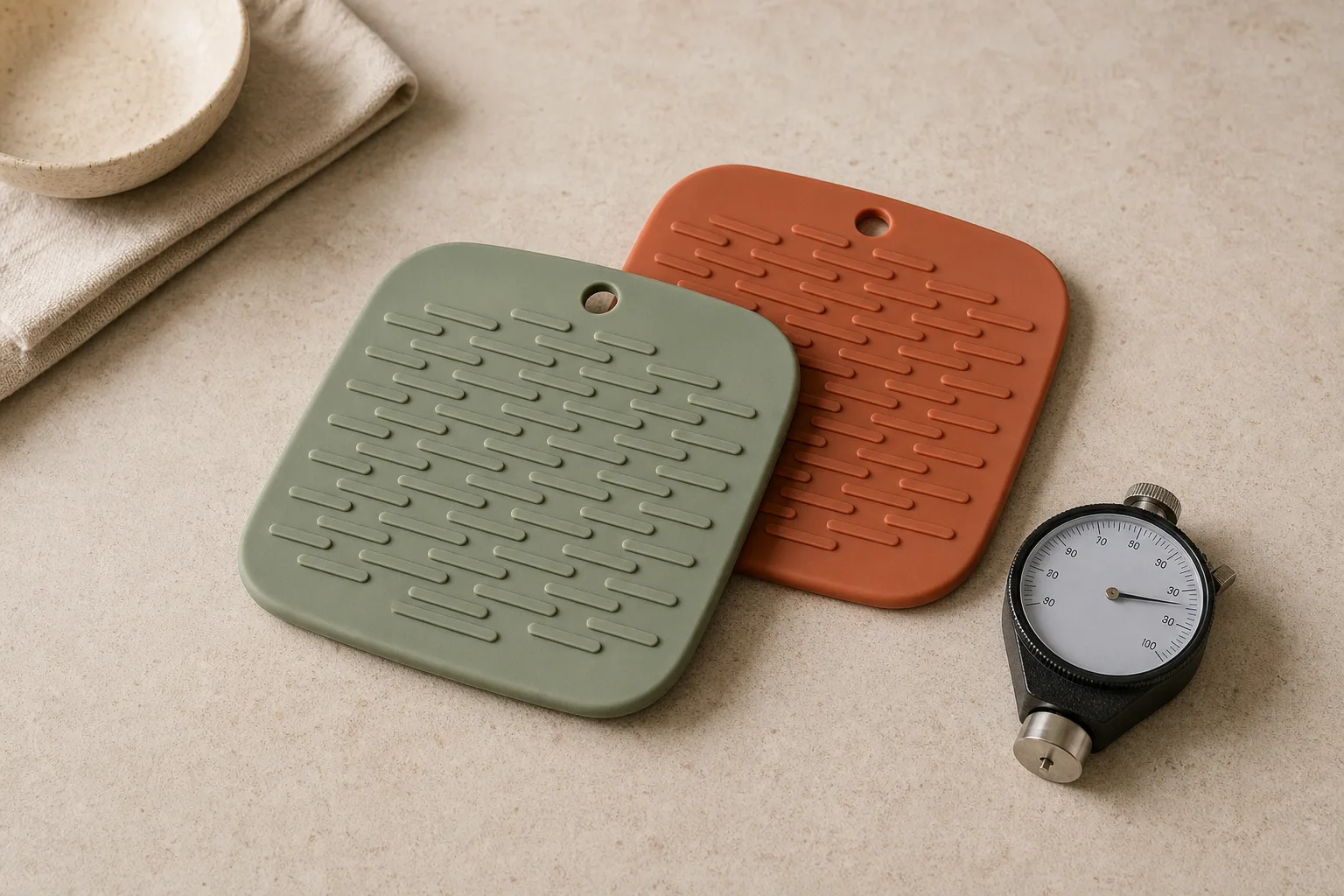 Buyer Guide
 If you are searching for “silicone pot holder” as a procurement lead, product-development manager, or QA head at a housewares, sink, or private-label brand, the first ten results Google returns are consumer reviews and Amazon aggregations. None of them speaks to what you actually need to decide: which cure system, which durometer, which MOQ tier, which compliance stack, and which factory-audit posture keeps the SKU alive through a Home Depot or Wayfair review cycle. This guide fills that gap. It is written to buyers, not cooks. The numbers are engineering numbers, the citations are Tier-1 standards, and the framing assumes you will be signing a purchase order and defending it against a retailer’s quality gate — not clipping a coupon.
A B2B silicone pot holder OEM program lives or dies on four decisions: MOQ tier (500 is the compliant floor), cure system (peroxide-cure with post-cure clears FDA and LFGB; platinum-cure is required for EU premium and PFAS-free positioning), Shore A durometer (65 ±5 is the working default), and outgoing QC posture (AQL 2.5 per ISO 2859-1 with per-batch compound-house COA). Everything else — color match, logo debossing, packaging, retail-tier audit — cascades off those four.
Why a B2B silicone pot holder sourcing guide, and why the consumer results miss the mark
The consumer-facing silicone pot holder market runs on brand reviews and dishwasher tips; the OEM market runs on cure chemistry, durometer targets, and audit-ready documentation. This guide addresses the second market — procurement leads sourcing against a private-label or brand-owned SKU spec, not consumers picking a trivet at Target.
The top ten Google results for “silicone pot holder” average 1,233 words, 0.3 external references, and 2.3 direct-answer blocks per piece. They tell a home cook which color looks nice and whether the product is dishwasher safe. That’s fine editorial content — but it is useless if you are trying to spec a 20,000-unit private-label run for a US retail-tier launch, negotiate tooling amortization with a factory, or defend a compliance dossier against a Tier 2 retail quality auditor. This guide is written for the second reader. It sits inside Wetop Silicone’s B2B guide library alongside pieces on FDA vs LFGB compliance, silicone OEM pricing structure, and the sourcing-factory checklist, and assumes the reader is comfortable reading a compound data sheet.
Pot holders are a deceptively simple product. The geometry is flat, the tooling is single-cavity or low-cavity compression, and the retail unit price sits in the $4-$18 range. Because the object looks simple, procurement teams routinely under-spec it — and then discover in retail review that the supplier ran an uncertified compound, skipped post-cure, or sampled outgoing QC at AQL 6.5 instead of 2.5. The audit fails, the SKU pulls, and the next production window slides two quarters. The remainder of this guide walks through the decisions that prevent that outcome.
What actually is a “silicone pot holder” from a materials standpoint
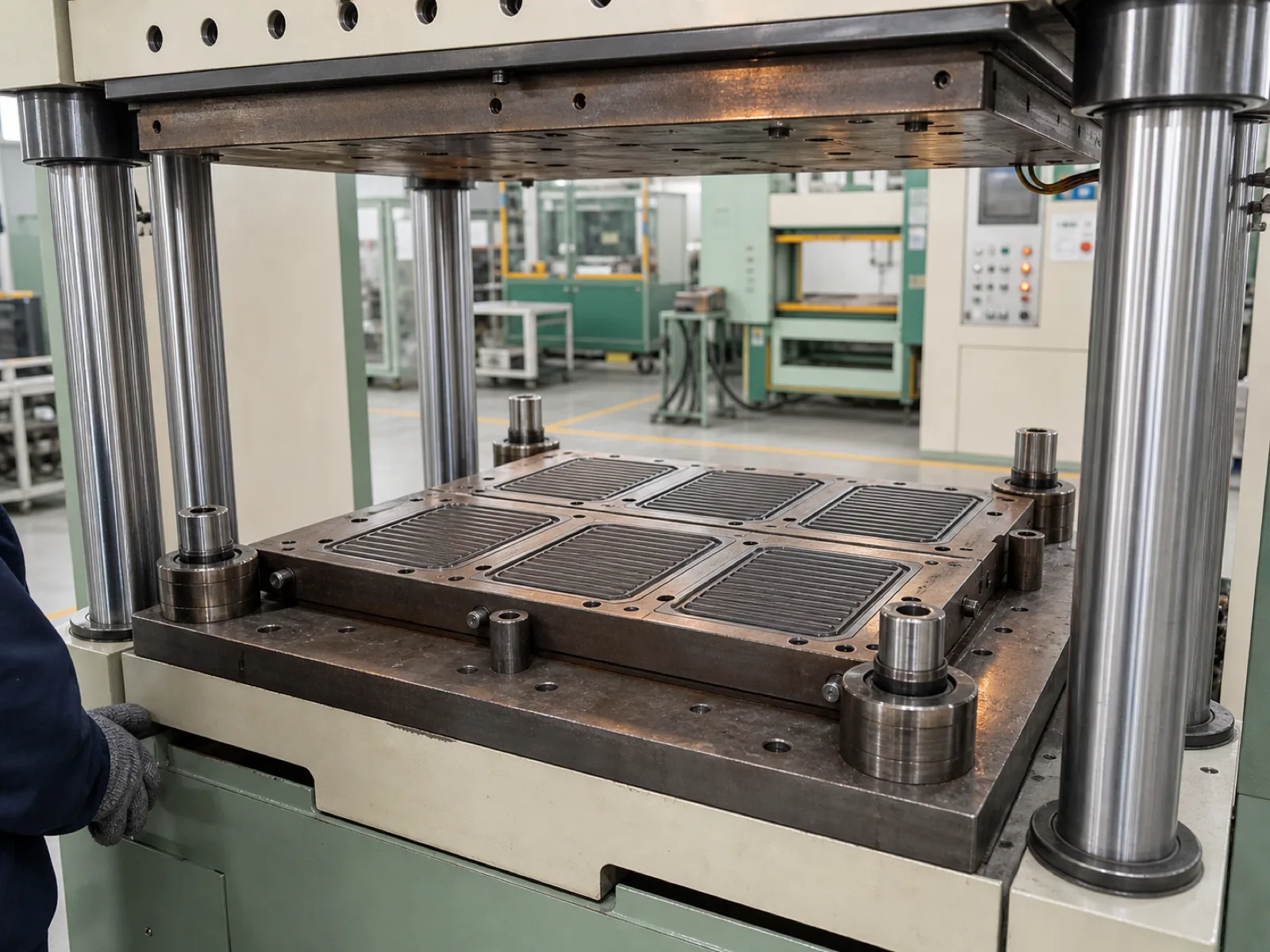
A silicone pot holder is a molded elastomer article made from polydimethylsiloxane (PDMS) cured into a crosslinked network, typically compression-molded at 170-200°C for 90-180 seconds and post-cured for 4-6 hours at 180-200°C. The material clears FDA 21 CFR 177.2600 and LFGB §30/§31 when correctly formulated and post-cured, and delivers continuous-use temperature suitability from -40°C to 230°C.
The polymer backbone is the same across all silicone rubber grades — Si-O-Si repeating units with methyl side groups. The crosslinker and catalyst system is what differentiates commercial grades. For pot holders the two dominant systems are peroxide-cure (organic peroxide catalyst, most commonly 2,4-dichlorobenzoyl peroxide or dicumyl peroxide) and platinum-cure (platinum complex catalyst driving a hydrosilylation reaction). Both produce food-contact-suitable articles when correctly manufactured. The differences show up in cost, byproduct chemistry, and regulatory positioning — covered in the cure-system section below.
The compound arrives at the factory as an uncured HTV (high-temperature vulcanizing) gum in a masterbatch that includes silica reinforcement (typically 20-35% fumed silica by weight), color pigments, and process aids. The factory weighs the compound, loads it into the compression mold cavity, closes the press, and holds pressure at cure temperature. The mold opens, the cured part is demolded, flash is trimmed, and the part enters the post-cure oven. Post-cure drives off residual volatile compounds — this is not optional for food-contact articles and is the single most-skipped step at price-led factories.
The compliance stack — FDA, LFGB, Prop 65, PFAS
A retail-shippable silicone pot holder needs four things stacked: FDA 21 CFR 177.2600 for US food-contact, LFGB §30/§31 (via BfR Recommendation XV) for EU food-contact, California Prop 65 conformance for US retail distribution, and a per-batch PFAS non-detect report to survive current retail-tier and EU regulatory posture. Anything short of the full four fails audit at the Tier 2 retail gate.
FDA 21 CFR 177.26001 governs “rubber articles intended for repeated use” in food contact. The section defines extractable residue limits, mandates specific test conditions, and is the primary US regulatory anchor. LFGB §30/§31, technically implemented through BfR Recommendation XV2, governs the German and (by de facto reference) EU food-contact silicone market. It defines an organic volatile extraction test — a direct measure of whether the factory post-cured the material correctly. Programs skipping post-cure fail this test predictably.
California Prop 65 is a warning-statement regime, not a spec threshold — but retail distribution into California requires either a Safe Harbor determination for each listed chemical or a compliant warning label. Most compound houses supplying reputable factories can supply Prop 65 statement language on the material COA. The PFAS layer is newer. The ECHA universal restriction proposal3 published in 2023 accelerated retailer PFAS-free spec adoption, and any supplier who cannot produce a per-batch non-detect test report from an accredited lab (SGS, Intertek, TÜV, Eurofins) should be treated as at risk. Wetop ships every pot holder program with the full four-layer dossier.
| Compliance layer | Governing standard | Test method | Retail-tier requirement |
|---|---|---|---|
| US food-contact | 21 CFR 177.26001 | Extractables per FDA method | Table stakes, all US retail |
| EU food-contact | LFGB §30/§31 via BfR XV2 | Organic volatile extraction | Required, all EU retail |
| EU framework | EC 1935/20044 | Declaration of Compliance | Required, EU retail |
| Prop 65 | California HSC §25249 | Warning statement or Safe Harbor | Required, US retail w/ CA distribution |
| PFAS | ECHA proposal3 | GC-MS non-detect per batch | EU premium + US West Coast retail |
| Social audit | Sedex SMETA / BSCI | On-site factory audit | Tier 2 retail (BBB / Wayfair / Tesco / Carrefour) |
Platinum-cure vs peroxide-cure — the pot holder decision
For the majority of retail pot holder programs peroxide-cure with disciplined 4-6 hour post-cure at 180-200°C is the correct spec and runs 15-25% cheaper per unit than platinum-cure. Platinum-cure becomes mandatory when the program markets PFAS-free explicitly, targets EU premium retail, or crosses medical-adjacent positioning. The choice is regulatory positioning, not safety.
The chemistry difference is byproducts. Peroxide-cure produces small amounts of organic decomposition products — chiefly acetophenone and dicumyl-peroxide fragments — which the post-cure oven drives off. Platinum-cure produces no comparable byproducts because the hydrosilylation reaction consumes both crosslinker and vinyl-terminated polymer stoichiometrically. Both materials, correctly manufactured and post-cured, clear FDA 21 CFR 177.26001 and LFGB organic volatile testing2 without qualification.
Where the two diverge is at the medical-adjacent line. USP Class VI classification per USP <88>5 requires passing in-vivo biological reactivity tests. Platinum-cured LSR from a reputable compound house typically meets Class VI on standard formulation. Peroxide-cure rarely reaches Class VI because residual byproducts create cytotoxicity signals in the extractables profile. If your pot holder program sits next to an infant-feeding SKU on the same brand line and the brand markets baby-safe positioning, spec platinum-cure explicitly and require USP <88> extract testing per lot. The full decision matrix lives in the dedicated Platinum-Cured vs Peroxide-Cured Silicone guide.
Shore A durometer targets and grip performance
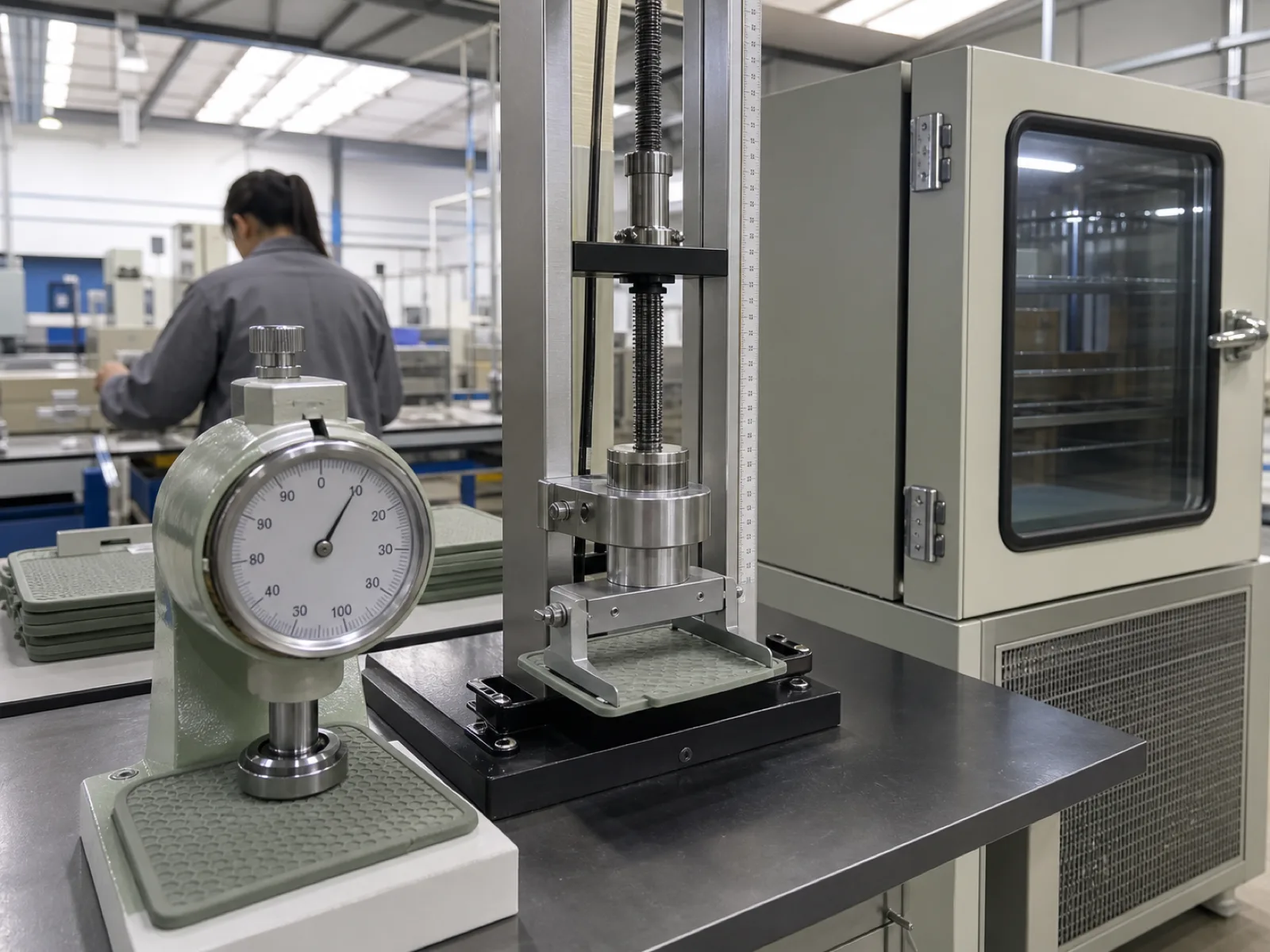
65 ±5 Shore A is the working default for a silicone pot holder — soft enough to grip a smooth cast-iron handle without slippage, firm enough to resist pinch-load deformation at 230°C. Softer than 55A the material feels squishy and won't grip; harder than 75A it feels cheap and cracks in the cold chain. Durometer is measured per ASTM D2240 on incoming COA and again on first-piece verification at the press.
Shore A hardness is an indentation-resistance measurement performed with a spring-loaded indenter defined by ASTM D22406. The reading correlates loosely with perceived firmness — a rubber band reads around 25A, a shoe sole around 70A, a car tire tread around 80A. For silicone pot holders the useful engineering window is narrow because the product has to satisfy two competing constraints. First, it has to grip a hot handle under pinch load without transmitting slip — this drives durometer down. Second, it has to hold shape and resist tearing at the handle-contact zone under a 10-30 N pinch force — this drives durometer up.
The compromise is 60-70A. Sink brand programs (Kraus, Ruvati, VIGO, Blanco tier) generally spec 65-70A because the perceived-quality signal at retail is a firm, substantial-feeling piece. Infant-adjacent and baby brand programs (OXO Tot, Munchkin tier) spec 55-60A for softer hand-feel. The compound-house data sheet must show target durometer with ±5A tolerance per lot. Wetop’s incoming QC samples durometer on every raw material lot before the compound reaches the press deck, and re-verifies on the first cured piece from every production run.
Temperature performance and test-method traceability
Silicone delivers continuous-use temperature suitability from -40°C to 230°C and tolerates intermittent exposure to 260°C, validated per ASTM D573 heat-aging protocol. Factories quoting "up to 300°C" without a compound-house data sheet are quoting marketing copy — the polymer backbone begins to break down thermally above 260°C and permanent property loss follows within hours.
The -40°C floor comes from silicone’s low glass transition temperature (~-125°C) and its retention of elastomeric behavior far below what conventional rubbers can tolerate. Nitrile and EPDM stiffen and crack near 0°C; silicone remains flexible into deep-freezer territory. The 230°C ceiling comes from thermo-oxidative degradation of the methyl side groups on the polymer backbone. At 230°C the reaction rate is slow enough that a properly-cured, properly-post-cured article retains its Shore A hardness within ±5 points and its tensile strength within 15% after 1,000 hours of exposure — the typical ASTM D573 aging protocol. Above 260°C the reaction accelerates sharply.
For a 4mm-thick silicone pot holder on a 230°C cast-iron handle, the outer face (hand side) reaches uncomfortable temperature after 4-6 seconds of continuous contact. That is safe operational time for lifting a pot from oven to trivet, but not for holding a hot handle for extended cooking. Programs positioning as oven-mitt substitutes rather than trivet-adjacent should spec 6-8mm thickness with an internal quilted air layer — the geometry doubles safe grip time to 10-12 seconds. Full test-method breakdown in Silicone Temperature Range Explained.
MOQ tiers and the pricing curve — 500, 1,000, 5,000
Unit price on a standard 4mm-thick square silicone pot holder drops roughly 22% from 500 to 1,000 pcs, another 14% from 1,000 to 5,000, and flattens beyond 10,000 pcs. The curve is dominated by tooling amortization ($1,800-$4,500 per cavity for compression tooling) and press-cycle labor scaling. Below MOQ 500 the tooling amortization inflates unit price past what any retail-tier price point can absorb.
The math is deterministic, not negotiable. A single-cavity compression mold for a standard geometry pot holder runs $1,800-$4,500 depending on cavity complexity, logo debossing depth, and steel selection. Spread across 500 pieces that is $3.60-$9.00 per unit of tooling burden. Spread across 5,000 pieces it drops to $0.36-$0.90 — an order of magnitude. The material cost, press labor, post-cure oven time, packaging, and QC labor scale roughly linearly with piece count. So the curve is steep between 500 and 2,000 (tooling amortization dominates), moderate between 2,000 and 10,000 (labor scaling with mild volume discounts on raw material), and flat above 10,000.
The illustrative table below is anchored on a 4mm × 200mm × 200mm square silicone pot holder in Shore A 65 with peroxide-cure and standard post-cure, single-color, single-side logo deboss, retail poly-bag packaging. Actual quotes vary with color complexity, cavity count, and freight consolidation posture.
| Volume tier | Illustrative unit price | Tooling amortization | Cycle time posture |
|---|---|---|---|
| 500 pcs | $3.80-$4.50 | Dominant (~$3.60-$4.50 of unit) | Single-cavity, slow |
| 1,000 pcs | $2.95-$3.50 | Significant (~$1.80-$2.25) | Single-cavity, standard |
| 5,000 pcs | $2.55-$3.00 | Small (~$0.36-$0.45) | 2-4 cavity tool |
| 10,000 pcs | $2.40-$2.85 | Negligible | 4-8 cavity tool |
| 50,000 pcs | $2.30-$2.75 | Fully amortized | 8-16 cavity tool |
Full amortization math and the reasoning behind Wetop’s 500-piece MOQ floor sits in Real Factory MOQ — The Math and Silicone OEM Pricing Structure.
Tier 2 retail sourcing readiness — BBB, Wayfair, Tesco, Carrefour
Tier 2 retail readiness for a silicone pot holder OEM program means ISO 9001 on the factory, a Sedex SMETA 4-Pillar or BSCI social audit, an outgoing QC posture at AQL 2.5 per ISO 2859-1 general inspection level II, and a per-batch compound-house COA with lot traceability from raw silicone gum to shipped pallet. Any missing element becomes an audit finding.
The Tier 2 retail-audit posture — Home Depot, Wayfair, Bed Bath & Beyond, Tesco, Carrefour, and equivalents — is a documentary posture as much as an operational one. Auditors expect to see the ISO 9001 certificate7 on the wall with a current calendar date. They expect to see a Sedex SMETA report or BSCI certificate in the compliance binder, updated within the last 12 months. They expect the outgoing AQL sampling plan to be documented per ISO 2859-18 with a defined general inspection level (II is standard) and defined acceptance quality limit (2.5 for major defects, 4.0 for minor is the retail default). And they expect per-batch traceability from the compound COA to the shipped carton, with lot number, cure date, post-cure oven log, and outgoing inspection record aligned.
Wetop runs all four as standard on the shop floor. The ISO 9001 certificate is current. The Sedex SMETA 4-Pillar audit is renewed annually. The outgoing AQL 2.5 sample sits at general inspection level II by default with tighter sampling available on request. The compound-house COA is filed against every production lot with the cure and post-cure logs. The full audit-readiness checklist that a procurement lead should hand a prospective factory is documented in Sourcing Silicone Factory Checklist.
Customization stack — Pantone match, logo deboss, packaging, private-label
Retail-grade customization on a silicone pot holder covers four dimensions: Pantone color match with ΔE ≤ 1.5 tolerance (per CIE colorimetry), logo debossing cut into the mold cavity for through-body relief, retail packaging (poly-bag, header card, box, or hangtag) with printed brand artwork, and private-label documentation including brand-owned lot codes and Declaration-of-Compliance letterheads.
Pantone match runs on the compound side. The masterbatch is pigmented to the target hex before the material enters the press, producing through-body color rather than a surface coating. Surface coatings on silicone peel and abrade — they are appropriate for prototypes and photography samples, not retail SKUs. Wetop matches to solid-coated Pantone at ΔE ≤ 1.5 tolerance measured under D65 illumination per CIE colorimetry9, which is visually indistinguishable from the target chip to a trained eye.
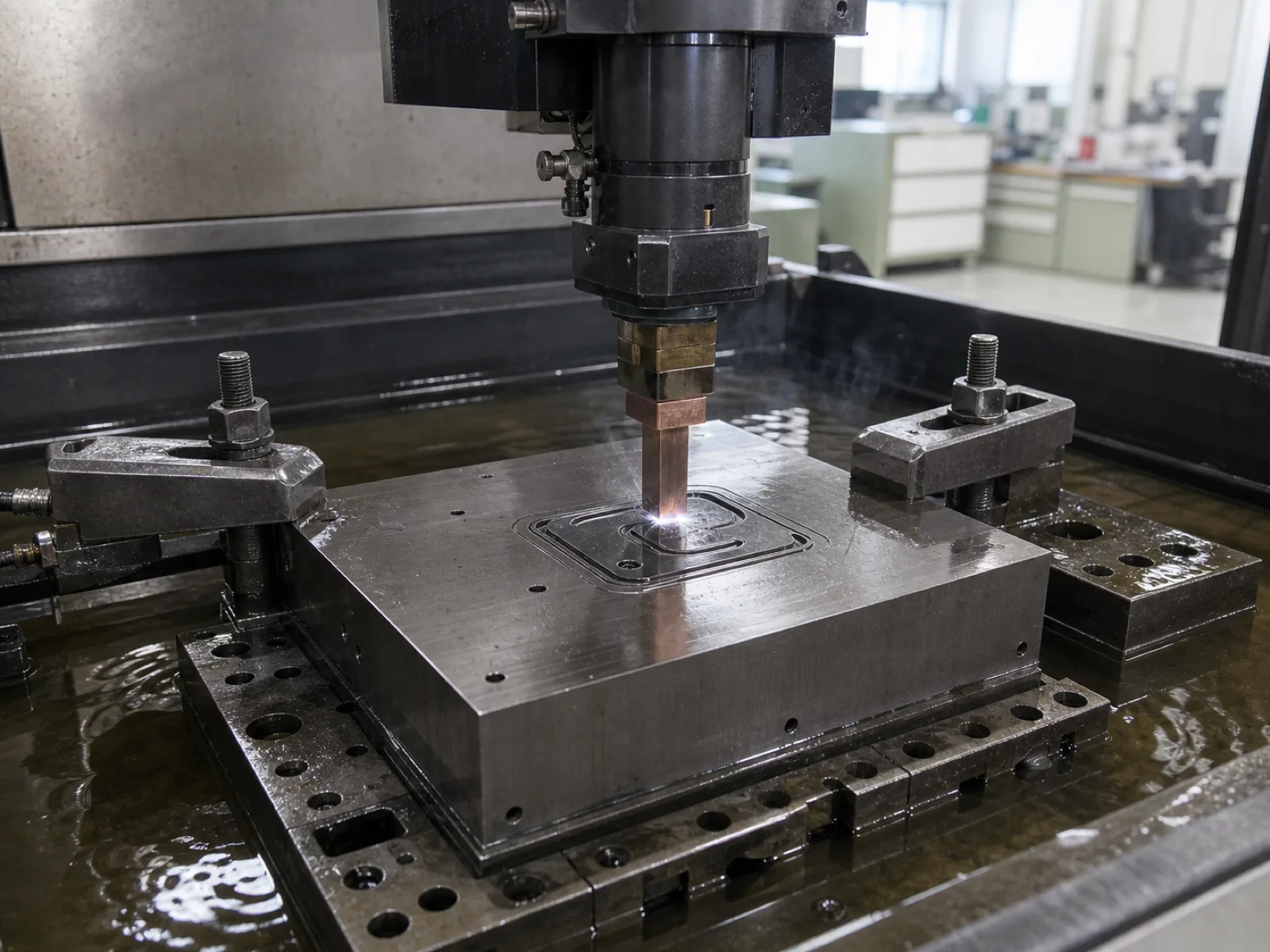
Logo debossing is a mold-cavity feature. The negative logo is EDM-cut into the mold steel by the tooling shop, then every piece produced from that mold carries the logo as a through-body relief without a secondary process. Deboss depth typically runs 0.3-0.6mm — deep enough to catch light and read on shelf, shallow enough not to compromise structural cross-section. Silkscreen printing and laser marking are also available; debossing is the retail-preferred method because it survives dishwasher cycling and cannot chip or fade. The customization framework is broken out in Customize Silicone — Logo Deboss, Print, Laser and Private-Label Silicone Kitchen Products.
Factory audit checklist — ISO 9001, Sedex, BSCI
A pot holder factory that can defend a Tier 2 retail audit has ISO 9001:2015 certification current, a Sedex SMETA 4-Pillar report or BSCI Grade A/B certificate under 12 months old, documented incoming raw-material inspection procedure, documented in-process inspection procedure, documented outgoing AQL sampling procedure per ISO 2859-1, and a customer-complaint traceability system that closes findings within 30 days.
Procurement leads visiting a prospective factory should carry a printed checklist. The ISO 9001 certificate7 should be posted visibly with a current calendar date and an accredited certification body name. The Sedex SMETA report or BSCI certificate should sit in the compliance binder with the last three annual audits filed sequentially. The QC procedures should exist as controlled documents with revision numbers, not as verbal shop-floor practice. The AQL sampling procedure should reference ISO 2859-18 with defined inspection level and acceptance quality limit.
The tell that separates a serious factory from a paper-compliant factory is the customer-complaint file. Ask to see the last twelve months of customer complaints — the closed ones, not the pending ones. A serious factory will have complaints (every factory does) and will have closed each one with a root-cause analysis, corrective action, and verified effectiveness check. A paper-compliant factory will produce an empty file or will refuse the request. Wetop keeps a complete customer-complaint history available to procurement leads under NDA — the process is documented at /nda/ and the ready-to-tour posture at /capabilities/.
Sample and tooling lead time — the 48-65 day cycle
Standard pot holder OEM lead time is 48-65 days from PO to first shipment: 7-15 days for sample, 25-35 days for mold tooling, 15-20 days for the first production run, plus 7-10 days for sea freight consolidation and export documentation. Programs using pre-existing tooling geometry collapse the tooling step and ship in 25-30 days.
Sample turn (7-15 days) covers material selection, color match, and — for programs with logo debossing — a bench-mold sample cut on an existing tool block. This sample confirms color, durometer, and geometry against the brand spec sheet before production tooling is cut. Skipping sample approval saves time up front and loses it downstream when the tool is cut against an ambiguous spec.
Mold tooling (25-35 days) is the critical path. The mold shop cuts the cavity into P20 or NAK80 tool steel using CNC milling and EDM (electrical-discharge machining) for logo detail. Multi-cavity tooling adds 5-10 days per additional 4-cavity increment. Cavity finishing (polish, texture, deboss depth verification) adds another 3-5 days. Tooling sign-off requires a first-off part physically inspected against the spec sheet before mass production begins.
First mass-production run (15-20 days) covers material procurement against the sign-off spec, press setup, initial cavity balancing, post-cure oven runs, and outgoing AQL 2.5 inspection. Sea freight consolidation (7-10 days) covers export documentation, container loading at Yantian Port (90 minutes from the Wetop factory), and departure. The full Gantt-chart breakdown, including where programs typically slip, is in MOQ and Lead Time — Silicone OEM.
QC protocol — incoming, in-process, outgoing
Three-checkpoint QC is the retail-audit-defensible posture. Incoming: compound-house COA verified on lot number, ASTM D2240 durometer sampled per lot, color chip compared under D65 light. In-process: first-piece durometer on the press, cavity dimensional inspection every 200 cycles, post-cure oven log per batch. Outgoing: AQL 2.5 sampling per ISO 2859-1 general inspection level II with functional pinch-load and temperature-cycle sub-tests.
Incoming inspection is the checkpoint that separates a serious factory from a price-led one. Price-led factories accept the compound-house COA at face value and load the material into the press. Serious factories re-verify durometer per ASTM D22406 on every incoming lot, compare the color chip against the target under D65 daylight-simulator lighting, and log the lot number against the customer PO. The re-verification catches roughly 1 in 200 lots where the compound house shipped the wrong grade or the color batch drifted — cheap to catch at incoming, expensive to catch downstream.
In-process inspection catches cavity drift. Compression mold cavities wear at the parting line over cycle count. First-piece durometer on the press catches a bad cure setup before it produces 500 defective pieces. Cavity-by-cavity dimensional inspection every 200 cycles catches wear before it produces out-of-spec parts. Post-cure oven temperature and dwell time are logged per batch — the log becomes the audit evidence that post-cure was not skipped.
Outgoing AQL 2.5 per ISO 2859-18 general inspection level II is the retail-standard outgoing posture. On a 5,000-piece lot the sample size is 200 pieces; the acceptance number is 10 majors, the rejection number is 11. Beyond the visual and dimensional sampling, Wetop runs functional pinch-load and temperature-cycle sub-tests on a smaller cohort — 20 pieces from each 5,000-piece lot cycled through -40°C to 230°C to verify durometer retention and geometric stability under a real thermal load. Any failure escalates to full-batch re-inspection at Wetop cost.
What Wetop OEMs on silicone pot holders — and how to start the conversation
Wetop runs silicone pot holder programs for housewares brands (OXO / Joseph Joseph / DI ORO tier) and sink brands (Kraus / Ruvati / VIGO / Blanco tier) out of a 7,500 m² founder-led factory in Dongguan. Standard program posture is MOQ 500 per SKU, Shore A 65 ±5 durometer with post-cured peroxide-cure or platinum-cure at customer election, per-batch FDA + LFGB + Prop 65 + PFAS non-detect dossier, Pantone match at ΔE ≤ 1.5, logo debossing cut in-house at the Wetop mold shop, and AQL 2.5 outgoing per ISO 2859-1 general inspection level II. The founder — William Zhuo — is directly reachable on active OEM inquiries.
Programs typically start with a spec sheet exchange under NDA (see /nda/ for the standard mutual NDA Wetop signs same-day), followed by a 7-15 day sample turn against the target durometer, color, and deboss detail. First mass-production ships 48-65 days from tooling sign-off. Retail-tier programs also receive a full compliance dossier (ISO 9001, Sedex SMETA, per-batch COA and PFAS report, LFGB test report, Prop 65 statement) with the first shipment for retailer submission.
Send RFQ, spec sheets, and sample requests to inquiry@wetopsilicone.com or use the intake form at /contact/. For active buying programs, sink and housewares brand references and past-program case studies are available under NDA — request through the same address. Related B2B guides sit at /guide/ and completed program case studies at /case-studies/.
Footnotes
-
US Food and Drug Administration. 21 CFR 177.2600 — Rubber articles intended for repeated use. ecfr.gov. ↩ ↩2 ↩3
-
German Federal Institute for Risk Assessment (BfR). Recommendation XV — Silicones. bfr.bund.de. ↩ ↩2 ↩3
-
European Chemicals Agency. PFAS Universal Restriction Proposal (2023). echa.europa.eu. ↩ ↩2
-
European Parliament and Council. Regulation (EC) No 1935/2004 on materials and articles intended to come into contact with food. eur-lex.europa.eu. ↩
-
United States Pharmacopeia. USP <88> — Biological Reactivity Tests, In Vivo. usp.org. ↩
-
ASTM International. ASTM D2240-15 — Standard Test Method for Rubber Property—Durometer Hardness. astm.org. ↩ ↩2
-
International Organization for Standardization. ISO 9001:2015 — Quality management systems — Requirements. iso.org. ↩ ↩2
-
International Organization for Standardization. ISO 2859-1:1999 — Sampling procedures for inspection by attributes. iso.org. ↩ ↩2 ↩3
-
International Commission on Illumination. CIE Colorimetry, 4th Edition. cie.co.at. ↩
FAQ
-
What Shore A hardness should a silicone pot holder be spec'd at?
60-70 Shore A is the working range, with 65 as the common default. Shore A durometer is measured per ASTM D2240[^astm-d2240] and represents indentation resistance. Below 55A the material feels 'squishy' and won't grip a cast-iron handle under pinch load; above 75A it feels stiff and cheap and cracks at cold-chain temperatures. Sink brands typically spec 65-70A for perceived quality; baby and infant-adjacent programs spec 55-60A for softer hand feel. The compound-house data sheet must show the target durometer ±5A tolerance per lot, verified on incoming COA and again in-process on the press deck.
-
Is a silicone pot holder actually safe to touch a 230°C pot?
Yes, within its rated temperature range and with correct grip technique. Silicone has continuous-use suitability from -40°C to 230°C and intermittent exposure to 260°C, validated per ASTM D573 heat-aging protocol. The material is a thermal insulator, not a thermal barrier — it slows heat transfer to the hand but does not eliminate it. A 4mm-thick silicone pot holder gives 4-6 seconds of safe grip time on a 230°C surface before the outer face reaches uncomfortable temperature. For extended-contact applications (oven mitt-style products) spec 6-8mm thickness with an internal quilted air layer. See [Silicone Temperature Range Explained](/guide/silicone-temperature-range-explained/) for the full test-method breakdown.
-
How long does a silicone pot holder OEM program take from PO to first shipment?
48-65 days is the standard cycle. Sample turn is 7-15 days depending on customization depth (color match, logo debossing, multi-cavity vs single-cavity). Mold tooling runs 25-35 days. First mass-production run is 15-20 days after tooling sign-off, plus 7-10 days sea freight consolidation and export documentation. Programs with pre-existing tooling geometry (Wetop's stock catalog trivet and pot holder shapes) collapse the tooling step and ship in 25-30 days from PO. See [MOQ and Lead Time — Silicone OEM](/guide/moq-and-lead-time-silicone-oem/) for the full Gantt breakdown.
-
What certifications does a silicone pot holder need to pass retail audit?
For Tier 2 US and EU retail (Home Depot / Wayfair / BBB / Tesco / Carrefour tier): ISO 9001[^iso-9001] on the factory, FDA 21 CFR 177.2600[^fda-177-2600] on the material per production batch, LFGB §30/§31 organic volatile compliance[^bfr-lfgb-xv], California Prop 65 warning statement conformance, and Sedex SMETA or BSCI social audit on the factory. Programs targeting EU premium tier add REACH Regulation (EC) 1935/2004[^ec-1935-2004] documentation and a per-batch PFAS non-detect report per the ECHA proposal[^echa-pfas-proposal]. Programs positioning near infant feeding or medical-adjacent add USP <88> Class VI[^usp-class-vi].
-
Can you match a specific Pantone color and deboss a logo on the pot holder surface?
Yes. Pantone color match runs on the compound side — the color masterbatch is pigmented to the target hex before the material hits the press, giving through-body color rather than surface coating (which peels). Wetop matches to solid-coated Pantone with a ΔE ≤ 1.5 tolerance (per CIE colorimetry[^cie-color]) — visually indistinguishable from the target chip. Logo debossing is a mold-cavity feature — the negative logo is EDM-cut into the mold steel, then every piece produced carries the logo without a secondary process. Silkscreen and laser marking are also available; debossing is the retail-preferred method because it survives dishwasher and doesn't chip. Details in [Customize Silicone — Logo Deboss, Print, Laser](/guide/customize-silicone-logo-deboss-print-laser/).
-
What is the QC protocol on a Wetop pot holder run?
Three checkpoints. (1) Incoming raw silicone: compound-house COA (Certificate of Analysis) verified on lot number, durometer sampled per ASTM D2240[^astm-d2240], color chip compared under D65 light. (2) In-process: first-piece durometer check on the press, cavity-by-cavity dimensional inspection every 200 cycles, post-cure oven temperature and dwell time logged per batch. (3) Outgoing: AQL 2.5 sampling plan per ISO 2859-1[^iso-2859-1] general inspection level II, with functional pinch-load and temperature-cycle tests on the sample cohort. Any failure escalates to full-batch re-inspection at Wetop cost, not the customer's.
-
What thickness and geometry should we spec on a silicone pot holder for a Home Depot / Wayfair private-label SKU?
The retail-defensible working envelope is 4-8mm thickness on a 180-220mm square or round footprint, with a rib or waffle pattern on the pot-facing side. 4mm flat is the entry-tier trivet-adjacent geometry — cheap tooling (single-cavity ~$1,800-$2,500), 4-6 seconds of safe grip time on a 230°C cast-iron handle, unit price at 5,000 pcs $2.55-$3.00. 6mm with a shallow rib pattern (0.8-1.2mm rib height on 8-12mm spacing) is the retail-mainstream spec — better perceived quality, doubles safe grip time to 8-10 seconds, adds roughly $0.35-$0.55 per unit at 5,000 pcs. 8mm with a quilted or waffle back is the oven-mitt-substitute spec — 10-12 seconds of safe grip time, but the cross-section drives material cost up 40-50%. Sink brand caliber programs (Kraus / Ruvati / Blanco tier) typically land on 6mm with a debossed logo on the top face and a shallow rib on the pot-facing face — the geometry reads as substantial on shelf without inflating carton cube. Corner radius should be spec'd at R6-R10 minimum to prevent stress concentration and cold-chain edge tearing. Cavity-to-cavity dimensional tolerance is held at ±0.15mm on thickness and ±0.5mm on outer dimension per the AQL 2.5 outgoing plan per ISO 2859-1[^iso-2859-1]. Programs that spec 3mm to hit an aggressive price point routinely fail the pinch-load and thermal-cycle sub-tests — the material deforms permanently under 15 N pinch at 230°C and the SKU pulls in retail review.
-
What are the common defect modes on silicone pot holders and how do we spec against them at PPAP?
Four defect modes drive 80%+ of retail returns and audit findings on silicone pot holders: flash at the parting line, surface bloom, dishwasher color fade, and first-heat odor. Flash (thin uncured silicone webbing at the mold parting line) comes from insufficient press clamp pressure or worn mold flash lands — spec'd against by requiring cavity-by-cavity dimensional inspection every 200 press cycles and a maximum flash length of 0.3mm at outgoing AQL. Surface bloom (white haze appearing over 4-12 weeks in the shipping carton) is uncured low-molecular-weight cyclosiloxane migrating to the surface — this is the smoking-gun evidence that post-cure was skipped or truncated. Spec against it by requiring a 4-6 hour post-cure at 180-200°C logged per batch, with the oven chart preserved as PPAP evidence. Dishwasher color fade shows up after 30-60 cycles when the pigment package uses non-heat-stable organic dyes — spec against it by requiring inorganic or heat-stable organic pigments on the compound COA and running a 50-cycle dishwasher aging test on PPAP samples. First-heat odor (sharp acetophenone smell when the piece hits 200°C for the first time) is unreacted peroxide byproduct — same root cause as bloom, same countermeasure (disciplined post-cure). Wetop's PPAP submission carries the post-cure oven chart, incoming compound COA with lot number, first-piece durometer per ASTM D2240[^astm-d2240], dimensional layout on all cavities, and the 50-cycle dishwasher and 100-cycle thermal-cycle aging sub-test reports. Programs that skip PPAP discipline discover these four failure modes in retail-tier consumer reviews rather than in first-article inspection.
-
How does a silicone pot holder compare to cork, cast-iron, cotton, or premium-brand silicone options for a private-label decision?
The material choice is a positioning and price-point decision, not a performance one. Cork trivets run $0.90-$1.80 landed at 5,000 pcs with almost no tooling cost — appropriate for entry-tier housewares SKUs (BBB / Target-value caliber) but fail on dishwasher exposure and stain over 6-12 months. Cast-iron trivets run $6-$14 landed and read as heirloom/artisan — appropriate for premium cookware brand accessory families but weight (500-900g) inflates freight cost and drives retail unit price past $25. Cotton pot holders run $1.20-$2.80 landed with high defect rates on stitching and grease absorption — appropriate for value-tier SKUs but unable to defend an FDA food-contact positioning. Premium-caliber silicone (OXO Good Grips / Joseph Joseph / DI ORO tier) sits at $2.30-$4.50 landed at 5,000 pcs on a peroxide-cure post-cured spec, or $2.90-$5.60 on platinum-cure — cleared for FDA 21 CFR 177.2600[^fda-177-2600] and LFGB[^bfr-lfgb-xv], dishwasher-safe for 500+ cycles, temperature-suitable from -40°C to 230°C. For sink brand accessory family programs (Kraus / Ruvati / Blanco caliber) silicone is the near-universal choice because it matches the sink-grid and drying-rack material story on the same brand shelf. The decision framework: if the SKU sits next to stainless-steel cookware or on a premium retail shelf (Williams-Sonoma / Sur La Table caliber), spec platinum-cure silicone with Pantone-matched through-body color and debossed logo. If the SKU targets Tier 2 retail mainstream (Home Depot / Wayfair / Tesco), peroxide-cure post-cured silicone at Shore A 65 in a 6mm rib geometry is the defensible spec.
-
Can a silicone pot holder OEM program run in the same cavity family as a matching trivet or coaster on a coordinated accessory SKU?
Yes, and it is the retail-mainstream posture for accessory family programs. A coordinated silicone pot holder + trivet + coaster accessory family typically runs on three separate compression tools, not one multi-cavity family tool — the geometries diverge enough (pot holder 4-6mm with rib, trivet 8-10mm with foot, coaster 3-4mm flat) that a single family tool compromises all three parts. What runs in the same family is the compound, color masterbatch, cure system, and post-cure oven cycle. Wetop's standard posture on a coordinated 3-SKU accessory family is: single compound spec (typically Shore A 65 peroxide-cure with disciplined post-cure), single Pantone-matched masterbatch pigmented once and drawn across all three tools, single logo deboss geometry cut into each tool's cavity by the in-house EDM bench (which locks the logo dimensions across parts within ±0.1mm), and a coordinated PPAP submission covering all three SKUs against the same compound COA lot. Tooling investment on the 3-SKU family runs $5,400-$13,500 total (three single-cavity molds) or $10,800-$27,000 if all three go to 2-cavity from launch. Lead time on the coordinated family is 30-40 days on tooling (parallel cut, not sequential) plus 15-20 days on first mass-production, matching the 48-65 day single-SKU cycle. MOQ is 500 pieces per SKU independently — a 1,500-piece coordinated program buys the family tooling on the same PO. Sink brand caliber programs typically request the family posture because the retail packaging (poly-bag or box with unified header card) sells the coordinated set on the same shelf facing.
References
Authoritative sources cited in this guide
- US Food and Drug Administration (Code of Federal Regulations). 21 CFR 177.2600 — Rubber articles intended for repeated use. https://www.ecfr.gov/current/title-21/chapter-I/subchapter-B/part-177/subpart-C/section-177.2600 — The primary US regulation governing food-contact silicone. Every Wetop pot holder program ships against this section with per-batch compound-house documentation.
- German Federal Institute for Risk Assessment (BfR). BfR Recommendation XV — Silicones. https://www.bfr.bund.de/en/bfr_recommendations_on_food_contact_materials-7498.html — The underlying technical standard behind LFGB §30/§31 organic volatile extraction testing. Defines the post-cure requirement that separates audit-passing from audit-failing silicone.
- International Organization for Standardization. ISO 9001:2015 — Quality Management Systems. https://www.iso.org/standard/62085.html — The baseline QMS standard. Every Tier 2 retail audit gate starts here. Wetop is certified against the 2015 edition.
- International Organization for Standardization. ISO 2859-1:1999 — Sampling procedures for inspection by attributes. https://www.iso.org/standard/1141.html — The statistical sampling standard behind AQL inspection. Wetop's outgoing QC runs AQL 2.5, General Inspection Level II per this standard.
- ASTM International. ASTM D2240-15 — Standard Test Method for Rubber Property—Durometer Hardness. https://www.astm.org/d2240-15r21.html — The measurement standard behind every Shore A hardness spec on a Wetop quote. Pot holder default: 65 ±5 Shore A.
- United States Pharmacopeia. USP <88> — Biological Reactivity Tests, In Vivo. https://www.usp.org/harmonization-standards/pdg/excipients/plastic-materials — The medical-grade classification standard. Applies when a pot holder program crosses into infant-feeding or wound-care adjacency.
- European Chemicals Agency (ECHA). PFAS Universal Restriction Proposal (2023). https://eur-lex.europa.eu/legal-content/EN/TXT/?uri=CELEX%3A32006R1907 — The regulatory action driving PFAS-free spec adoption. Every Wetop pot holder program ships with a per-batch PFAS non-detect report from an accredited lab.
- European Parliament and Council. Regulation (EC) No 1935/2004 on materials intended to come into contact with food. https://eur-lex.europa.eu/legal-content/EN/TXT/?uri=CELEX%3A02004R1935-20090807 — The EU framework regulation for food-contact materials. Wetop programs targeting EU retail ship with a Declaration of Compliance under this regulation.
- International Commission on Illumination. CIE Colorimetry, 4th Edition. https://cie.co.at/publications/colorimetry-4th-edition — The colorimetry standard behind Wetop's ΔE ≤ 1.5 Pantone match tolerance.
Start a custom program
Send a brief. Get an engineer’s reply in one business day.
Every Wetop program is tooled from a customer’s specification. Send a CAD file (STEP · IGES · DWG) or a written brief and we’ll reply with a mold cost estimate, price brackets at MOQ 500 / 1,000 / 5,000, and any engineering questions.